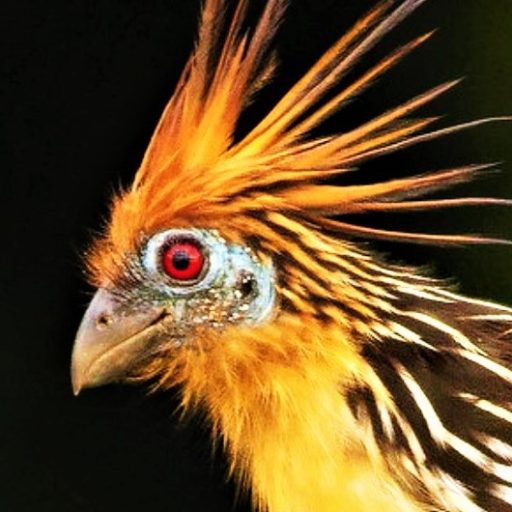
Iguazú falls is one of the largest waterfalls in the world. It lies on the Iguazu river which forms the border between Argentina and Brazil, so the falls are actually shared between the two countries. Just downstream, the Iguazu flows into the Paraná river, with Paraguay on the other side. Each country has a sizeable city near the border: Puerto Iguazu (Argentina), Foz do Iguaçu (Brazil) and Ciudad del Este (Paraguay).
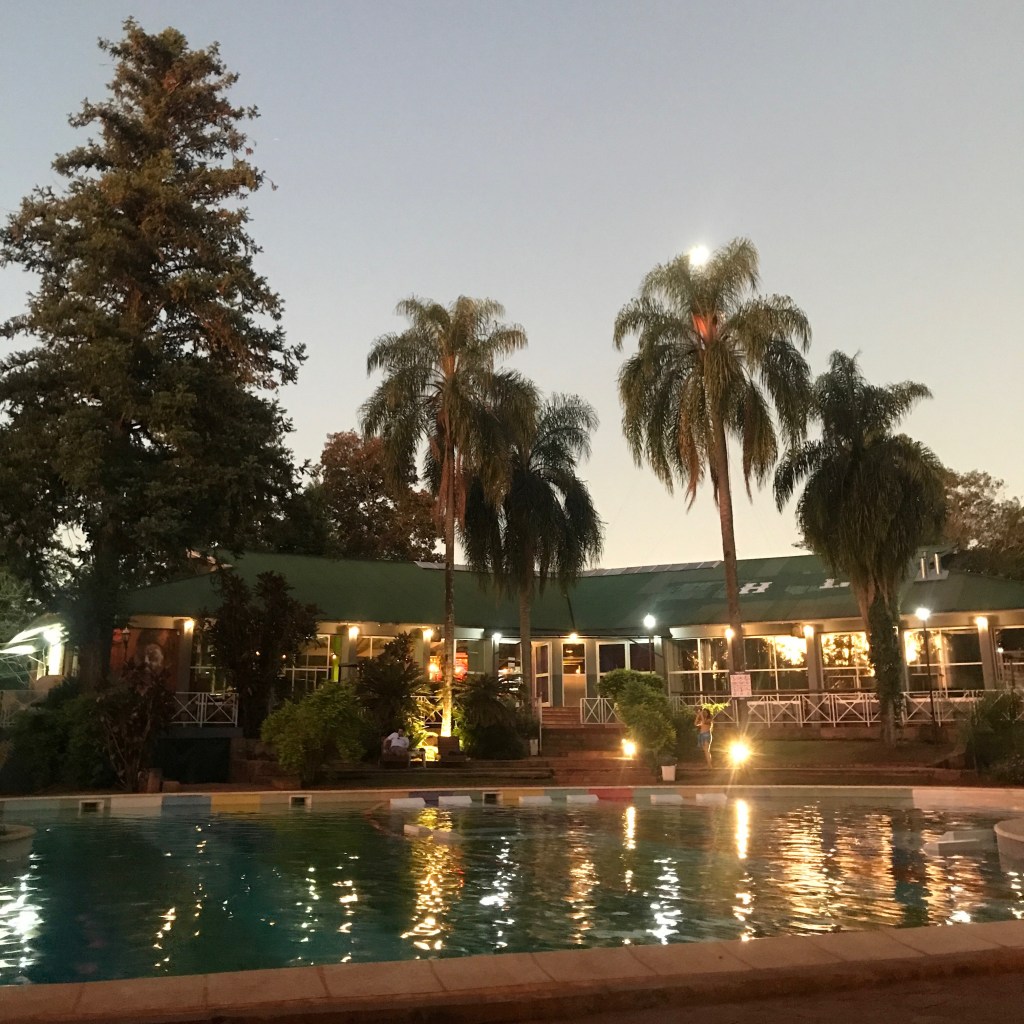
I never actually ventured across either of the borders while I was there; I stayed in Argentina at a hotel outside the city. I didn’t know at all what to expect since it was marketed as “Latin America’s First Brewery Hotel.” I hadn’t heard of any beer hotels claiming to be older, and it looked nice enough from the pictures, so I risked it all and made a booking. Sure enough, it was a brewery! The hotel rooms were downstairs, and so in my head I like to imagine the owner saying “Whoa, we have all this basement space, why don’t we build rooms and have people sleep down here! That would be great!” It seems that whatever the dream they were chasing, they’re definitely going after it. I enjoyed a craft IPA by the pool that evening:
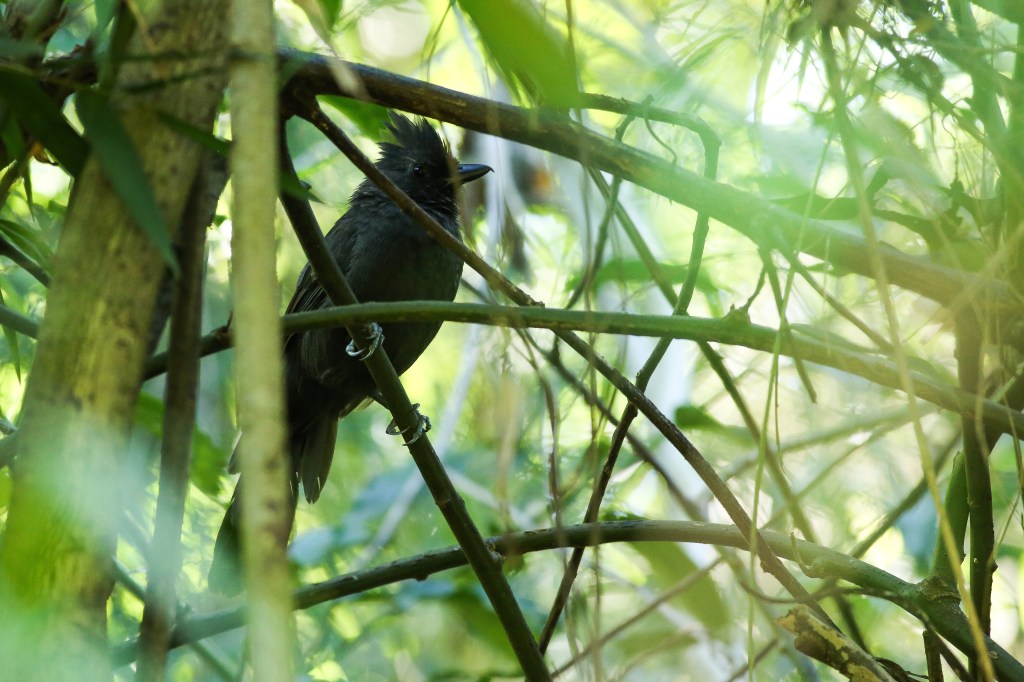
The following morning I got up and walked next door to check out an eBird hotspot that I had seen (one of the reasons I was staying here instead of in the city itself) called “Camino al Santuario” (Road to the shrine). It turns out folks exploring the area a long time ago found a tree with a likeness of the Virgin Mary. Now there’s a small chapel and a few residencies at the end of a 1-mile road through the woods; I didn’t find the tree itself. The great thing about the road is that the gate doesn’t close, so its one of the few places that is accessible before the typical reserve opening time of 7 or 8am. While the forest wasn’t original growth, it was definitely good birding; I heard or saw several very cool birds like Rusty-margined Antwren, Black-goggled Tanager and Rusty-breasted Nunlet. The highlight for me was getting to very briefly see a Tufted Antshrike, an Atlantic Forest endemic with a very cool crest.
At the Santuario itself I got eyes on a Blue-naped Chlorophonia which was very cool to see, but unfortunately I wasn’t able to get a picture. I headed back to the hotel and decided that the next day I’d head to the falls themselves!
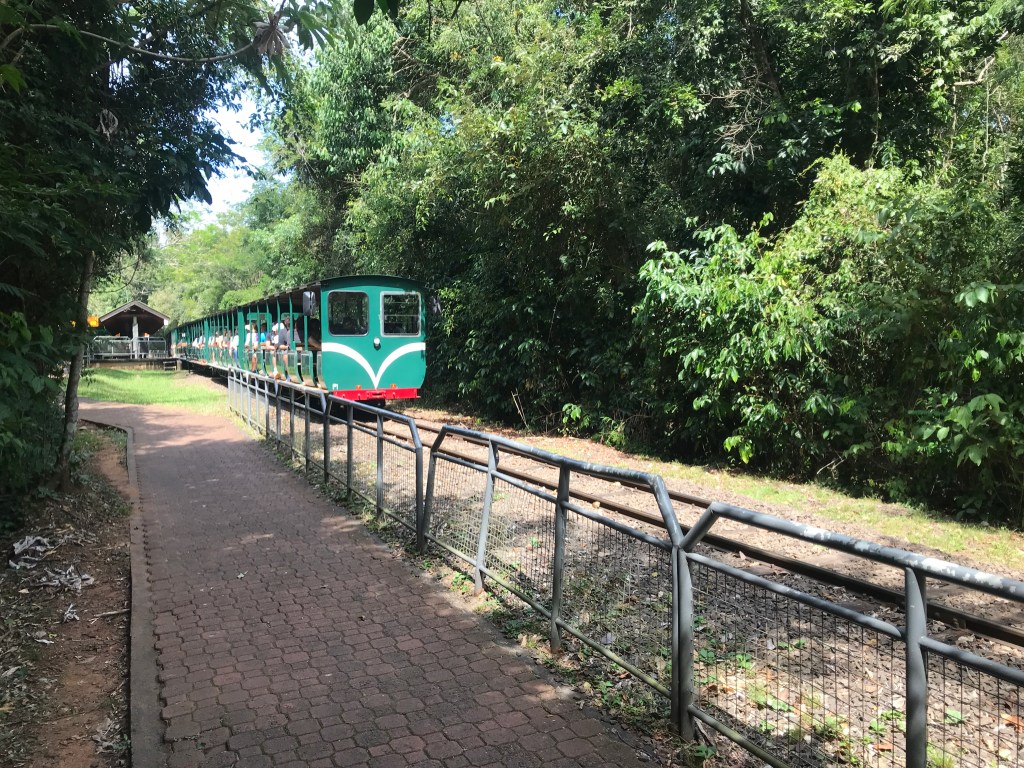
I got up and caught one of the buses (which leave from the bus station in Puerto Iguazu starting at about 7) to the national park. The entrance fee was the same as it was in Tierra del Fuego and El Calafate, 5,500 pesos or about $13 at the time. The infrastructure in the park was really impressive, and I haven’t looked into whether there might have been international investment. Excellent paved pathways, big buildings and offices, and even a little gas-powered train that carries tourists to the head of the falls:
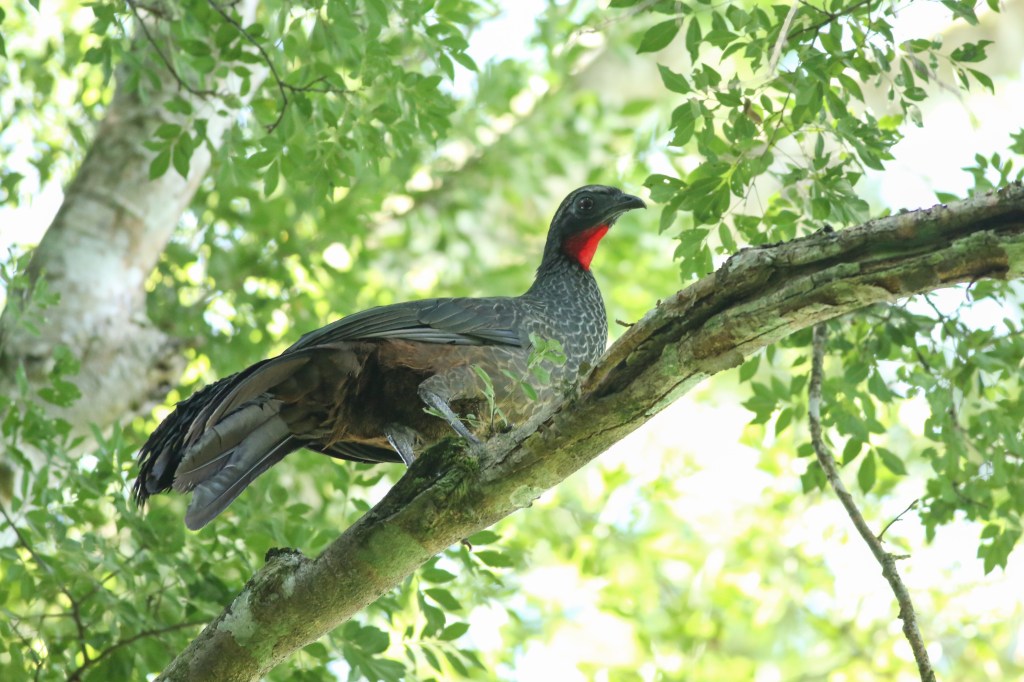
At places like this where there are lots of people, the best way to find birds is often to try and head down a trail before anyone else does, since the birds generally move away once a steady flow of people appears. I headed down the Macuco (Guarani name for Solitary Tinamou) trail, and had some great birds. The trail led from the train station about 2.5 miles to a little waterfall through some very old forest judging by the large trees. I got a bunch of new birds, including distant views at the endemic Swallow-tailed Manakin (Bailarín Azul or Blue Dancer in spanish) and a very brief look at a very difficult-to-find bird: a Rufous-breasted Leaftosser (This is one English name that’s hard to beat). While I didn’t get pictures of those two species, this Rufous-winged Guan perched over the trail was an example of a bird that would probably disappear as soon as 5-6 people had walked past it:
On the way back, I saw a clump of folks staring up into a tree, and when people without binoculars are looking at a tree it almost invariably means one thing: monkeys. I looked up and realized that the monkeys were way closer than I’ve typically seen them, there was an orange tree low over the trail and 8-10 monkeys were going crazy over the oranges, dropping peels practically on the tourists’ heads.
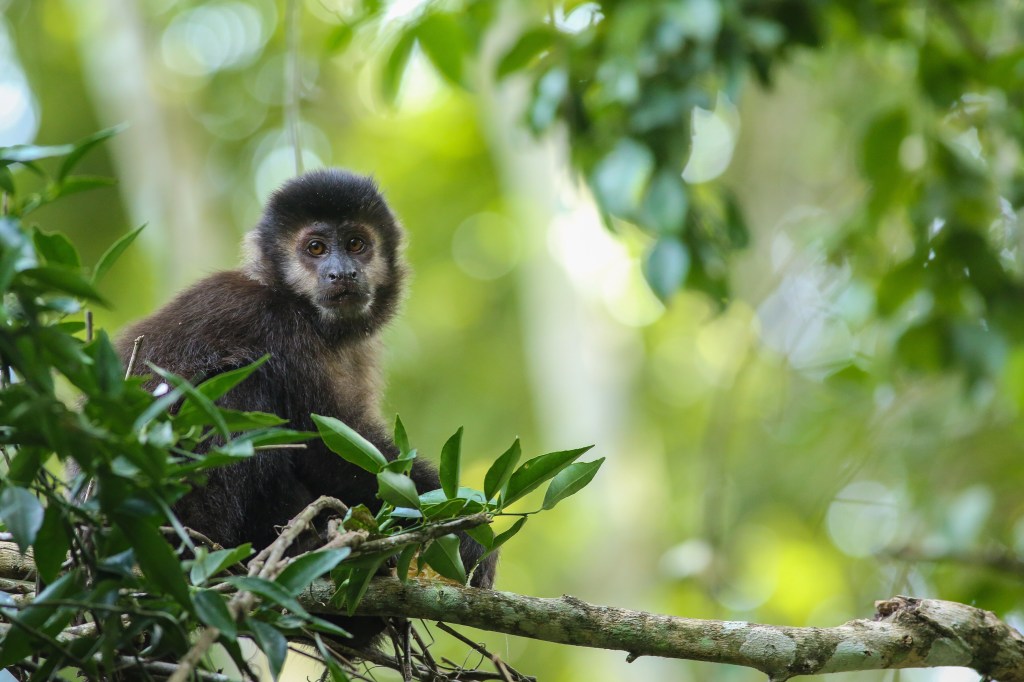
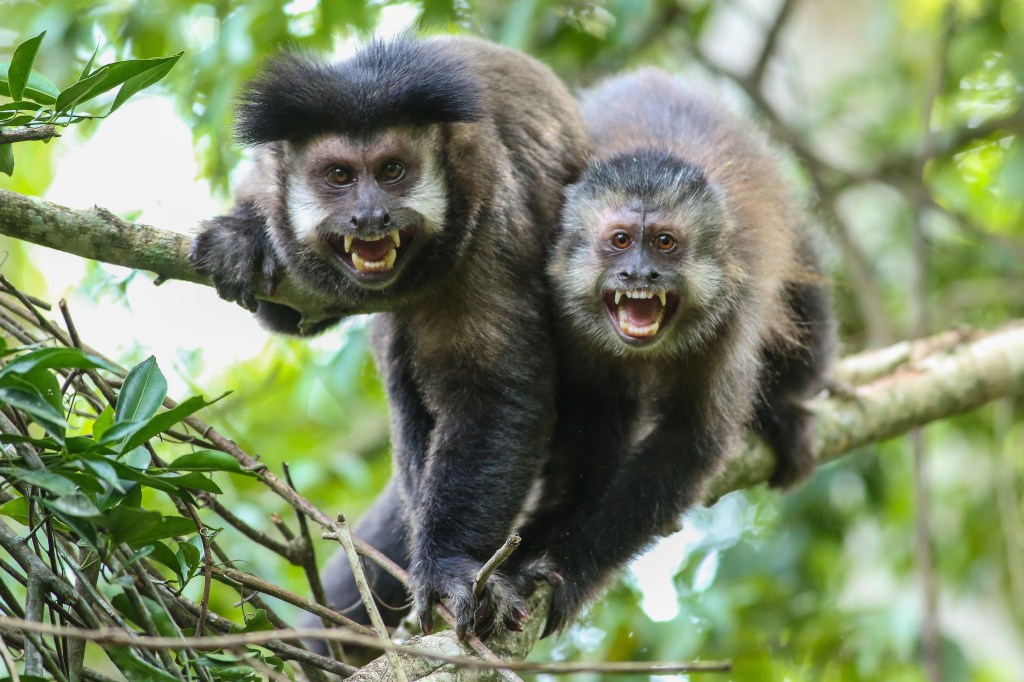
After I took that second picture from closer-in I decided it was time for me to go. I didn’t have the courage or linguistic skills to confront the other tourists about being so close, but I knew that at the very least I didn’t want those fangs sinking into my arm. I saw a park ranger around the corner and let her know what was going on, and she seemed to understand the situation.
I saw another group of folks staring up into a tree a little farther down the trail, and I almost fell over when I saw what they were looking at:
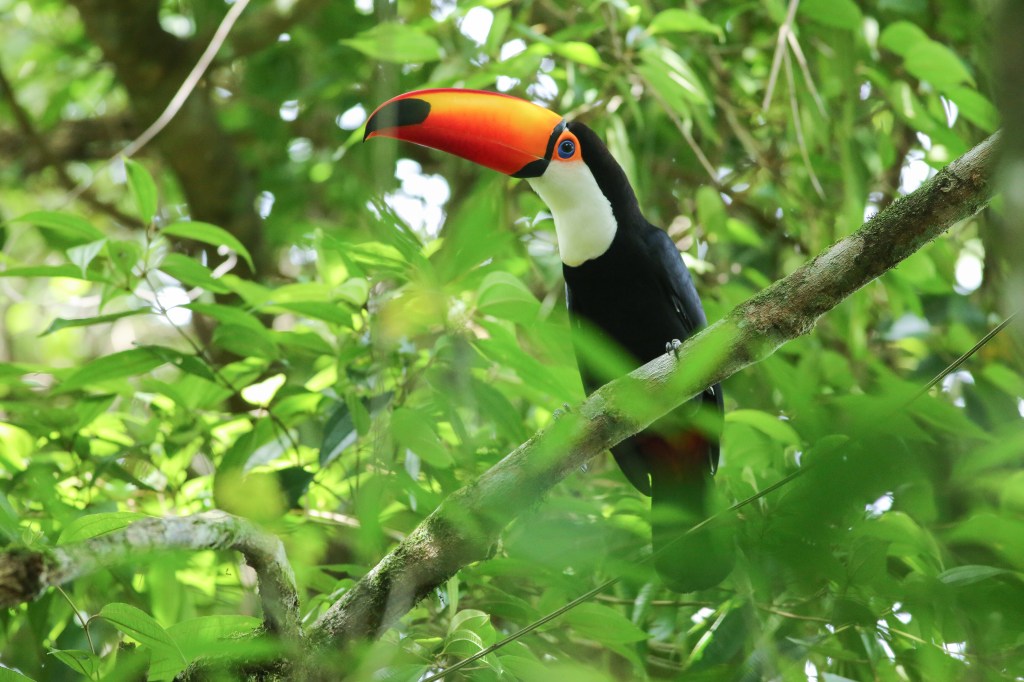
This is one of the “Globally Iconic Birds” I talked about in my initial Watson proposal, and just like with the Resplendent Quetzal (post) I had told myself I was going to be cool and not freak out when I saw the bird that all the ecotourists are obsessed with. But once again I was wrong. Such an incredible species. Just check out that vivid blue-and-orange face skin, and the color tones on the bill! Seeing a bird in real life is ALWAYS different than you’ll expect, no matter how many pictures you look at beforehand. What a special animal.
After walking that trail I headed up to the main falls area. The Iguazu river spreads out to a miles-wide shoals above the actual waterfall precipice, after which it all returns to a single channel. Because of this a normal trail wouldn’t be able to get visitors anywhere near the falls themselves. To solve this problem, the park has constructed an enormous boardwalk that lets people access the falls without swimming. It also solves the problem of people being able to get close to the edge: they’re contained between friendly boardwalk railings. It also means that the ecosystem continues almost interrupted except for the columns underneath.
The waterfalls were breathtaking. I didn’t have my wide-angle lens and so I only got telephoto shots and pictures with my phone.
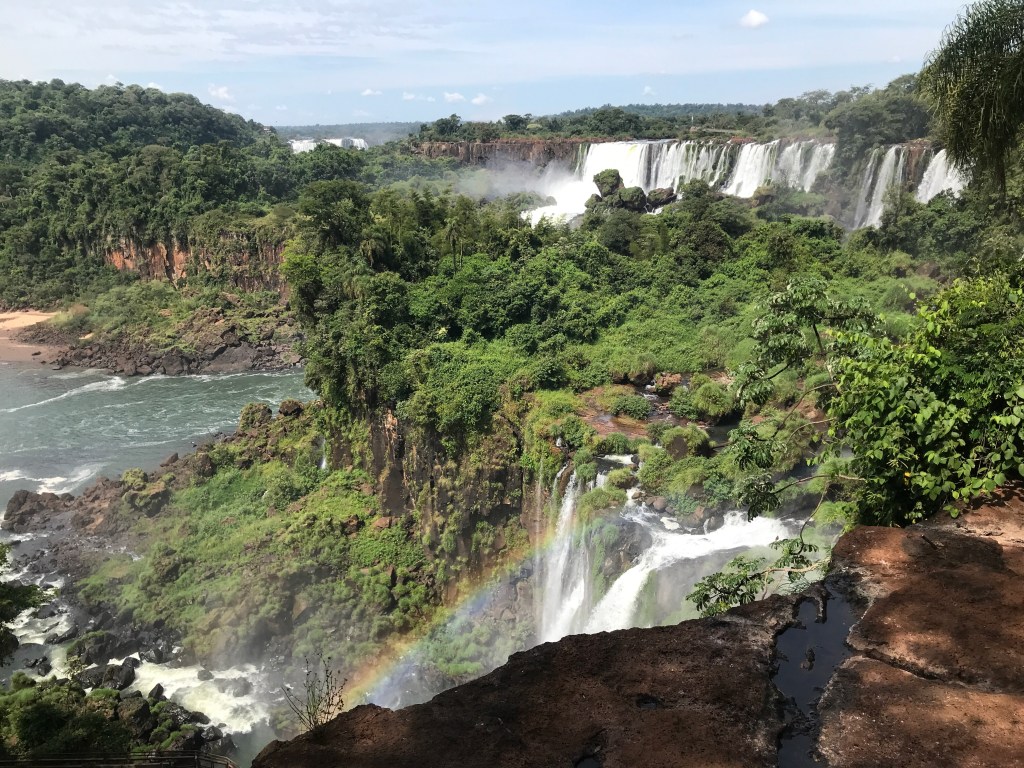
And here’s a video of the falls. A video… wow, maybe I’ll become an influencer, who knows?
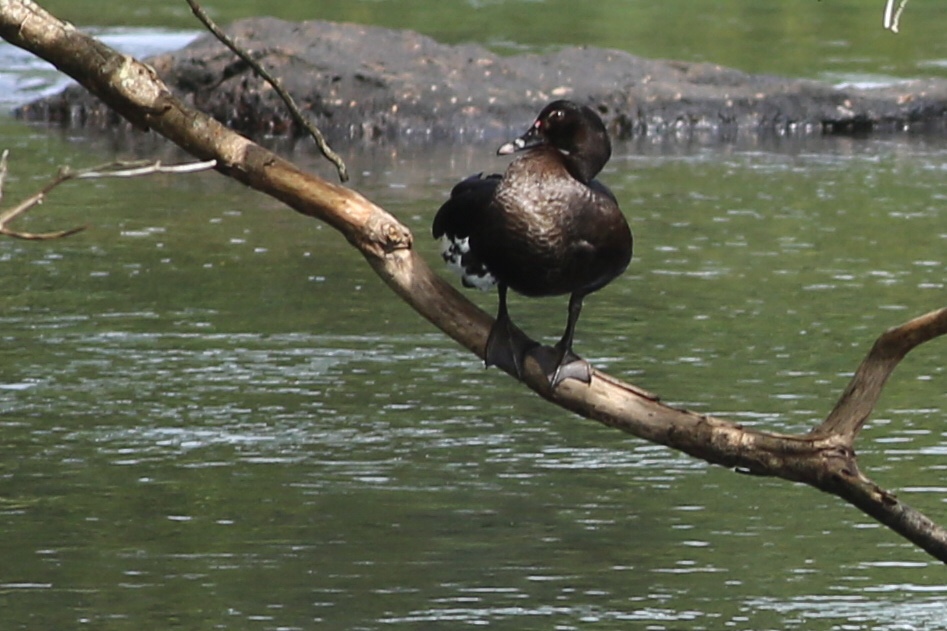
Another cool and unexpected surprise was seeing a wild Muscovy Duck for the first time! The domesticated version of this bird has taken over parks across the USA and a lot of the world, so it was cool to see the original thing:
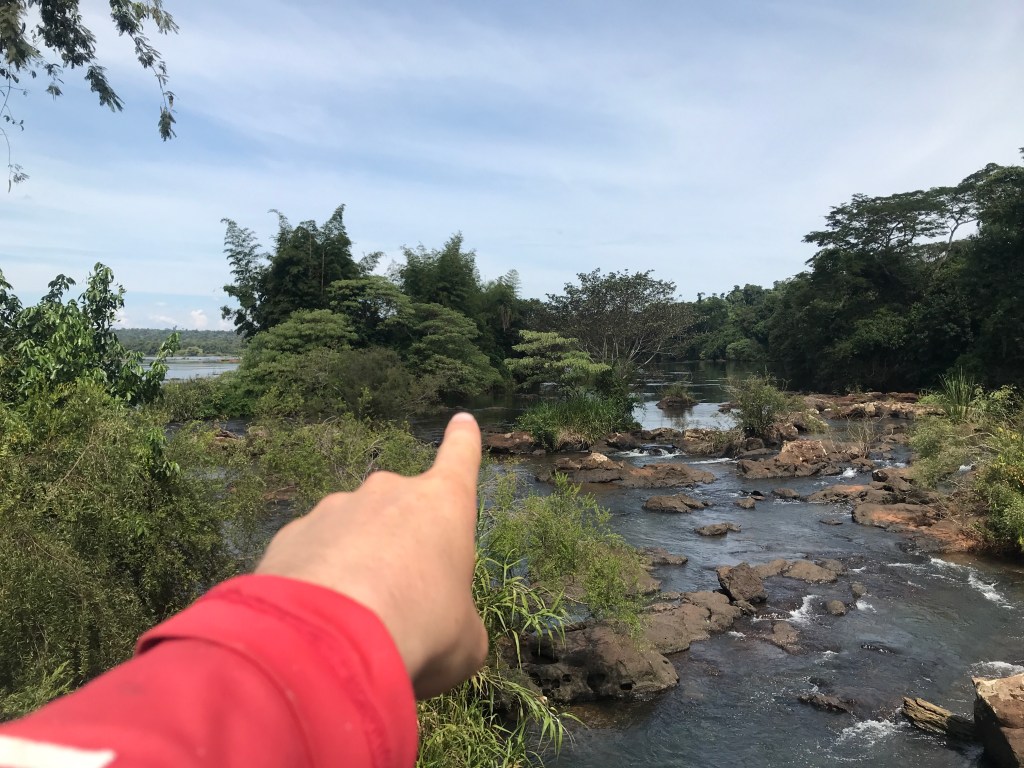
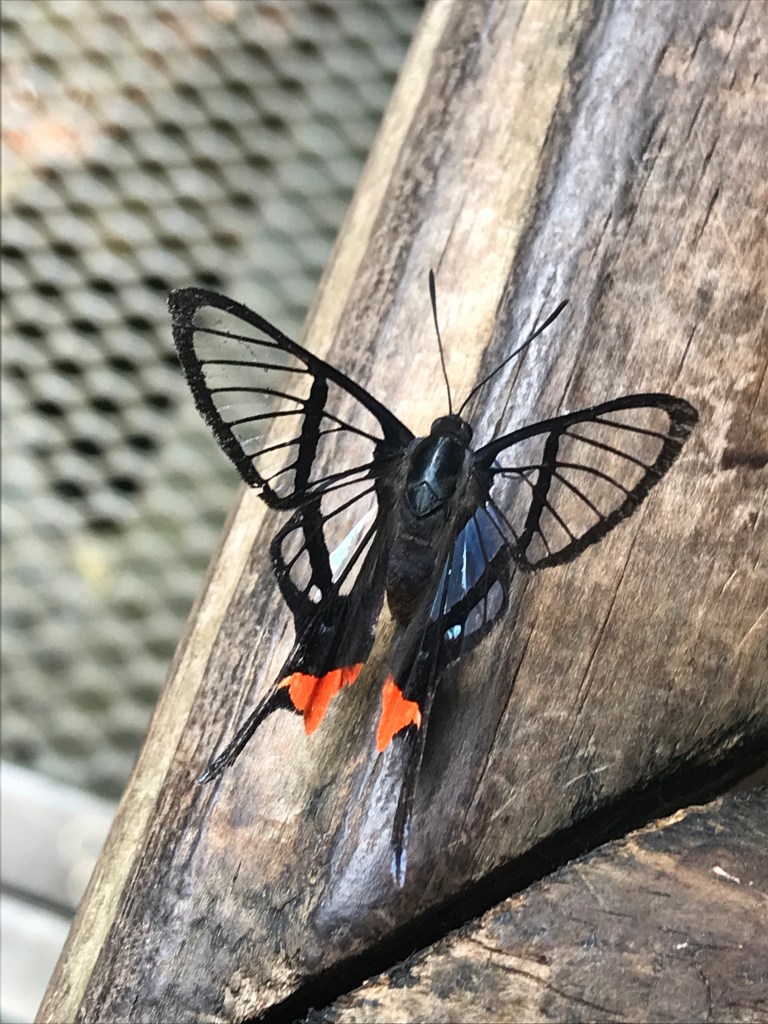
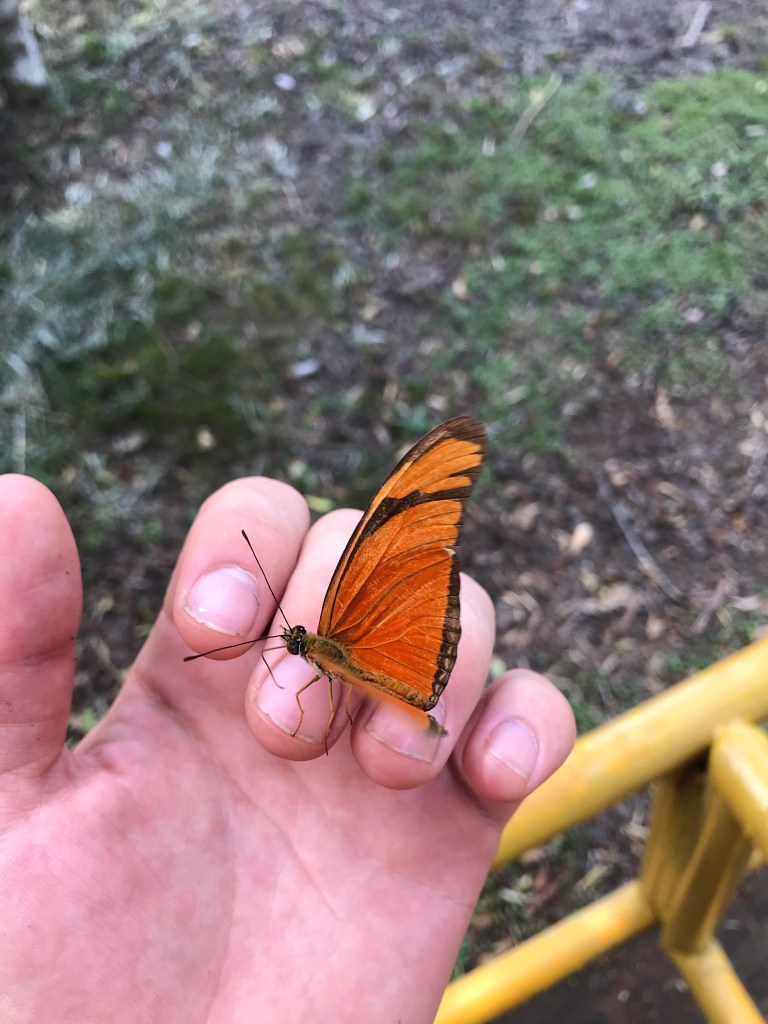
There were loads of butterflies. The one on the right is called a Julia. One of my favorites without a doubt.
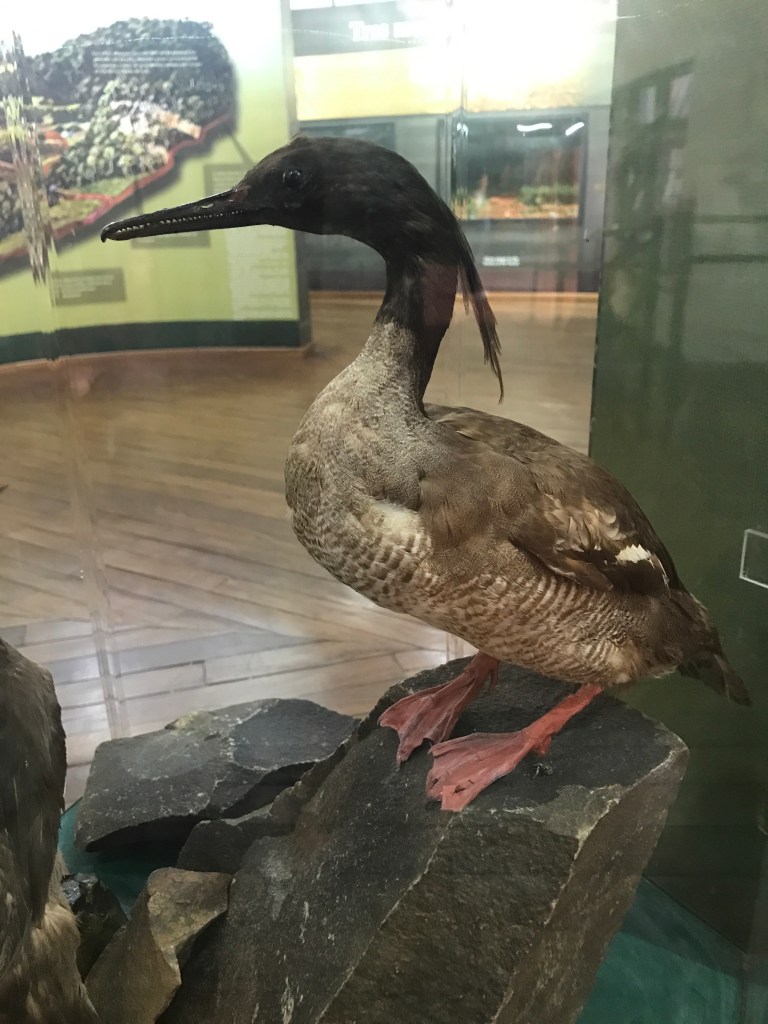
Since there was a little museum I decided to check it out: they had some very interesting exhibits, including a taxidermied specimen of the nearly-extinct Brazilian Merganser!
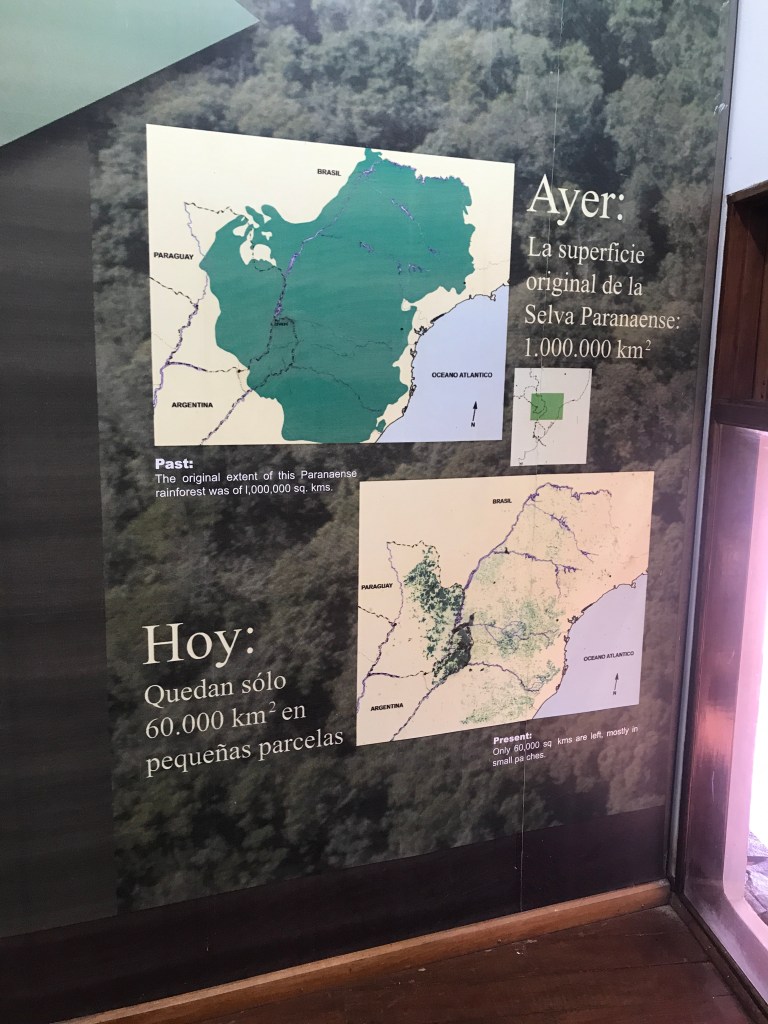
I headed back to the hotel. The next day I met up with Pocho Cabral, the manager of Karadya Birding Lodge, but that’s a story for the next blog post. Thanks for reading!


 Backcountry Birding
Leave a reply to Angus Pritchard Cancel reply