Apr 6-11, 2023
This story starts back in early February: while I was staying at Finca Ecologica San Luis in Costa Rica, I met a couple of birders from California: Kathe and John Hendrickson. They put me in touch with Fernando Pocho Cabral, the manager of Karadya Birding Lodge here in Misiones. Thank you both for making this connection!
Pocho lives in Puerto Iguazu, and was able to pick me up from the Beer Hotel on his way out to the Birding Lodge for the weekend. We picked up some food and hit the road, crossing to the eastern side of Misiones through the Uruguaí forest reserve. After about a 1.5-hr drive we arrived at Karadya.
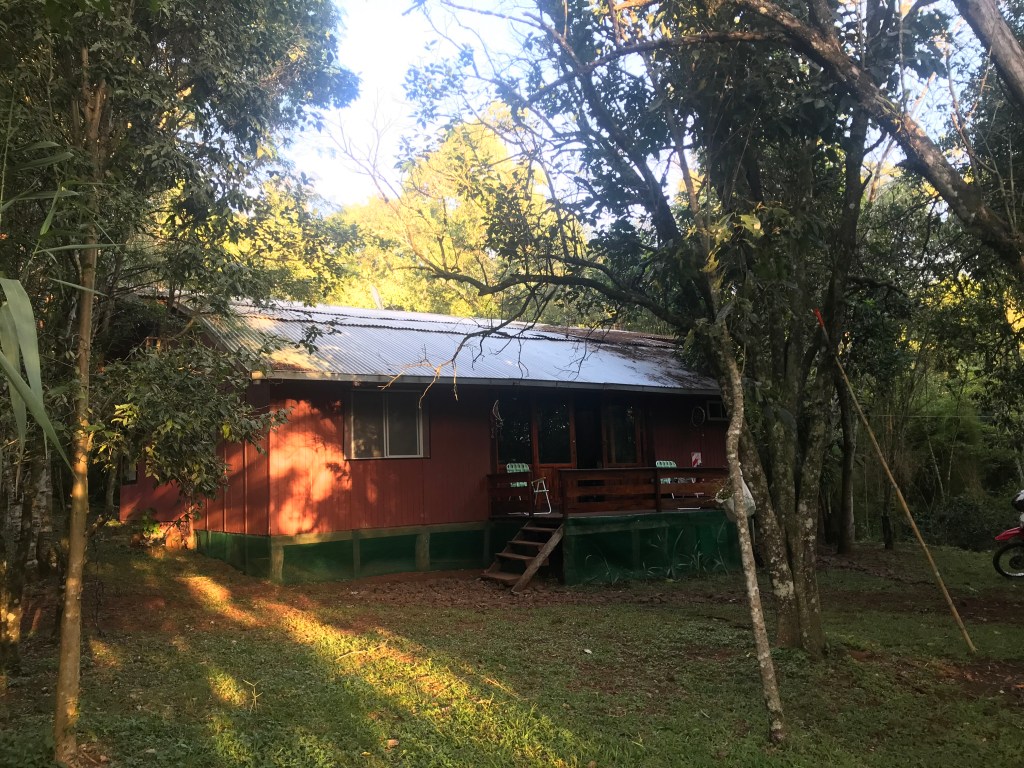
It’s a large private reserve owned by Julian, one of the first professional bird guides to work in Misiones, and has a great network of trails as well as a couple of lodge buildings with room for up to 10 guests. Pocho has worked as a bird guide in Misiones for over 20 years, and organizes birding tours which always visit Karadya. His friend Diego manages the lodge, and frequently spends a week at a time there. I forgot to mention, one of the coolest parts about the place is that it’s in a forested valley, completely cut off from cell signal or Wi-Fi. Truly rare to have such comfortable digs without the curse of internet connection. There was a guitar, so Tropical Screech-Owls and remembered songs were the soundtrack to the evening.
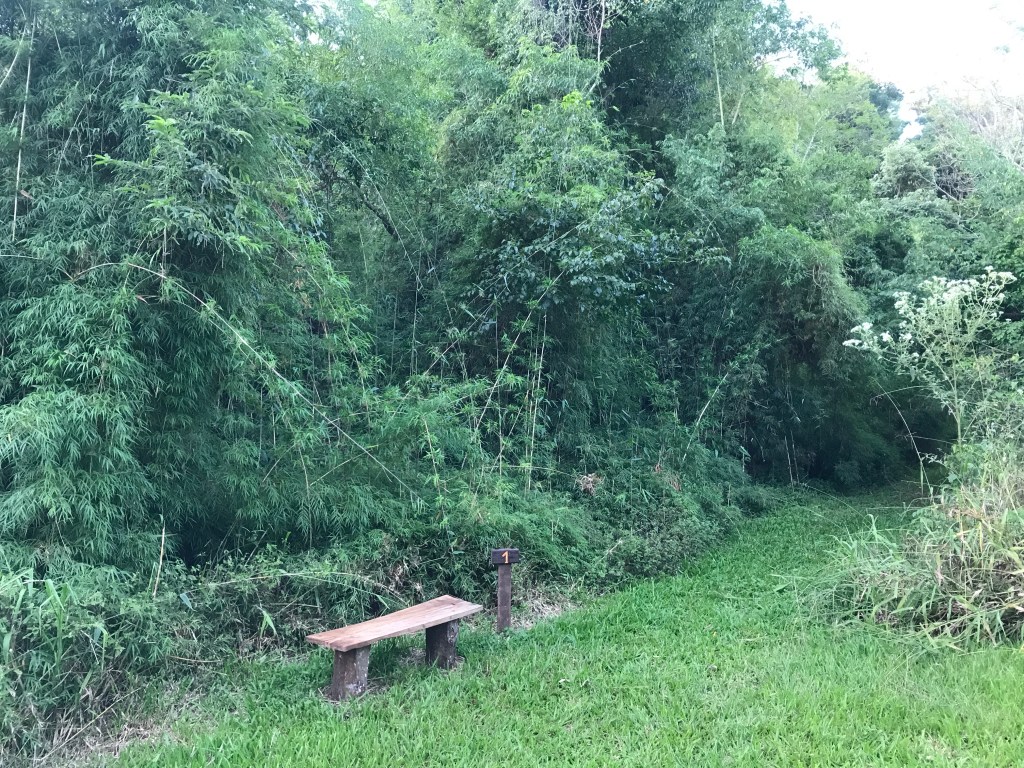
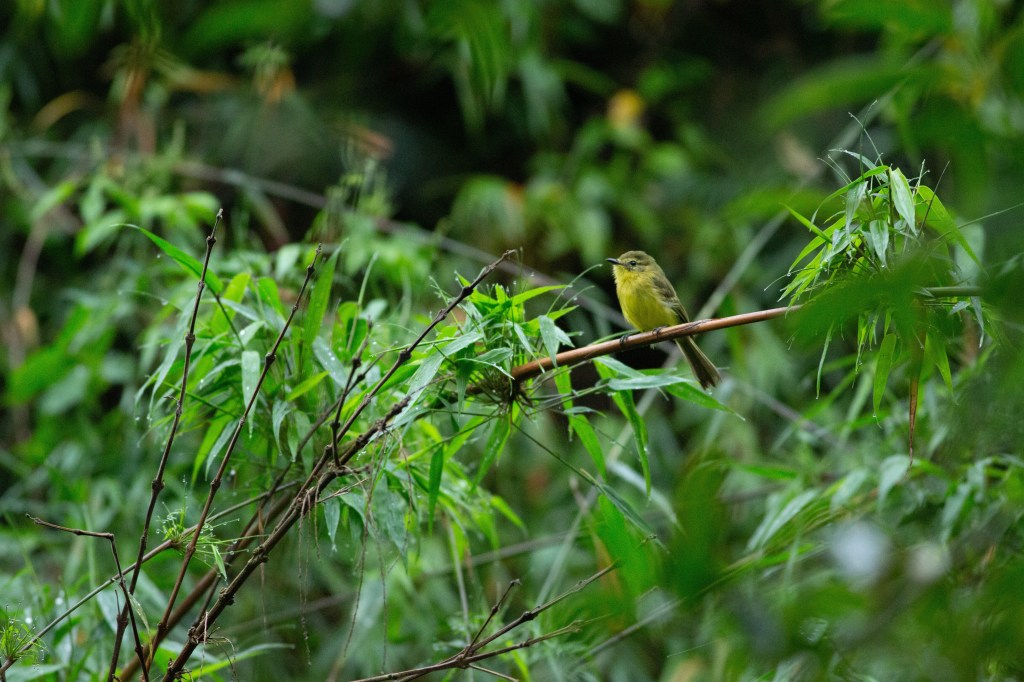
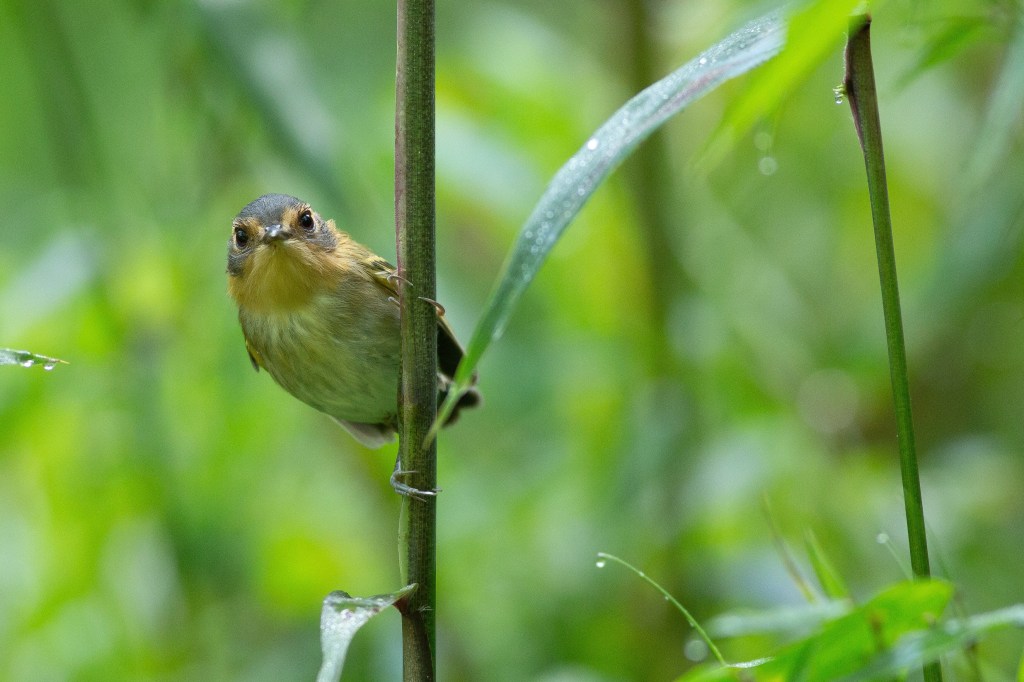
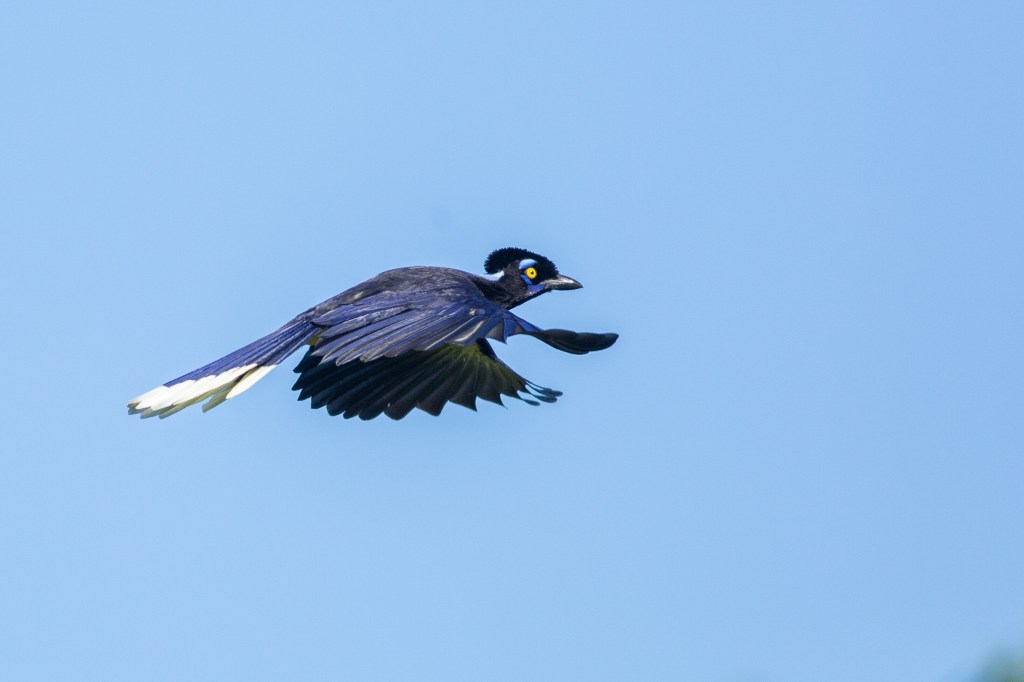
The following morning Pocho and I set out early on the property. The morning chorus was dominated by a mix of the persistent piping of a Sibilant Sirystes, the declarative song of a Bertoni’s Antbird and the constant exclamations of a flock of Plush-crested Jays. In the background, four or five Variegated Antpittas announced that they were still alive and well with a low, dove-like cooing, and a Spot-billed Toucanet groaned awkwardly from a hidden treetop perch. We spotted a trio of Red-breasted Toucans which the jays shortly chased away. There’s a small pond on the property, but it was still surprising to see a Green Kingfisher perched on a palm branch without any water in sight. We headed up the trail and were treated to very close views of Ochre-faced Tody-Flycatchers and Yellow Tyrannulets. The Bertoni’s and Dusky-tailed Antbirds declined to show themselves, hiding in the dense bamboo thicket with the Rufous Gnateaters and Variable Antshrikes.
Later in the day Pocho pointed out a unique noise emanating from a different stand of bamboo: Spotted Bamboowren. This is a very cool and unique species that I had been hoping to run into but hadn’t expected to. It too stayed well out of sight. “Ese bicho” said Pocho (who also spoke perfect english) “no se suele ver.” — “that little bugger is not easy to see.” I trusted him.
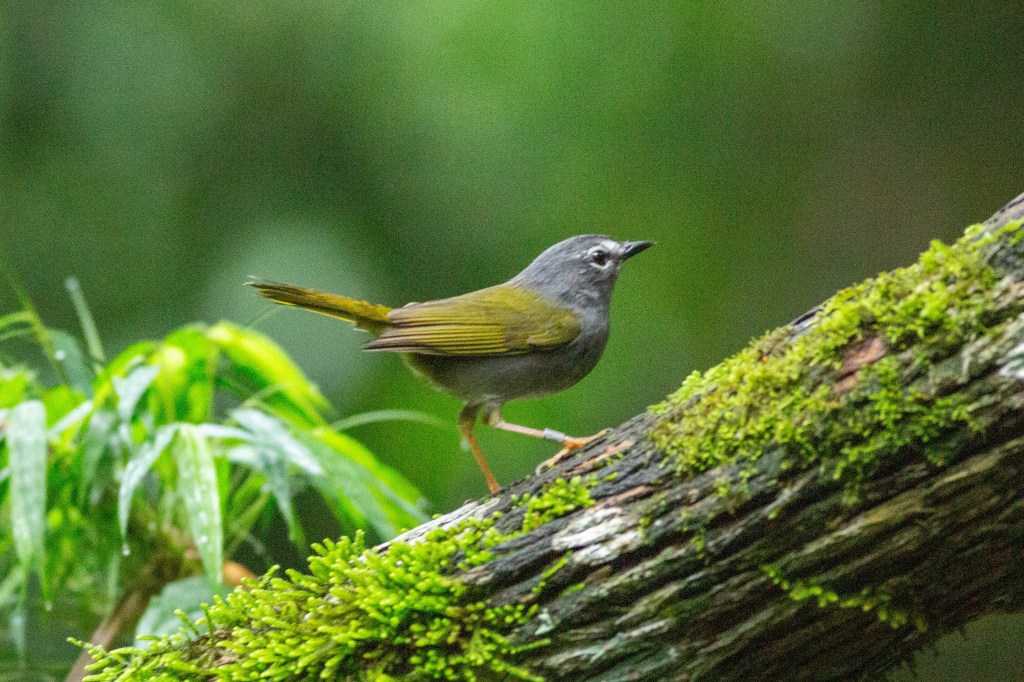
There was also a point in the trail where a beautiful mossy branch had fallen across, making a perfect perch for a photo-op. There was a White-browed Warbler nearby and so we played the song a couple of times and it perched for about a quarter of a second exactly where we’d hoped. Unfortunately the light was low enough that the picture came out pretty blurry, but I was very surprised a couple of days later when I downloaded it to see that the bird was banded! There aren’t many nearby banding stations (and the numbers aren’t even visible in the photo), so Pocho is still working on figuring out where this guy could have got his jewelry.
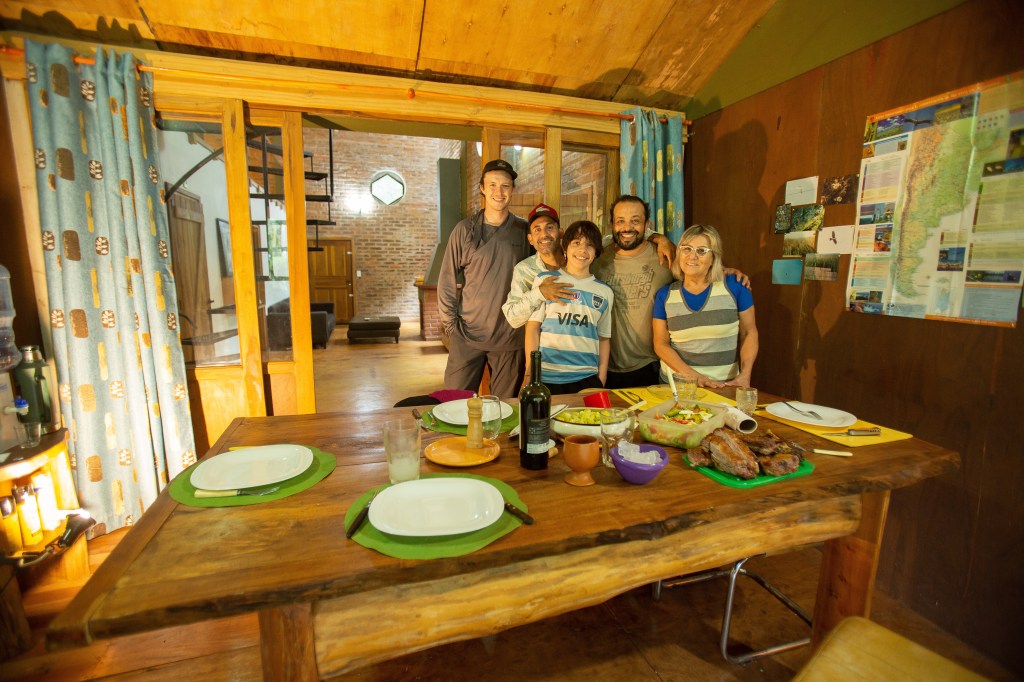
That evening Diego and Pocho prepared a traditional Asado, ribs and brisket smoked over the wood of a naturally-fallen Palo Rosa tree, an Atlantic Forest endemic. There are few places left where Palo Rosa still grows; since it’s one of the most valuable woods from the area it’s been felled almost everywhere. The Asado had a pretty incredible delicate smoky flavor that I won’t soon forget, and will probably never get to taste again.
Pocho needed to return home for a few days and so did Diego and the family, and while the plan was originally for me to return to Iguazu with Pocho, they talked it over and to my surprise they offered that since I didn’t have any commitments, I could stay at the reserve while they were gone. I hesitated for a second, since it meant that I’d be completely cut off from the outside world, then slapped myself on the wrist for thinking like that and enthusiastically said “yes” and “thank you very much.”
They headed out and I was left on my own in the jungle. It was a really great chance to slow down a bit since I’d been moving around pretty constantly up until that point. I was forced to stop emailing and trying to plan out my next moves, and an incredible feeling of stillness soon set in.
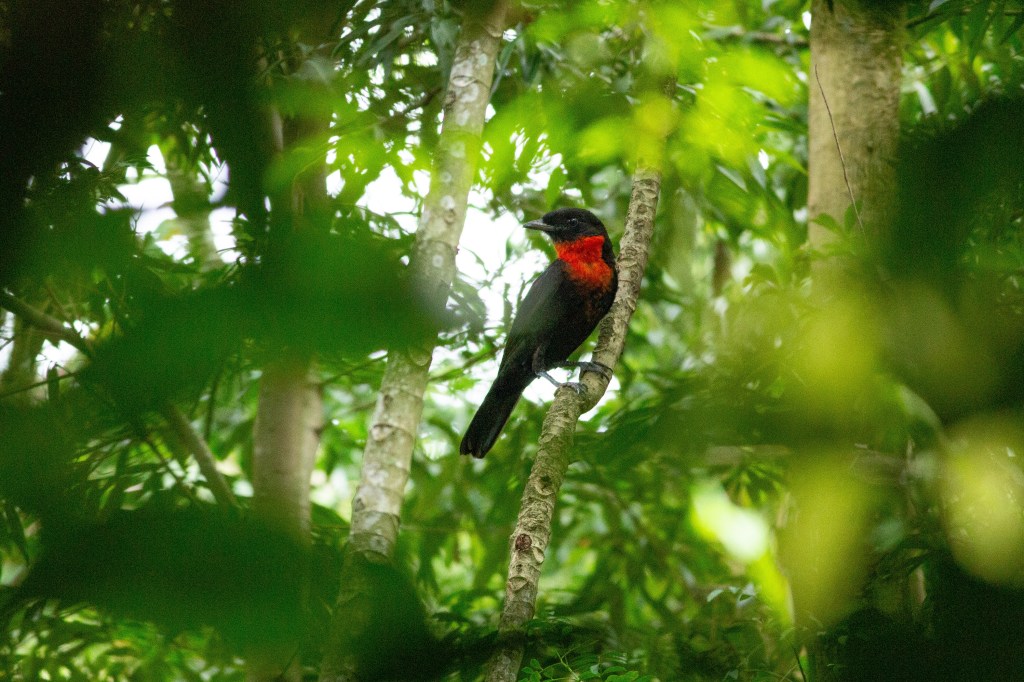
I went out early in the morning, liberally applied insect repellent to all parts of my person, and sat under a tree that Pocho had suggested as a place to sit and wait. After a few minutes, more birds resumed their singing and started to move around again. Another few minutes went by. An ant crawled over my shoe. Suddenly it sounded like a branch had fallen off a nearby tree, hitting leaves on the way down, but then it swooped upward and landed out of sight. I quickly but silently stood and crept to a spot where I could see where it had landed. Lifting my binoculars, i got a little knot of excitement in my stomach: it was a Red-ruffed Fruitcrow! This weird group of birds are not related to crows; they are in fact the largest members of the Cotinga family, most of which are small brightly-colored birds of canopies. One of those groups that doesn’t really have a North American equivalent, making it especially exotic for birders like me. I was able to get a half-decent shot of the bird, and later learned the Guarani name: Yacutoro.
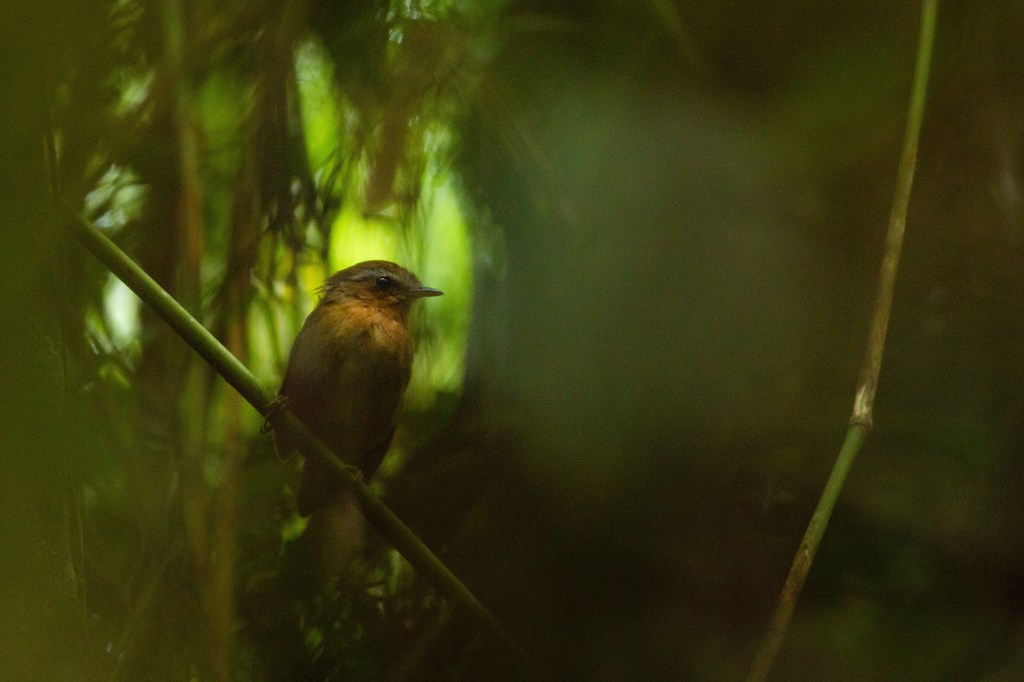
I tried the same strategy at another spot nearer the house, and got a couple of shots that I’m happy with (admittedly with the use of a little playback). One of the hardest birds here to photograph is undoubtedly the Rufous Gnateater. It makes the same sound a disappointed person makes when they purse their lips and suck inward through their teeth, and so it’s earned the Spanish name “Chupadientes” or “Toothsucker.”
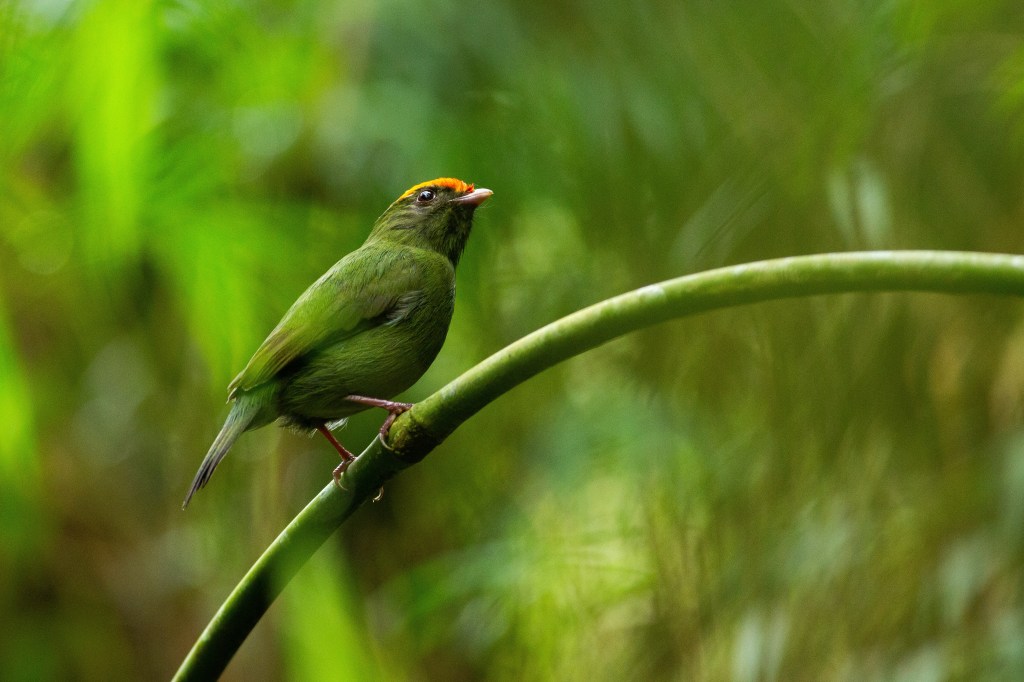
I was very grateful to this immature male Swallow-tailed Manakin for picking such a clear branch and checking me out for a few seconds. Next year all that green will be blue, and he’ll have two long tail plumes to help impress the ladies as part of an exclusive dance crew.
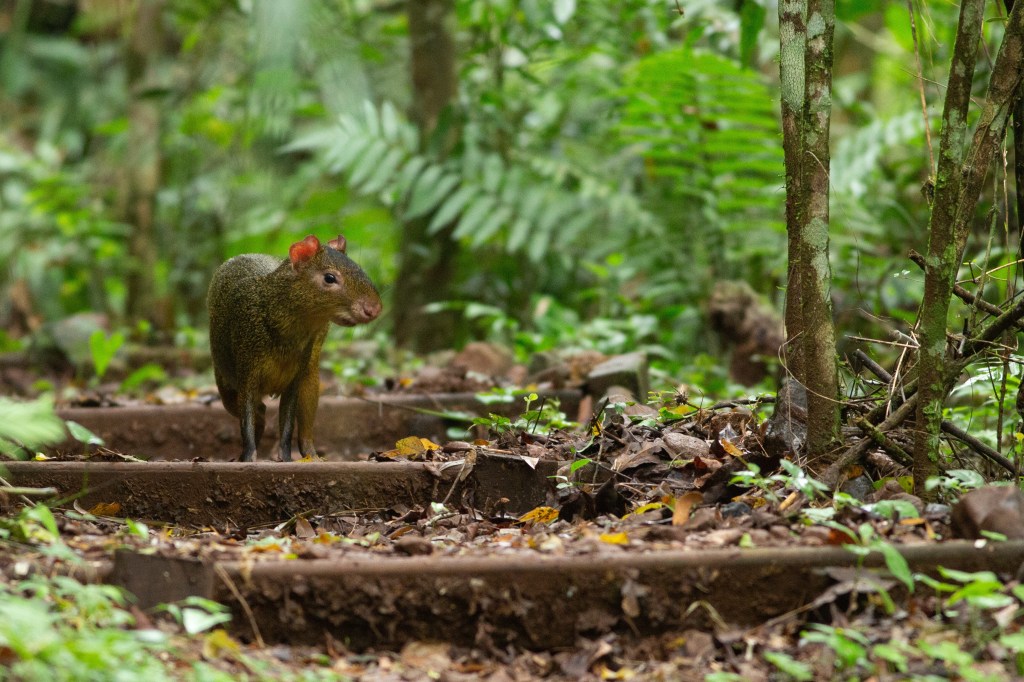
I also really surprised this Agouti, who was not expecting me to be sitting there at all.
After five nights total at the reserve, I caught the morning bus back to Puerto Iguazu, where I met back up with Pocho. We stopped off at the Jardin de Picaflores, one of the only places in Argentina with hummingbird feeders (other than Pocho’s house).
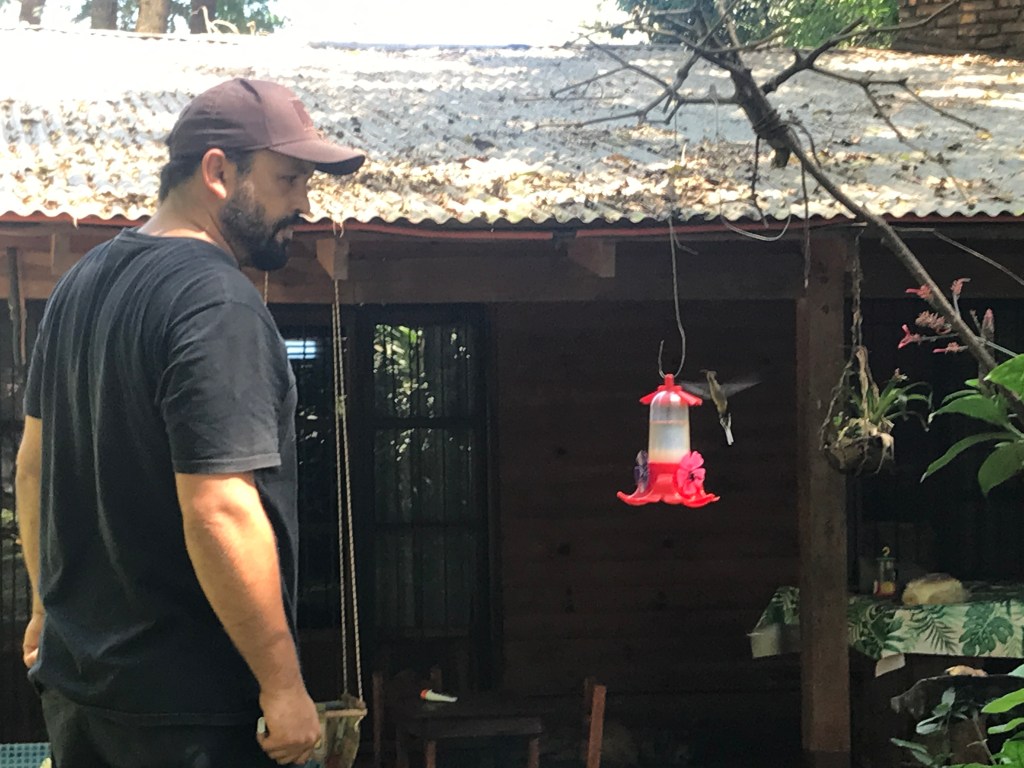
A huge thank you to Pocho (@birding_iguazu) and Diego (@diegoalfredofarias) for such a wonderful time at Karadya. Anyone interested in staying at the reserve should reach out to them via email or WhatsApp at +54 9 351 3851829. It’s an incredible spot that’s not to be missed if you’re planning a trip to Northeast Argentina. It has quite a few birds that aren’t likely or even possible at Iguazu National Park, and the road there is paved the entire way (just a short dirt entrance road to the reserve itself that’s possible in any vehicle).
Pocho can be reached directly via his WhatsApp: +54 9 3757 441666. He’s an excellent guide with a dependable vehicle, and has perfected a 2-day tour which covers a huge amount of N. Misiones birding. Starting with the National Park (where he has special early access, up to two hours before the normal opening time of 8am!) the tour includes birding the Macuco Trail, seeing Iguazu Falls, then over to Karadya for lunch and dinner. The next morning is spent birding at Karadya, then on the way back to Iguazu the next day he takes birders to some secret roadside spots for Sharp-tailed Streamcreeper and Yacutinga (Black-fronted Piping-Guan). I would highly recommend it.
I caught a bus back to Buenos Aires—the most comfortable one I’ve been on so far, from Crucero del Norte—and shortly headed out by plane to San Salvador de Jujuy in the northwest of the country.


Leave a Reply