I am writing blogs again! I have been back in the states for about 9 months now, but I am going to try and finish journaling my Watson in blog posts. This post covers the days of July 15-16, 2023, when I visited Komodo Island in Indonesia.
I sat down heavily in the shade of a large boulder, shivering from fever chills with sweat dripping down my temples. I had burned through my 1-liter water bottle in just an hour, but I could tell I was still sorely dehydrated. Middle-aged tourists, some with little kids, streamed up the trail effortlessly as I tried to play it cool while actually gasping for air. This is so stupid, I thought, how can I be THIS sick? Not even 500m in and I was giving up on a trail I could have jogged up just two days ago. I decided it would be worse to continue and risk passing out than to simply face the embarrassment of turning back. I snapped a picture of the view and gingerly made my way back down to the dock where the boat was waiting. The captain gave me a curious look when I appeared before the other tourists from our group, and I explained that I wasn’t feeling well. “Oof,” he replied, “this will be a long day for you.” he said with a chuckle. Why did I have to get sick today, out of all days?
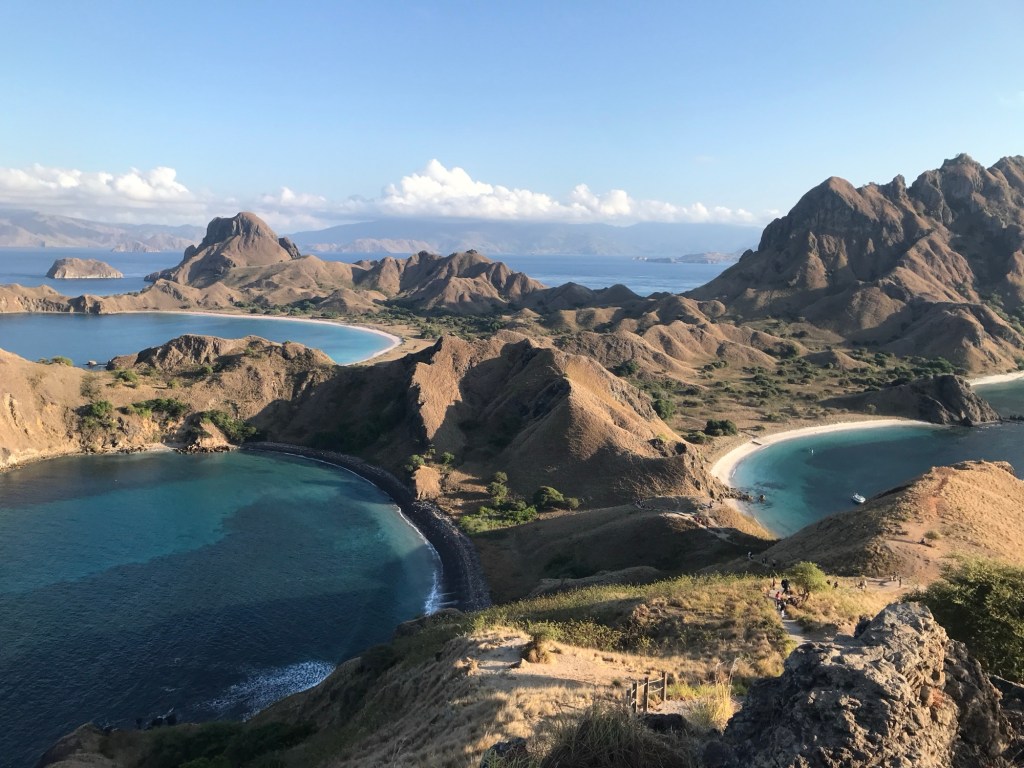
Back on the boat, we headed through more heart-wrenching scenery as I gulped bottled water and tried to ignore a pounding headache. I swallowed another Imodium. In just 15 minutes we arrived at yet another mind-blowing spot: a pink-sand beach. Most of the sand particles are white quartz, but crushed bright-red coral grains turn the beach an unbelievable shade of pink. Of course, the water was crystal clear and of course there was an incredible variety of reef fish a few meters out into the bay. In my delirium I somehow didn’t take a picture of the beach, but I do remember the snorkeling. Enormous corals, anemones, dozens of clownfish and pretty much every other group of reef fish I think I have heard of.
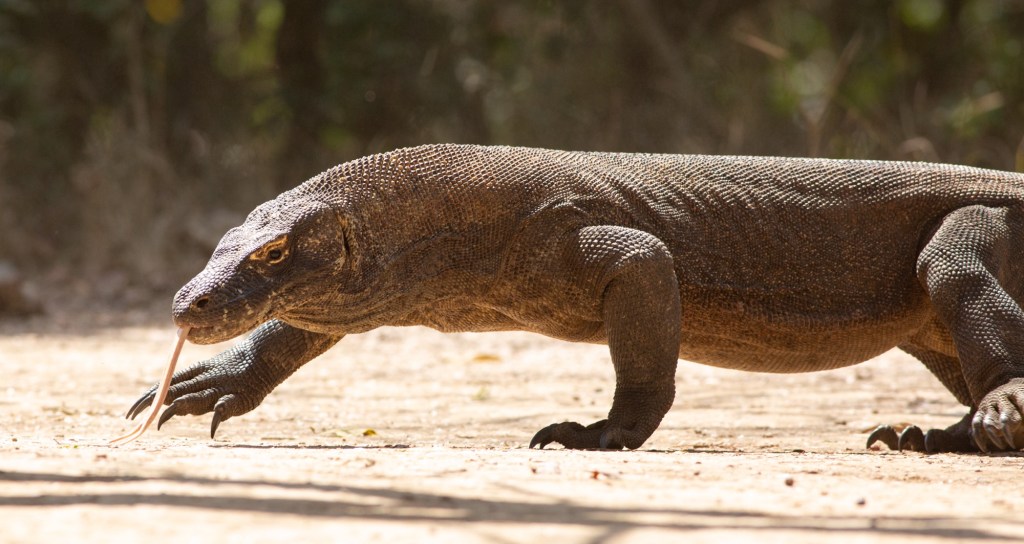
Another few minutes on the boat and we arrived at the island that has made this archipelago world-famous. We landed at the end of a dock in deep enough water to accept much larger ships, and I spoiled the surprise for myself by scanning the shore with binoculars. Grinning despite the headache, I didn’t say anything to the other tourists as we walked to the shore. We were greeted by a couple of charming rangers from the National Park, and this fellow:
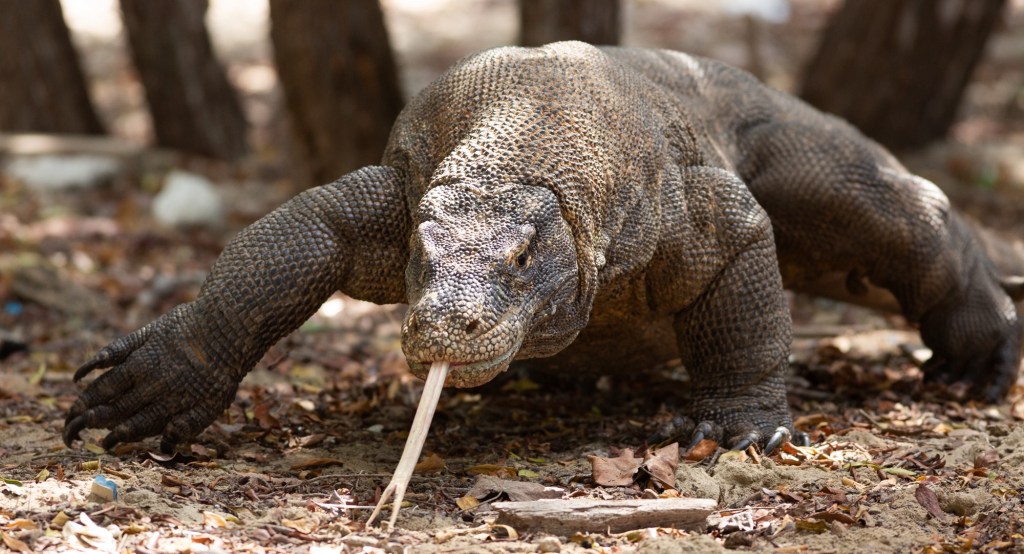
The first actual description of Komodo Island that I read was in a Douglas Adams book, of all places. It hasn’t changed much since he visited in the 90’s, it seems. The tour guides all still carry walking sticks made from a forked tree branch, which could theoretically be used to physically impede a Komodo Dragon’s advancement towards their person. Just as I noticed this detail, our group merged with a couple other groups who were all trying to get a look at this particular dragon. I then witnessed one of the more terrifying tourist-guide-nature interactions that I have seen in my life: a multinational herd of sun-shirt-bearing visitors clamored in half a dozen languages as they surrounded an 11-foot water-buffalo-eating venomous lizard. The guides struggled to maintain a perimeter around the leviathan beast as it marched unconcernedly across the sandy ground, and other smaller dragons (which ran pretty fast) kept making the guides’ job a lot more complicated as they kept running towards the tourists from all sides. I think the ‘dragon’ sticks are far more often used to impede tourists that try to approach these carnivorous apex predators than vice versa.
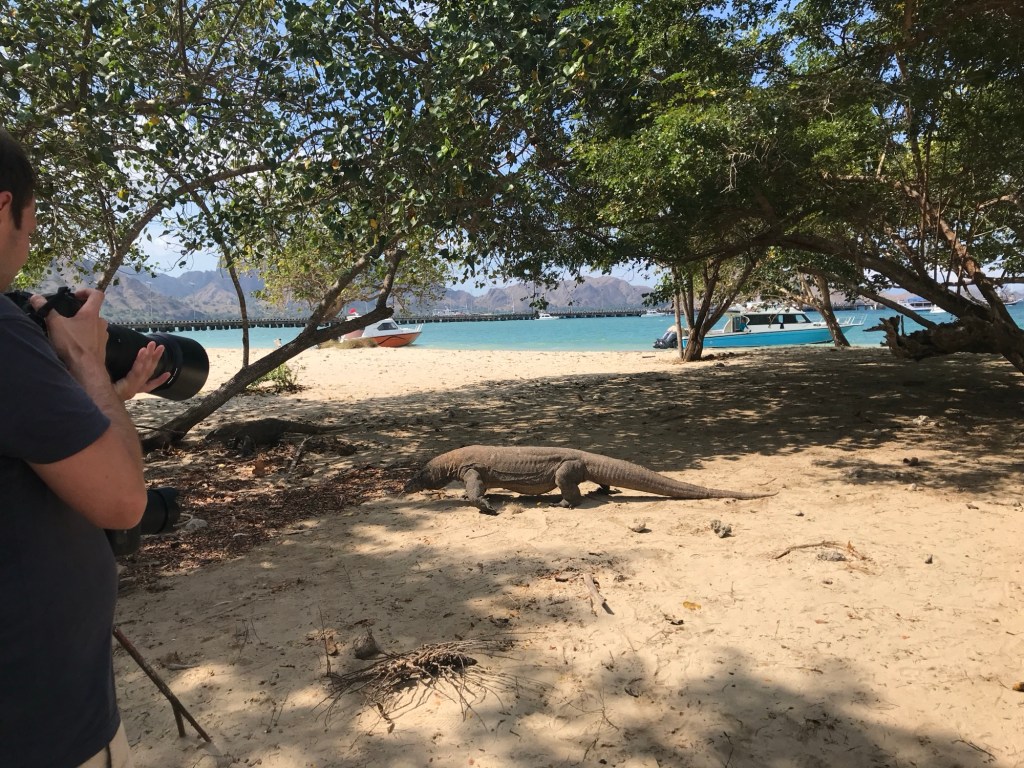
This was by any measure a fascinating bio-anthropological moment, so I observed as much as I could before speed-walking over to the toilets. My tour group had re-formed and so I tried to pretend like I’d never left as our walking guide explained the plan. We then set off on a short hike into the woods, which I can vaguely remember. I heard and saw my first Black-naped Oriole shortly after leaving the beach, followed by a couple of Wallacean Drongos and then a trio of Pied Imperial-Pigeons going to town on a fruiting palm. But by far the most exciting birds announced themselves with a hoarse squawk from a distant treetop: a pair of endangered Yellow-crested Cockatoos! This was my second-most-wanted species to see on Komodo (after the dragons of course), a very exciting place to see such a cool bird, my first ever Cockatoo species. They flew before I could lift my camera; I will blame the fever for my reaction time.
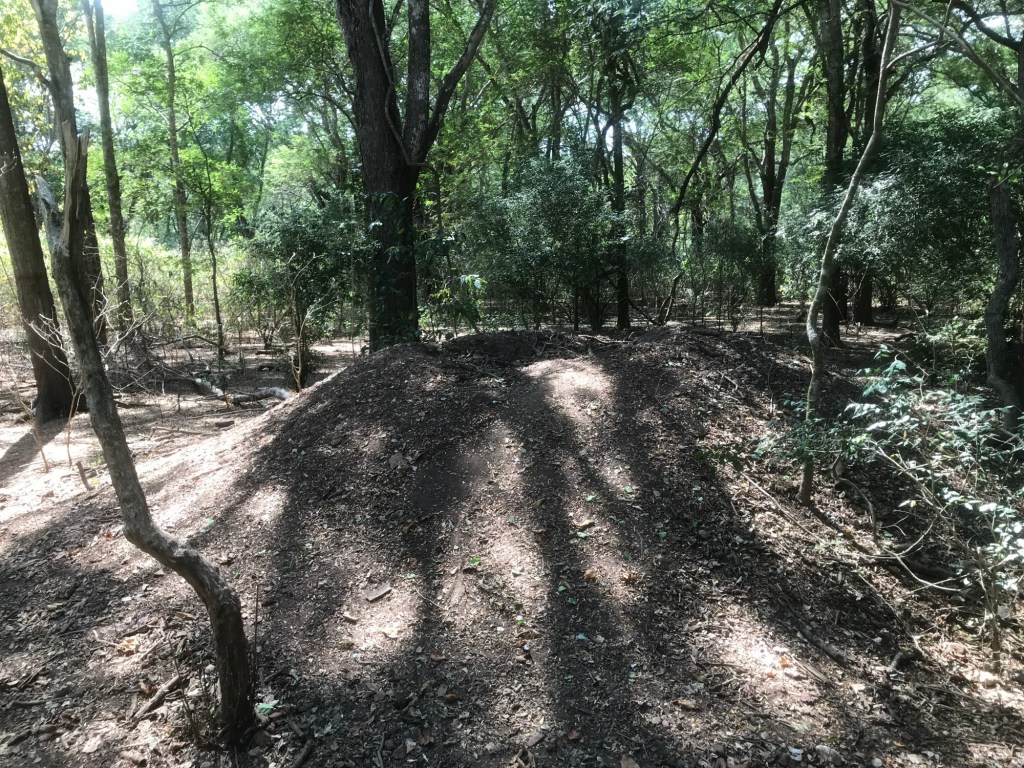
On the way back to the beach we passed two interesting things.
One, which I found more interesting than the other group members, was the massive mound nest of the Orange-footed Megapode. Megapodes are a group of chicken-like birds that somehow figured out how to use the heat from decomposing plant matter to incubate their eggs. They make a huge compost pile, dig a hole in the middle and lay their eggs inside. The organic matter heats up and incubates the eggs for 2-3 months until the chicks hatch out, fully feathered and even able to fly. This strategy probably works a lot better on islands with fewer insatiable reptilian monsters constantly searching for their next meal, but it must work at least a little here, since the nest seemed to be the handiwork of more than a few chicken-sized birds.
The second thing was a very relaxed resting dragon, which the guides immediately started offering to take tourists’ pictures with. Each party stood or sat a few feet behind the dragon’s tail, and the guide framed the picture to make it look like they were sitting right next to the animal. I chose snobbery and opted not take a cheesy picture with the world’s largest lizard.
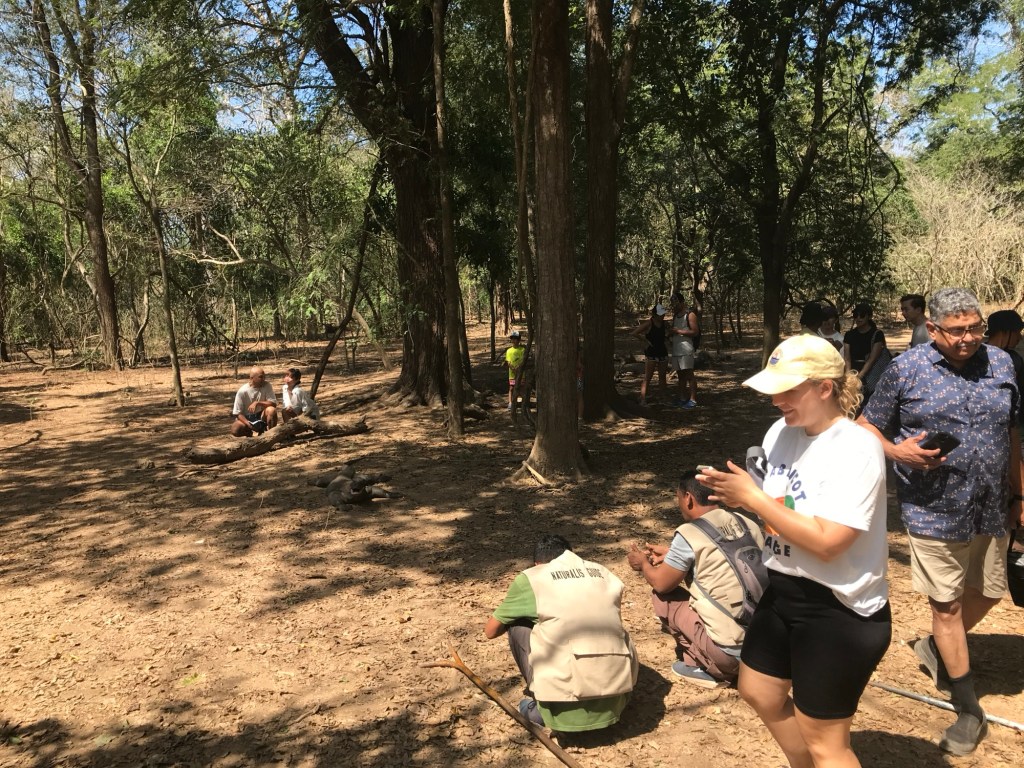
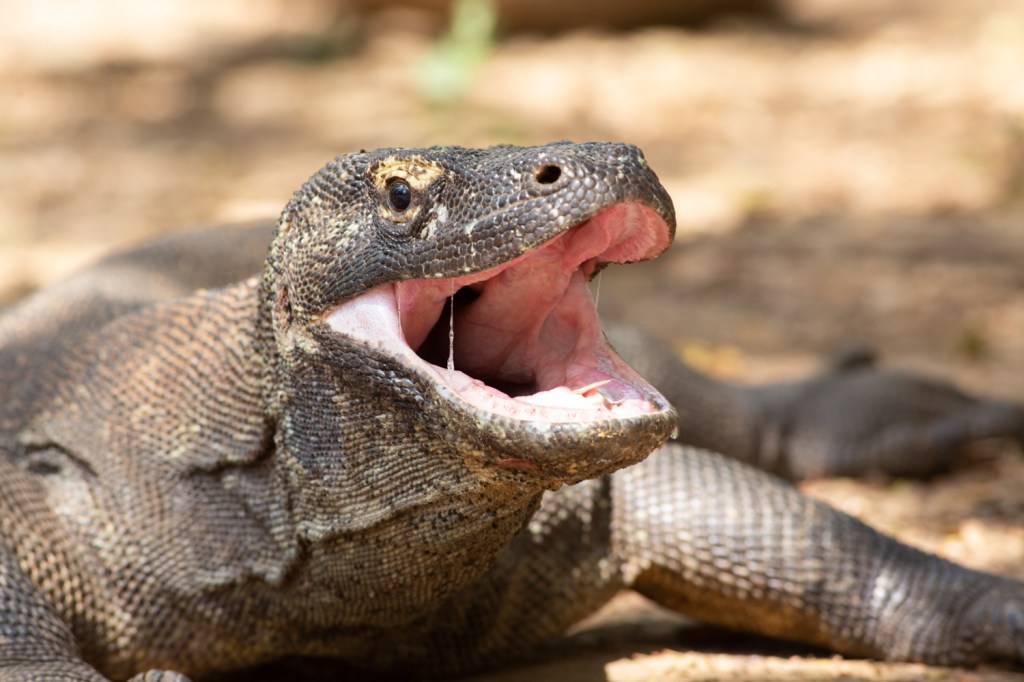
At this point I was feeling pretty faded, and so it was nice to sit in the shade while the other group members ate their lunch. I cannot imagine what might have happened if I had put food in my stomach, but I’m glad I didn’t. There was another birder there with a different group (I could tell because he was photographing some small brown birds instead of large, stately reptiles) and I wanted to talk to him, but everything I thought of saying sounded pretty dumb in my head. So I just sat and drank my water.
On the boat ride back we stopped at a few more snorkeling spots, but I opted to stay in the boat and enjoy the sea breeze. I did get to see a few green sea turtles coming up for air while the others snorkeled. A couple of them were really big!
Needless to say, by the time I collided with my hostel bed back in the town of Labuan Bajo, I was already asleep. Why on earth did I put myself through that ordeal while so sick? This is an excellent question. I had planned a two day trip to the area before flying to Sulawesi, and birded the hills on Flores on the first day, so I had no other options if I was to see Komodo itself. Here’s how it really shook out:
I should start by noting that when tourists visit Komodo, they stay on the western end of Flores island, in a town called Labuan Bajo. But as is the case in many tourist areas, everything bears the famous name; I think quite a few tourists thought they were sleeping on the island of Komodo. It definitely seemed that way chatting with people in the town. On the evening I arrived, the boat-trip lady at the hostel reception had gone home, so I organized a scooter driver (ojek) take me to a forest birding spot the next morning. I’d book the boat trip the next evening to leave the following morning. I grabbed a dinner of fried chicken, fresh vegetables and rice with iced tea, and went to bed. (an important detail)
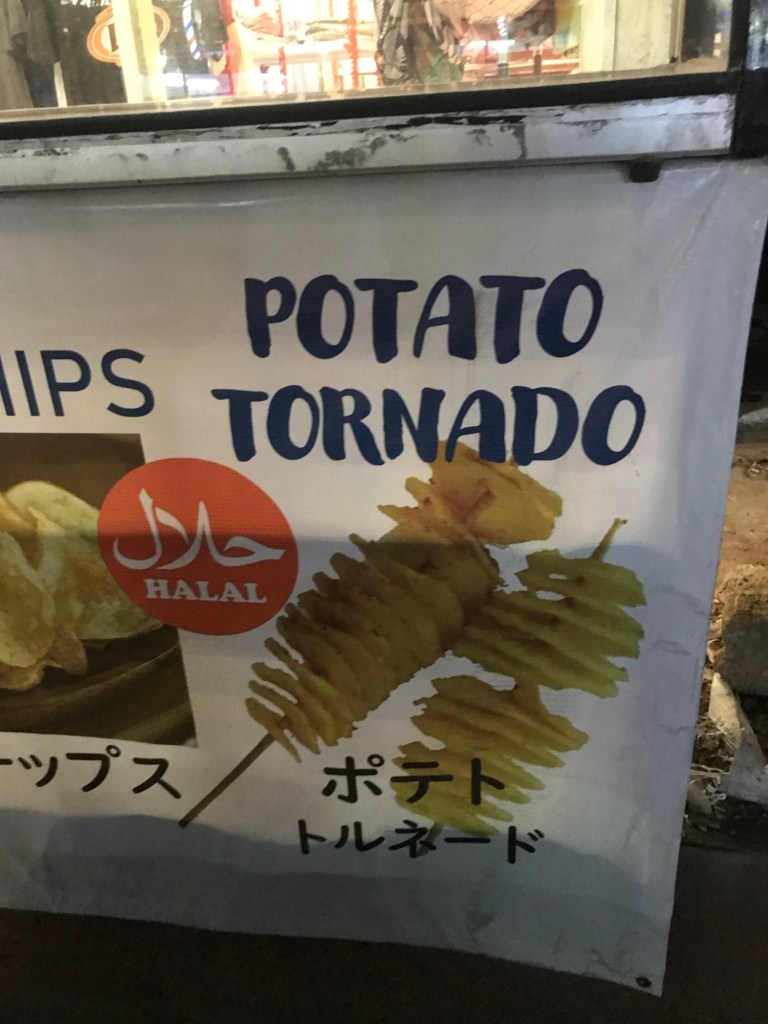
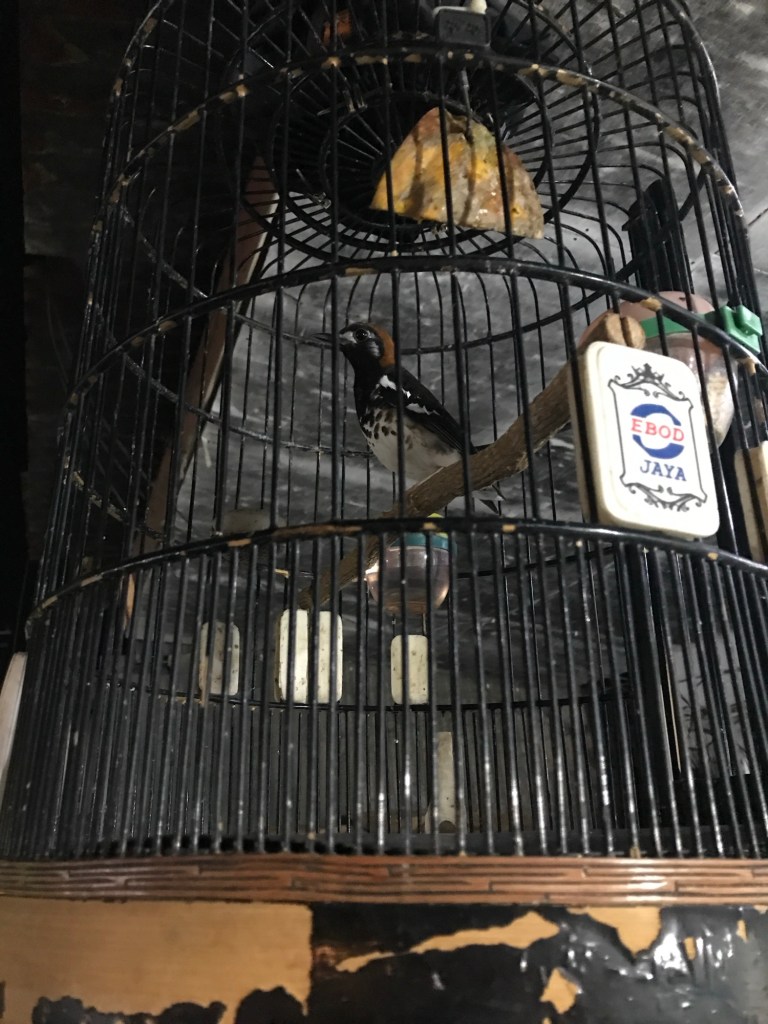
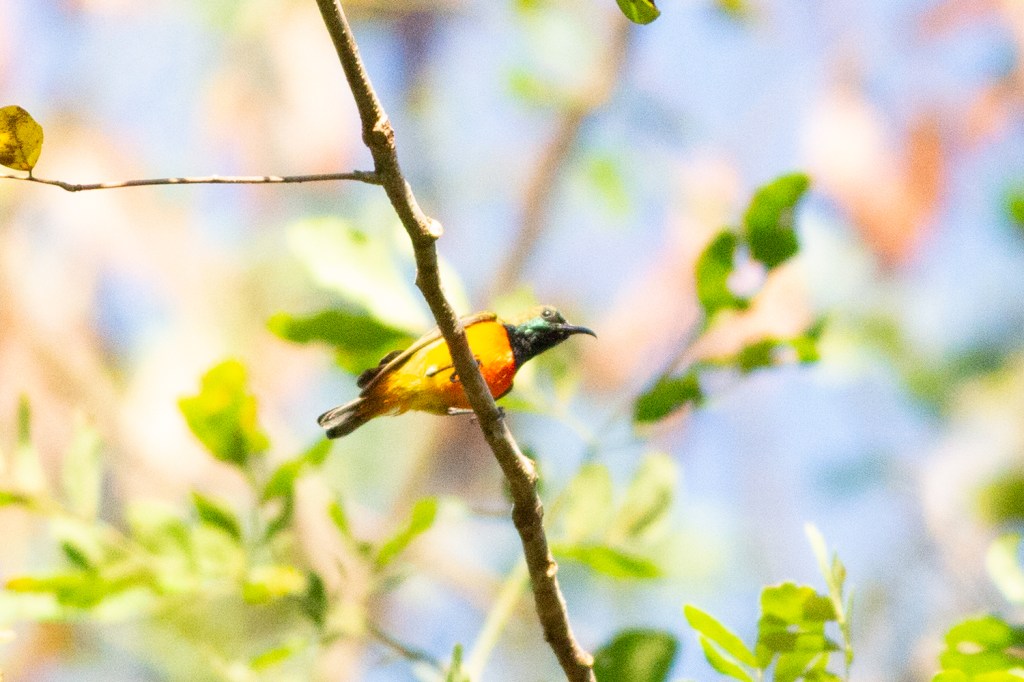
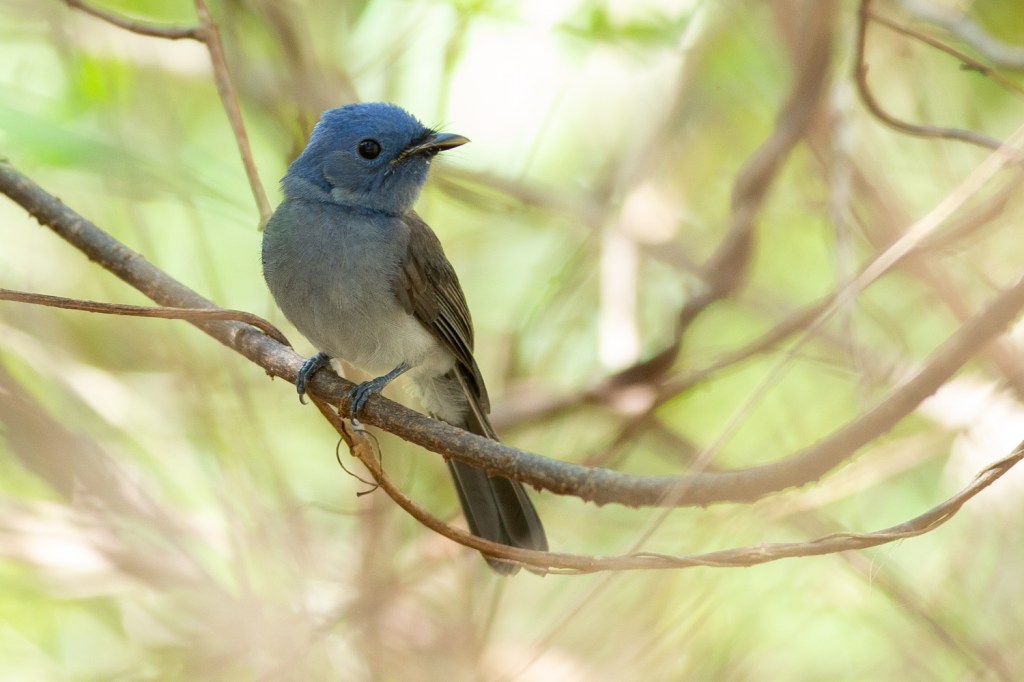
The next morning I woke up and headed to the hills with the ojek driver. On the way we picked up Nasi Kuning (Yellow Rice) to-go from a street vendor (also an important detail). It was incredibly difficult birding up in the woods as I was pretty hopeless with the calls. But I managed to identify a few interesting species like Black-naped Monarch and Ornate Pitta, both of which I briefly saw. I was very happy to identify a family of Flores Monarchs, strikingly-colored flycatchers endemic to this half of the island. 13 species in 4 hours was pretty crushing, but I later realized that this was pretty typical for degraded-habitat birding in Wallacea.
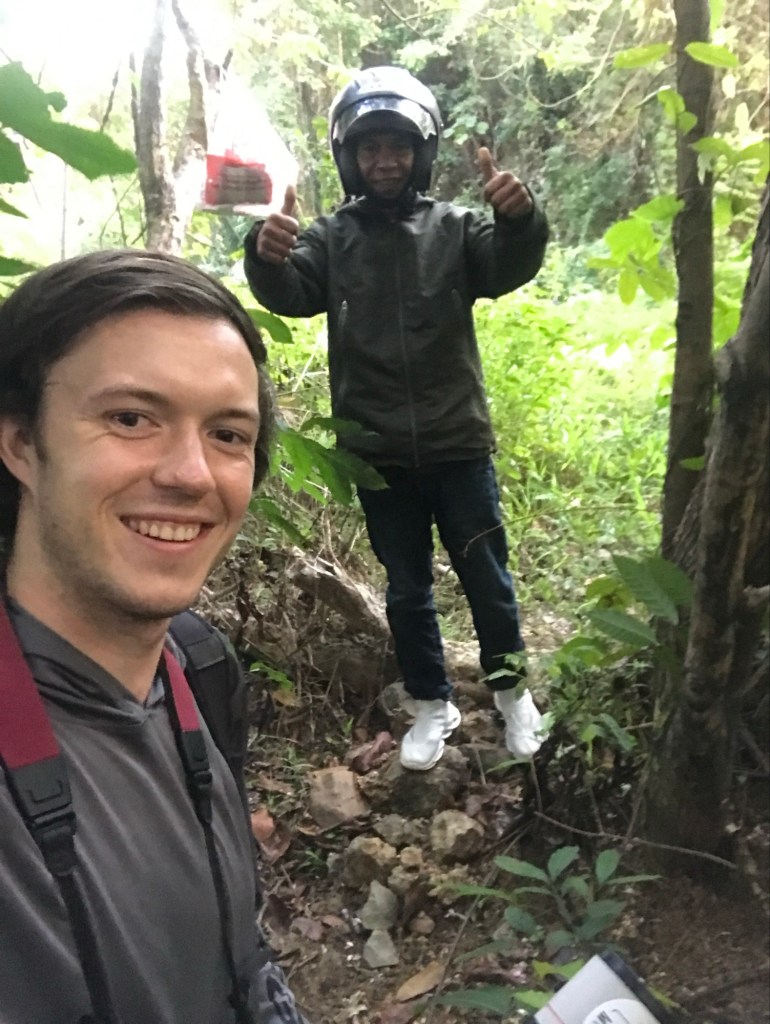
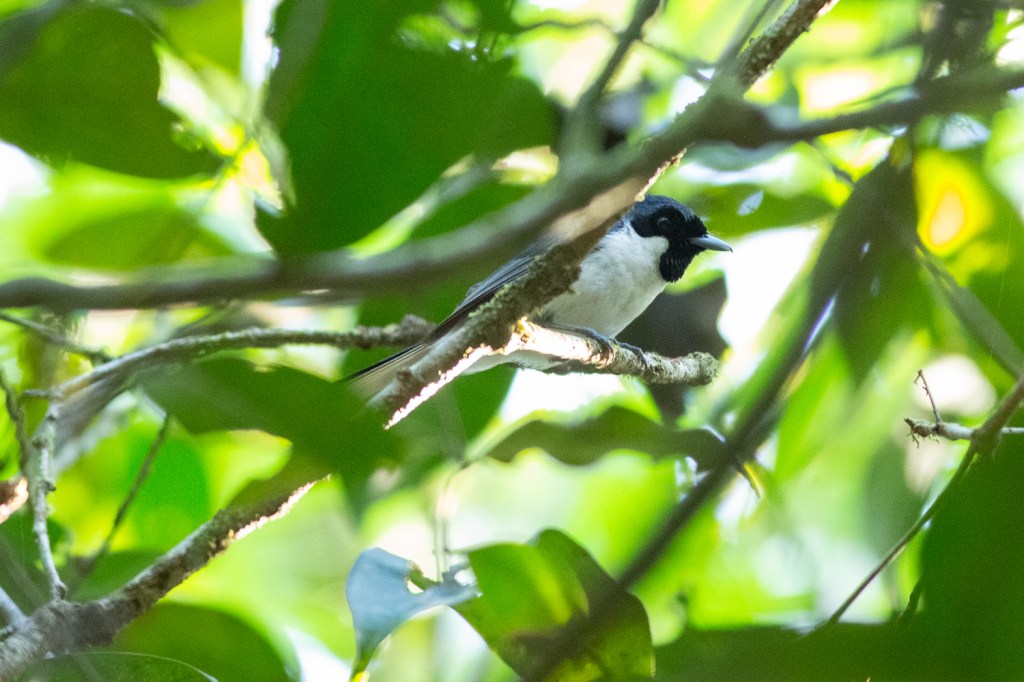
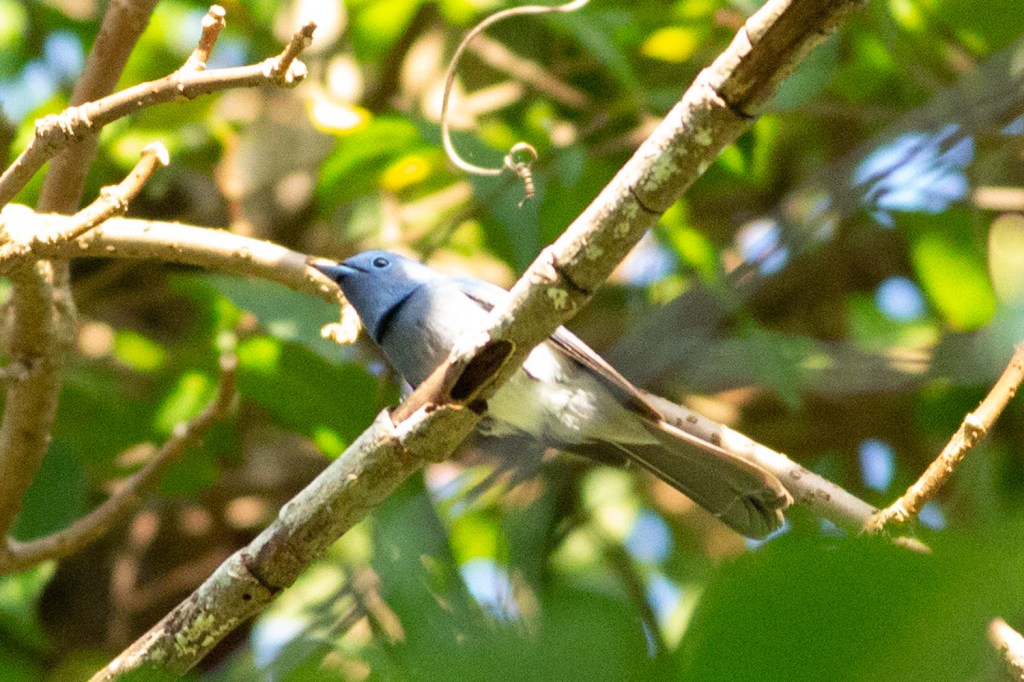
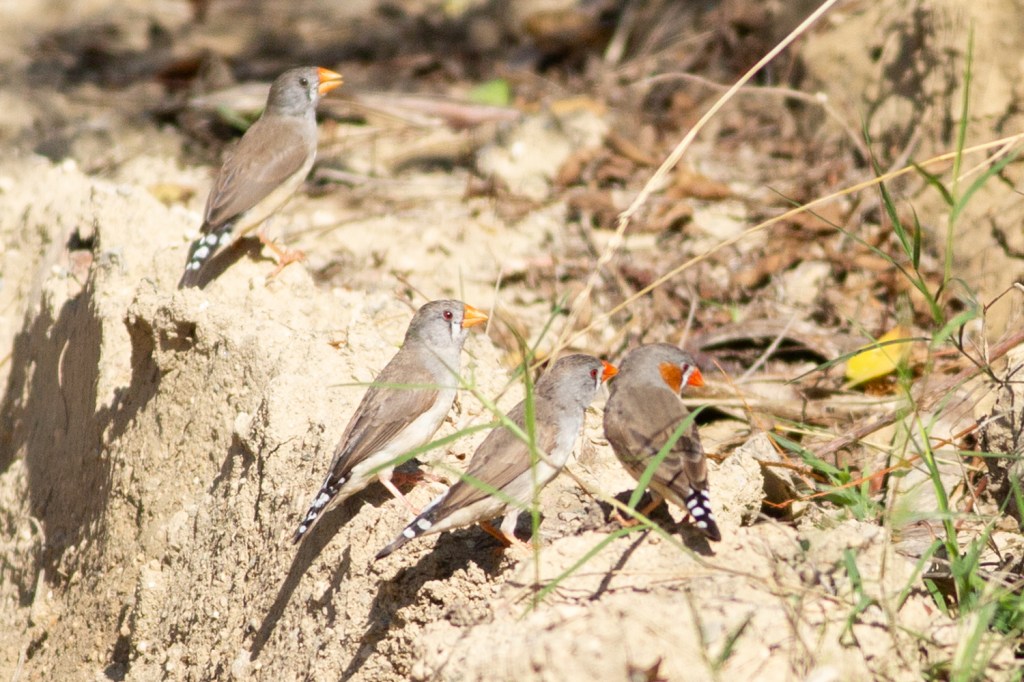
I said goodbye to the driver just a mile south of Labuan Bajo, by a river mouth that was pretty good birding (for it being nearly 10am and very hot). I got to see wild Zebra Finches, which was neat, as well as a better view of a female Black-napped Monarch.
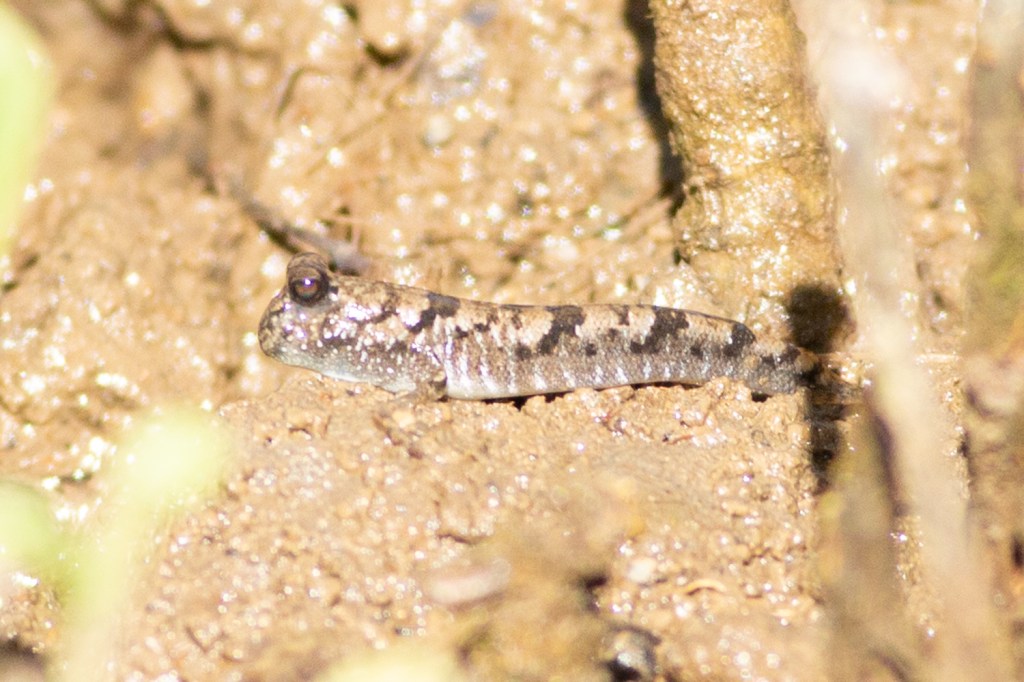
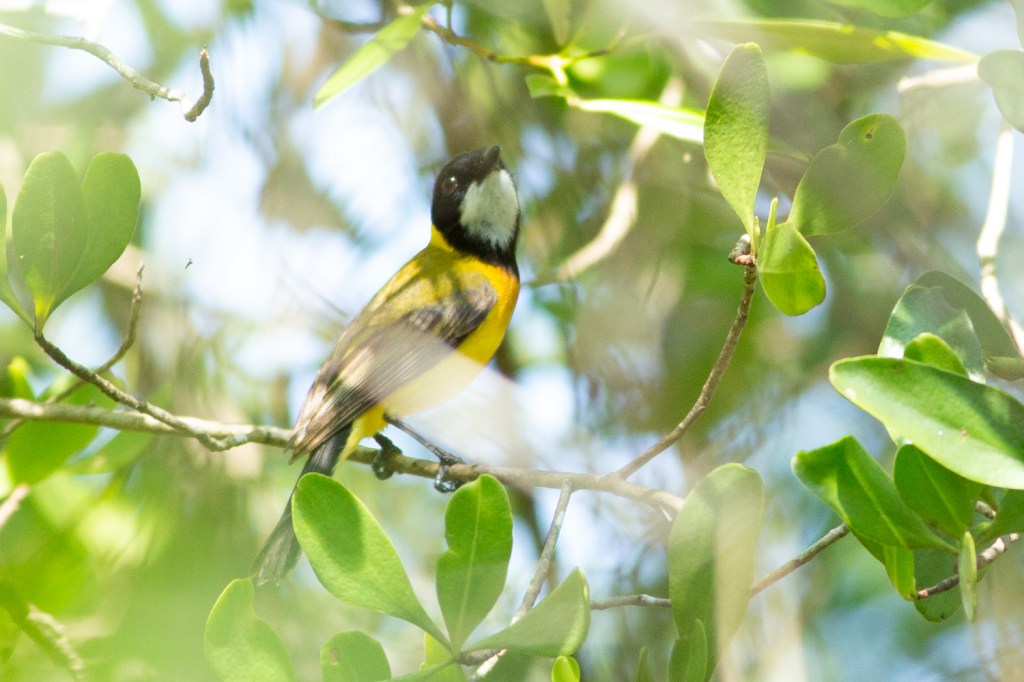
After walking a few hundred meters to the mangroves by the river mouth, I heard a piercing call that I recognized as a Stork-billed Kingfisher, one that I had hoped to see there based on eBird reports. I walked quietly towards the sound, scanning each branch over the river, but no kingfisher. I waited, searching the whole area several times and hoping it would call again… but to no avail. Although I count heard-only birds on my list, this was definitely the heard-only I was most hoping to actually see. (Spoiler: a couple months later I finally laid eyes on a distant Stork-billed Kingfisher… through an airplaine window, perched on a lamppost on the Singapore Airport tarmac!)
I turned to keep walking but was hit with an extreme case of heavy legs and light head. Wow, I thought, I have been drinking enough water… maybe I’m just sweating that much that I’m still super dehydrated? I sat down on a pile of dirt and waited for the feeling to pass, finishing off my second 1.5L bottle for the day. Within a few minutes I was feeling a little better so I strolled back to the road and caught a ride back to my hotel. I booked a spot on a tour that left at 5:30 the next morning, and went to sleep at about 5pm, just exhausted.
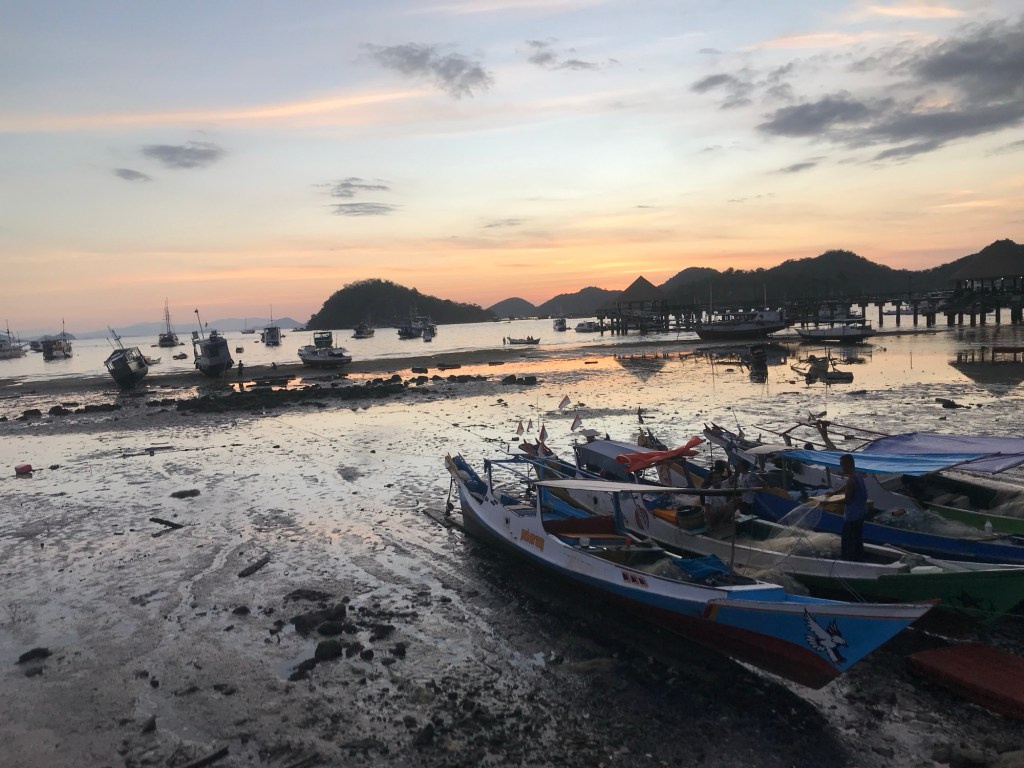
Pretty soon I woke back up with one of the worst fevers of my life, which transitioned to diarrhea as the hours ticked from PM to AM. By the time the tour company picked me up in the morning, I was still feeling terrible (and terribly incontinent), slightly less feverish, but I had convinced myself that it would be unforgivable to come this close to visiting Komodo without seeing the big lizards. I’d go on the boat trip, then visit the hospital the next day. Labuan Bajo actually has one of the best hospitals in Indonesia, seemingly placed there by the government to bolster tourist confidence in visiting such a remote area.
As I’ve already covered, I suffered through a delirious version of a once-in-a-lifetime day of incredible wildlife, then fell asleep right away. The next morning I headed to the hospital, and was given excellent care. The doctor did blood work and checked me out, and determined I did NOT have meningitis (I had a frighteningly sore neck in addition to my headache), nor did I have malaria. It was some absolutely gnarly food poisoning, probably from either the Un-sanitized water in the ice cubes in my sweet tea, or from the questionably sanitary street vendor’s fingers which served my yellow rice.
The very kind doctor wrote me no less than 5 prescriptions: a 9-day antibiotic for the bugs, zinc tablets for immune support, an anti-acid-reflux syrup in a glass bottle, oral rehydration packets for the ions I’d lost, and Imodium for ease of mind. I picked up the lot and paid the bill, $100 total for the consultation, labs and medicine. I shudder to think what it would’ve cost in the USA.
Next I headed to Gorontalo, on the northern peninsula of Sulawesi. I slowly started eating normally again, but high-grease food seemed to really excite my stomach so I had to avoid fried rice, fried chicken and fried noodles (the only foods most restaurants seemed to offer all of a sudden). I was pretty nauseous for about a week and it took a bit longer for my whole appetite to come back. Moral of the story: no drinks with ice, and only eat food that I was reasonably sure was safely handled.
And also, never apply to be a ranger at Komodo National Park. If the dragons don’t eat you, you’ll die of a stress-induced heart attack from saving hundreds of tourists’ lives a day!
 Backcountry Birding
Leave a comment