Mid-July, Bali Barat National Park, Indonesia.
In 2002, experts guessed there were probably 6 Bali Mynas left in the wild.
Now how could I be looking at a wild Bali Myna after only a few minutes of waiting at the Bali Barat National Park visitor’s center?
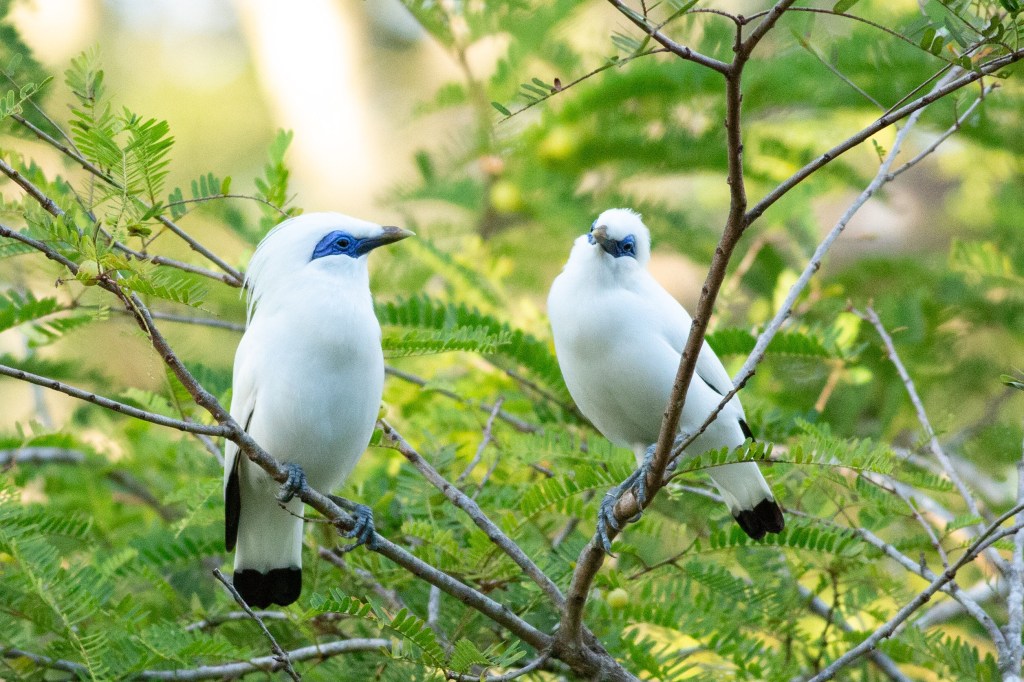
The reason for both lies in the phenomenal popularity of the Indonesian caged bird trade. This absolutely fantastic, snow-white, blue-faced myna species was trapped nearly to extinction within its extremely small range of the western peninsula of Bali. Thankfully this meant that there were plenty of Mynas (also known as Bali Starlings, or Jalak Putih in Bahasa Indonesia) in captivity, which were used to help with a captive breeding and release program. The protection of the park seems to have been pretty effective, and now there are over 500 in two populations in the area: some on an island and some on the mainland of Bali, almost all within the national park.
My guide’s name was Tolak, and together we visited a whole range of spots in and around the National Park, starting with the main office at sunrise. The first bird of the day was a Green Junglefowl which we heard crowing from a nearby tree before dawn. As we walked over to try and get a look, a huge bird swooped from one tree to the next. I got a split second look at its silhouette against the morning sky as it passed: an Oriental Pied Hornbill! Even though it was a very brief look, the little kid in me got pretty excited to see a member of such a cool group of birds for the first time.
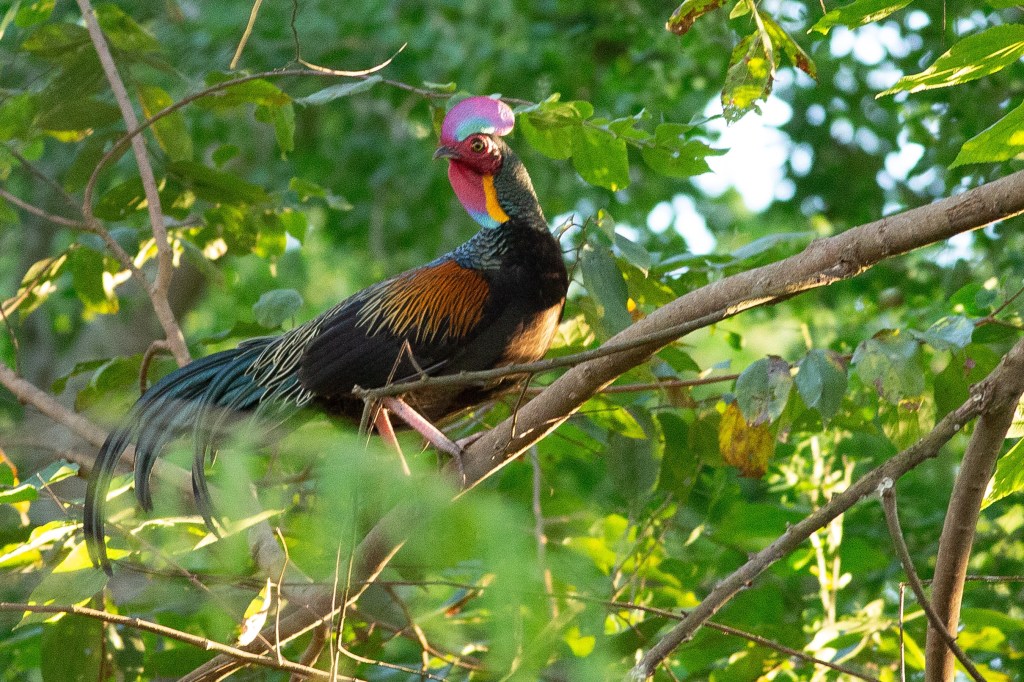
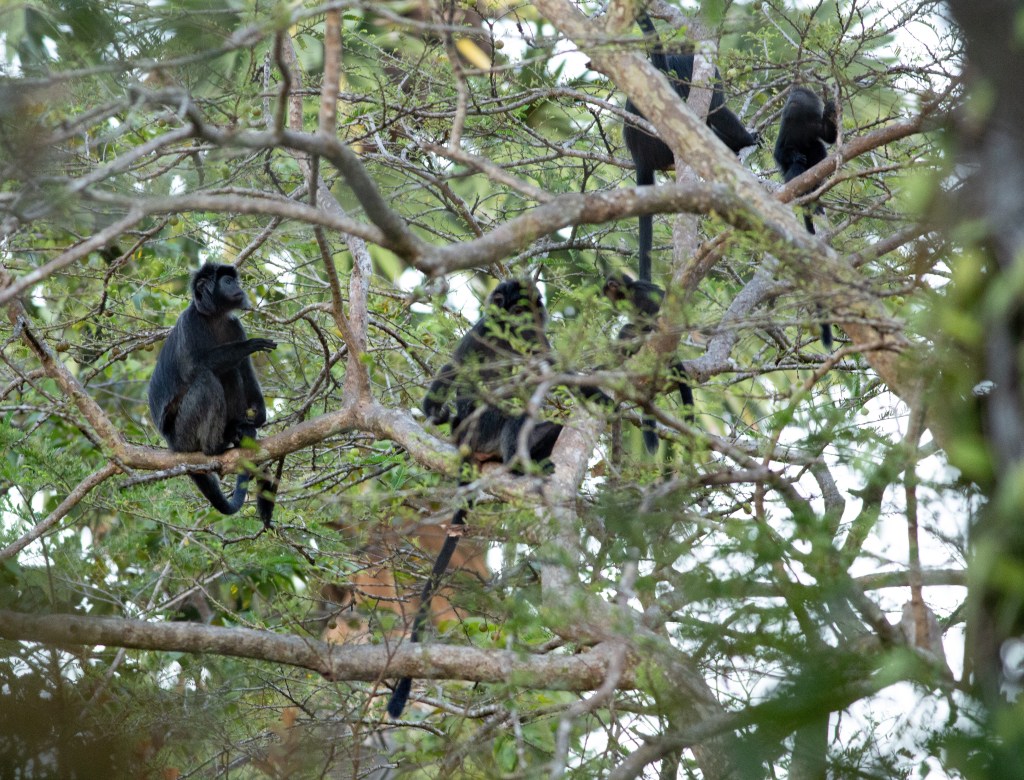
After locating the spectacularly-plumed Junglefowl (yes, it is a cousin of the species that was domesticated and is the modern-day chicken) we walked back to some bird feeders stocked with fruit and waited. Olive-backed Sunbirds chirped and flitted around the understory trees, and a Black-winged Flycatcher-Shrike stayed artfully out of view when I tried to take its picture. I did get this blurry shot of a group of vulnerable Javan Langurs as they swung past the feeding station:
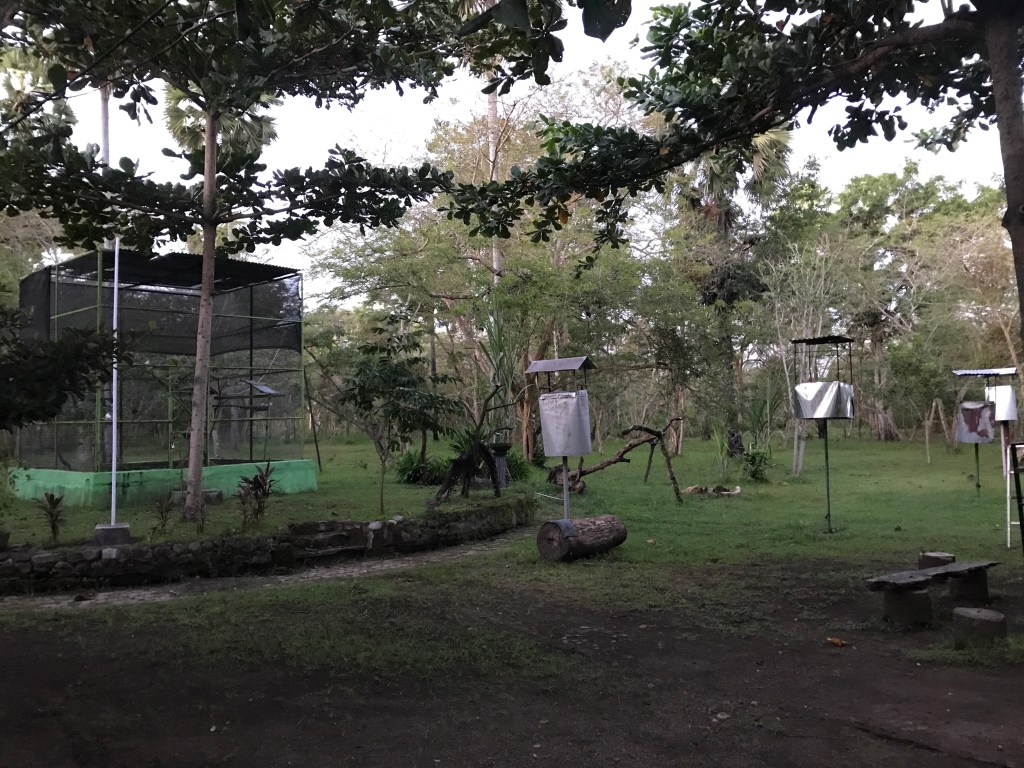
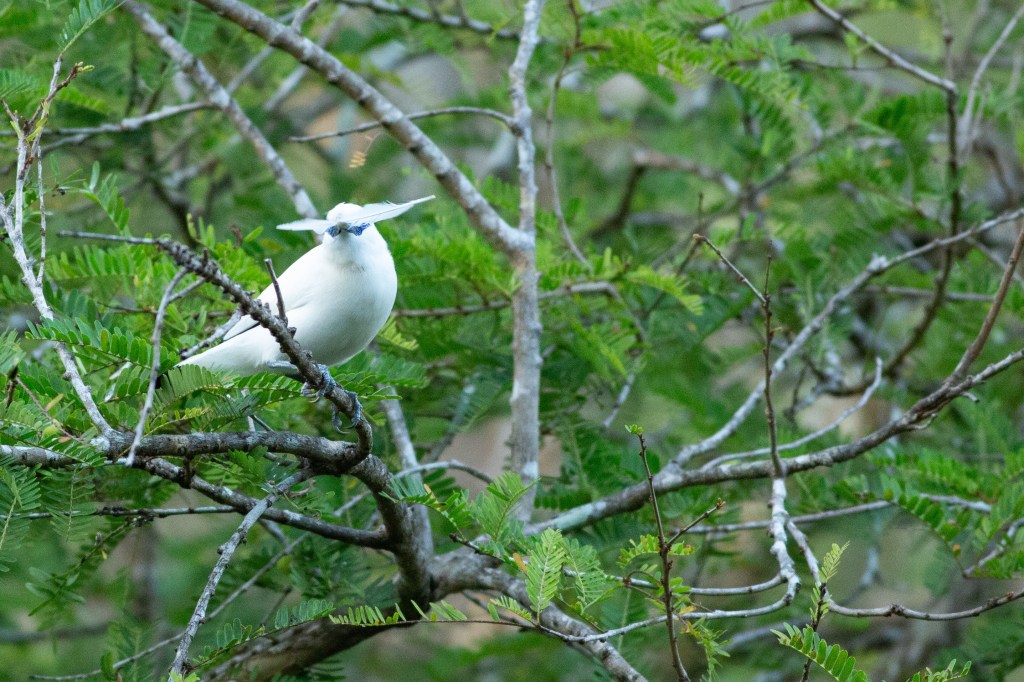
After a few minutes Tolak heard a slightly different call, and smiled. He hastily led me around the building to get a view of the bird in question, a spectacularly white Bali Myna perched in the top of a bare tree. After a few minutes it was joined by several more and they started to descend on the feeders.
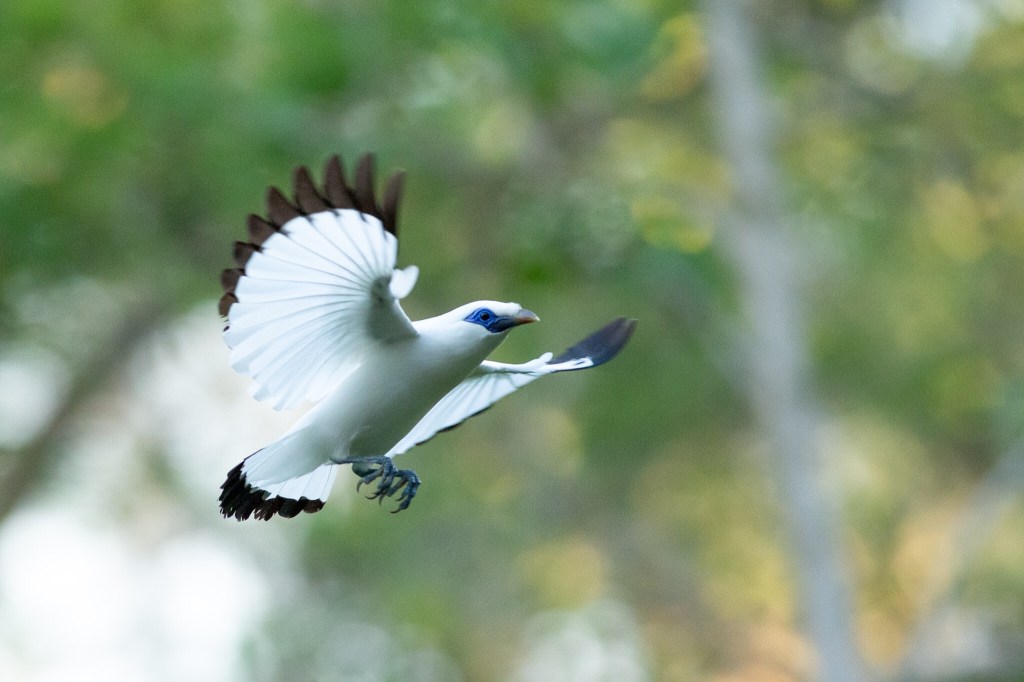
In ones and twos, over the next 30 minutes nearly 20 birds arrived! They were very clearly moving in male/female pairs (the males have slightly longer crests), which made it easy to anticipate when the second bird of each pair would fly, allowing for a couple of good pictures in flight, showing off those stunning black-tipped primary feathers.
A couple minutes later and a different bird appeared, and Tolak got very excited. “Black-winged Starling! Do you see it? You are very lucky!” I did see it, and although it stayed pretty obscured by branches I was able to get a photo.
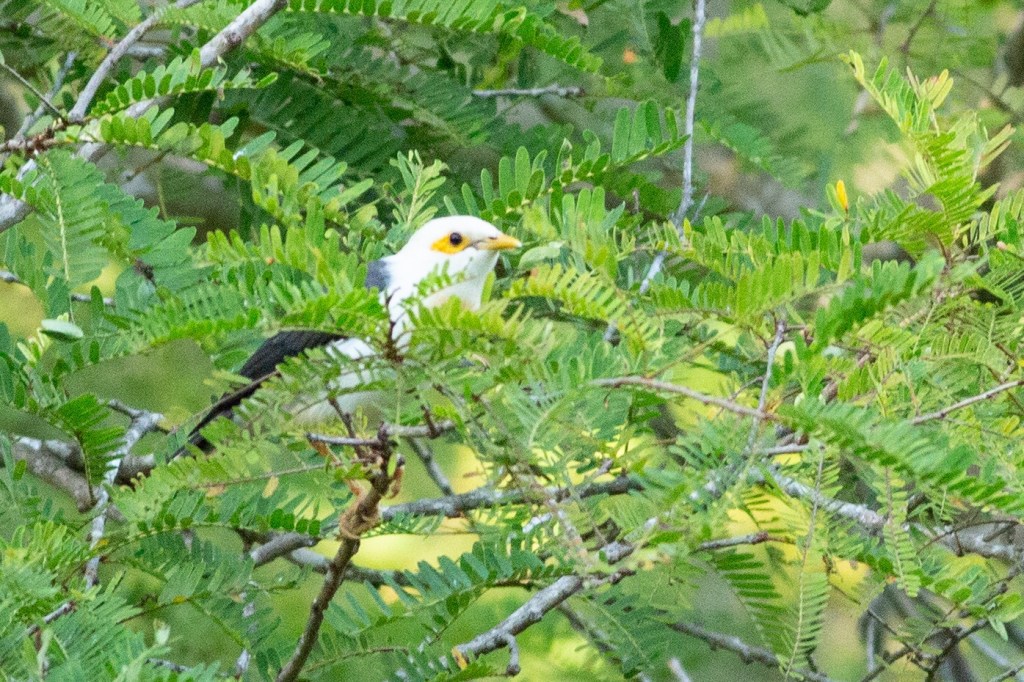
This species is potentially approaching the same situation Bali Mynas were 20 years ago. It’s extremely popular in the caged bird trade at the moment, and some estimates suggest there are fewer than 100 birds left in the wild. In stark contrast to this absurd degree of imperilment, a recent study suggested that upwards of 10,000 captive-bred Black-winged Starlings are sold every year in bird markets across Indonesia. The authors pointed out that this volume, combined with the lack of a consistent certification process for captive-bred birds, means that a few wild-caught birds could easily be overlooked as they enter the market each year. Since the wild population is so tiny, even just a few birds being removed could have a devastating effect.
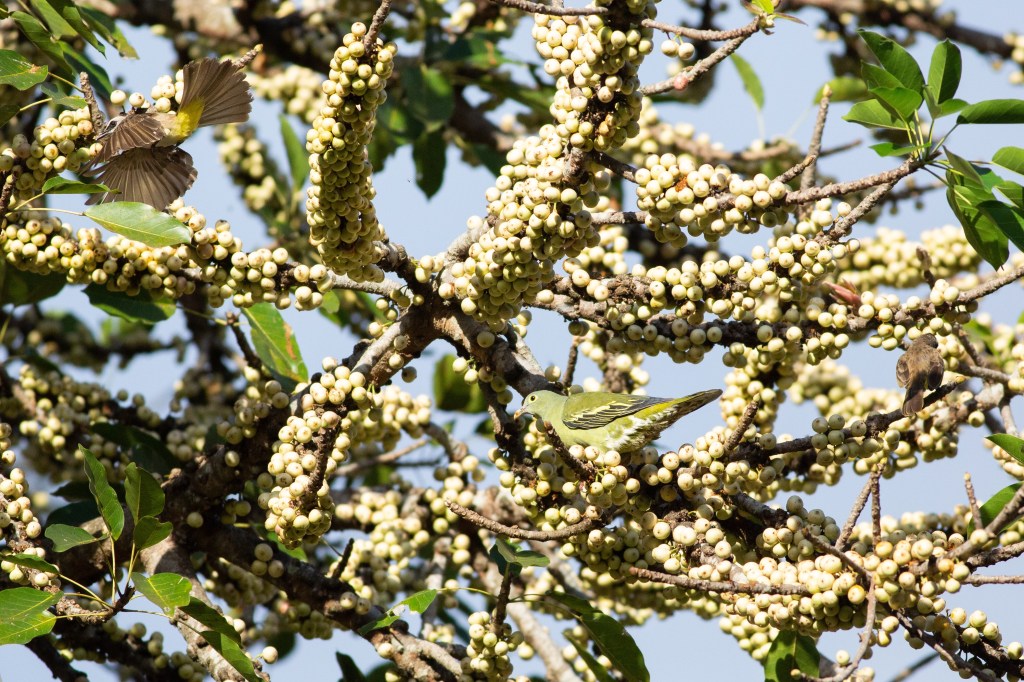
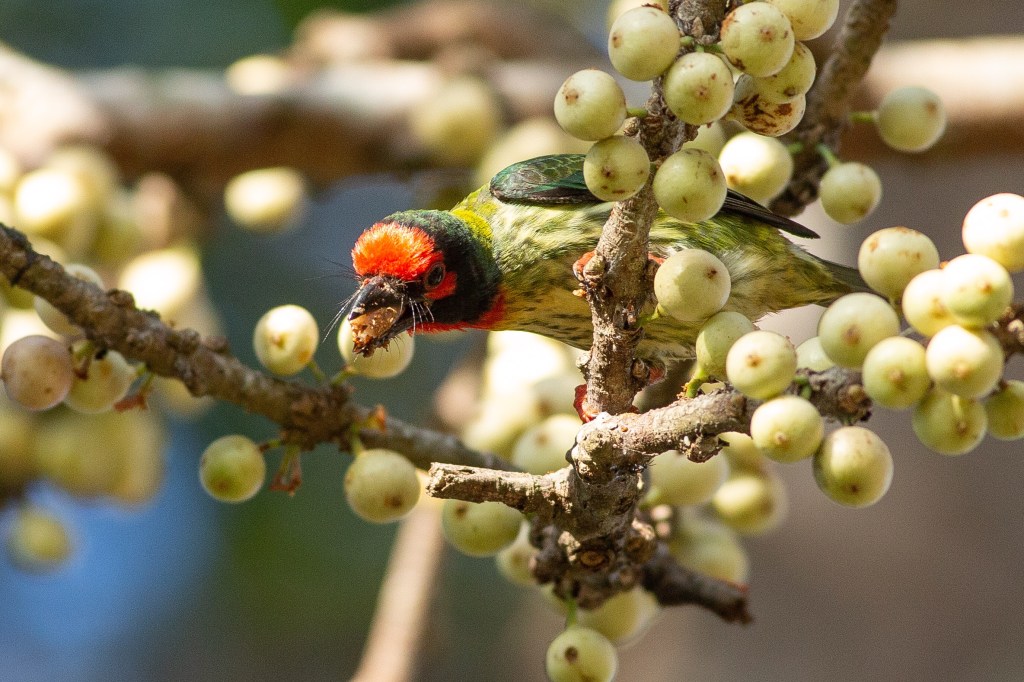
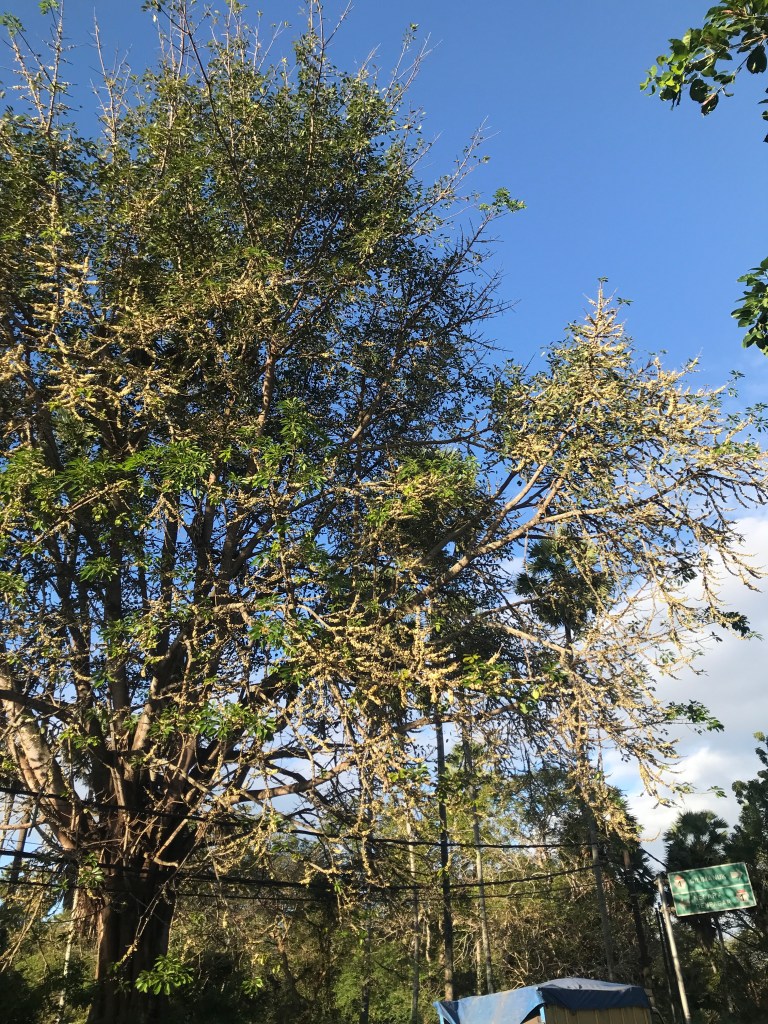
After pondering the bizarre experience of seeing such an incredibly imperiled bird in the wild for a moment, we hopped on the scooter and rode a few hundred meters to the most decadent fruit tree I’ve ever seen in my life. An absolutely MASSIVE fig was completely covered with millions of fruits, and probably nearly 100 birds. Dozens of Yellow-vented and Sooty-headed Bulbuls flew to and from the surrounding trees while several Coppersmith Barbets staked their claim to one branch at a time. Gray-cheeked and Pink-necked Green-Pigeons mingled in the upper branches, and a few Bali Mynas even joined the party. I simply could not believe how much fruit was on this tree.
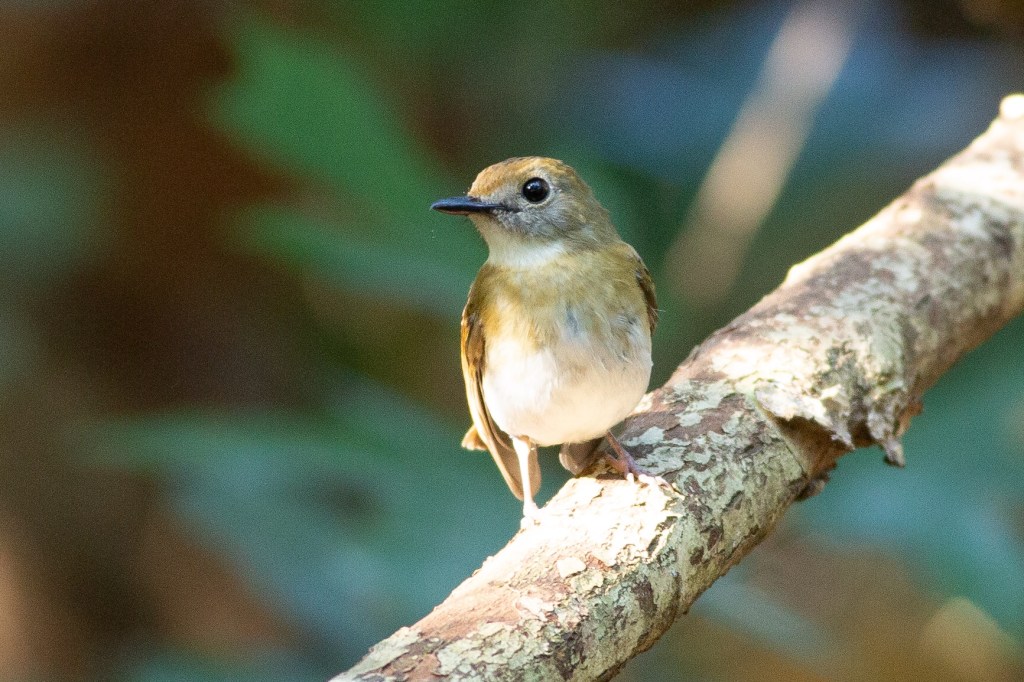
For the next stop, we visited a hide near a small temple in the woods. Here we joined with a couple other guides from Bali Birding Tour and an Australian woman named Anita. One of the guides sprinkled a few mealworms on a log and then we waited. The first birds to appear were a pair of Fulvous-chested Jungle Flycatchers and an Olive-backed Tailorbird.
Not long afterwards the real star of the show appeared, one of Asia’s most famous birds, the Javan Banded-Pitta.
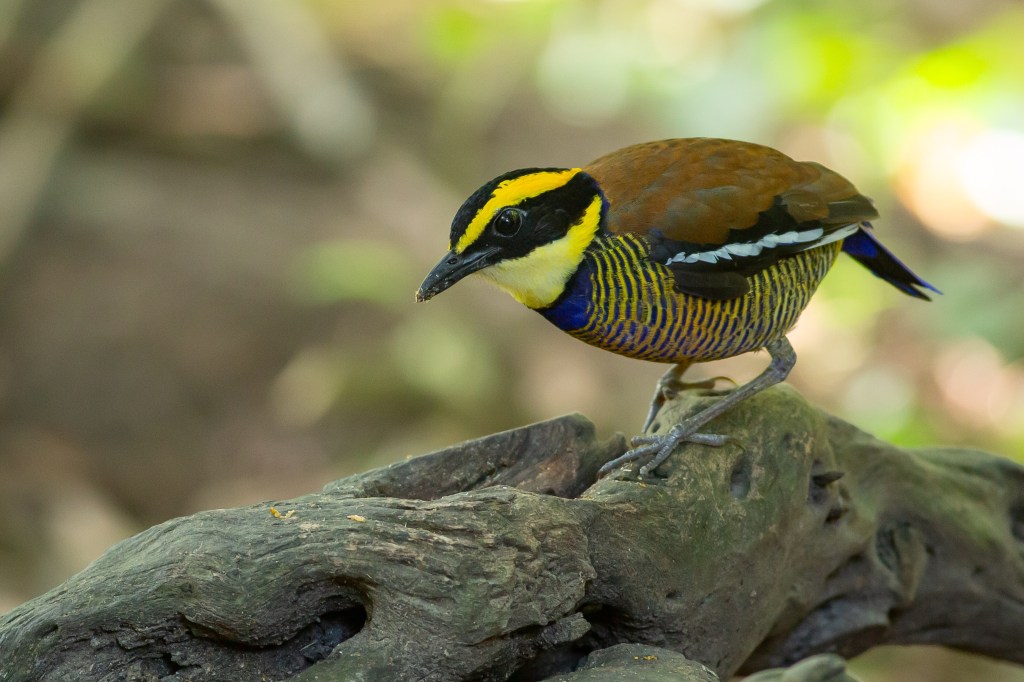
This is the bird that tops many a birder’s most-wanted lists when they visit Bali. It didn’t disappoint. I was equally excited for the Rufous-backed Dwarf-Kingfisher that showed up a couple of minutes later. For an idea of the size, it would have fit very comfortably in a normal coffee mug. Incredibly cute.
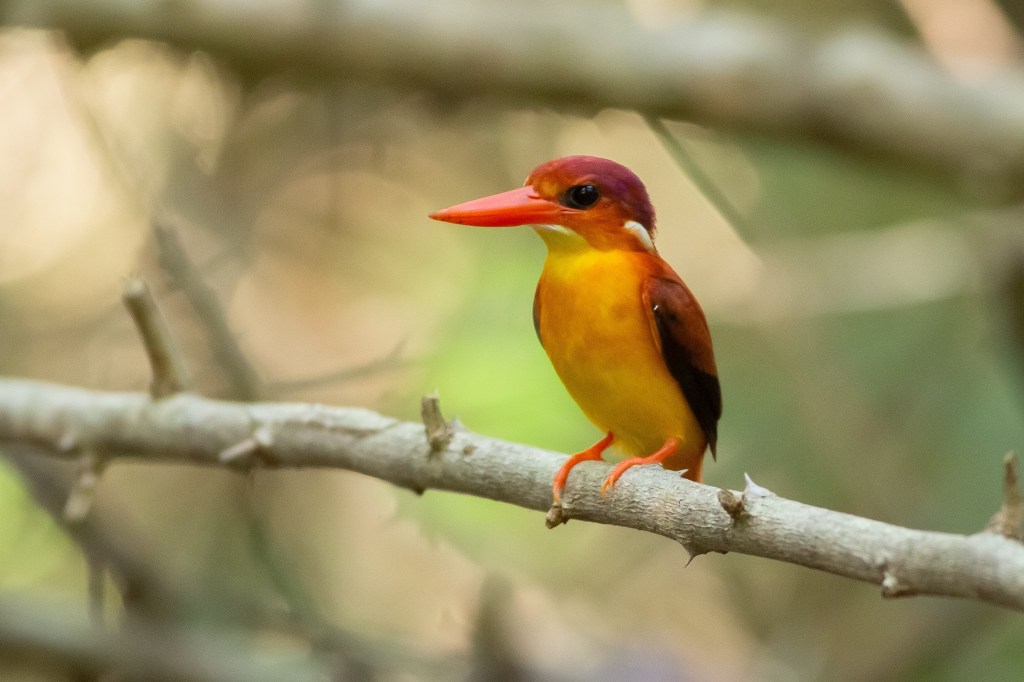
I have been particularly keen on kingfishers since age 10 when I did a school project on all the world’s kingfishers, so prepare yourself for a lot of Kingfisher content in the coming weeks.
Another highlight was searching a scrubby area for Savannah Nightjar. We flushed one from nearly underfoot, and then Tolak spotted a second one which I was able to get some good photos of.
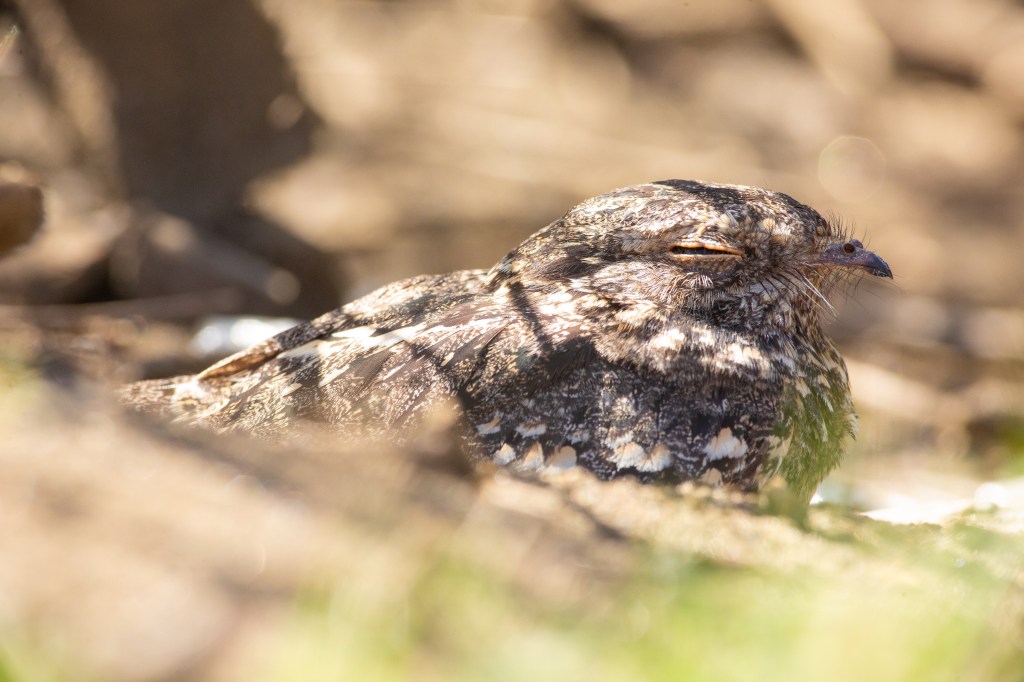
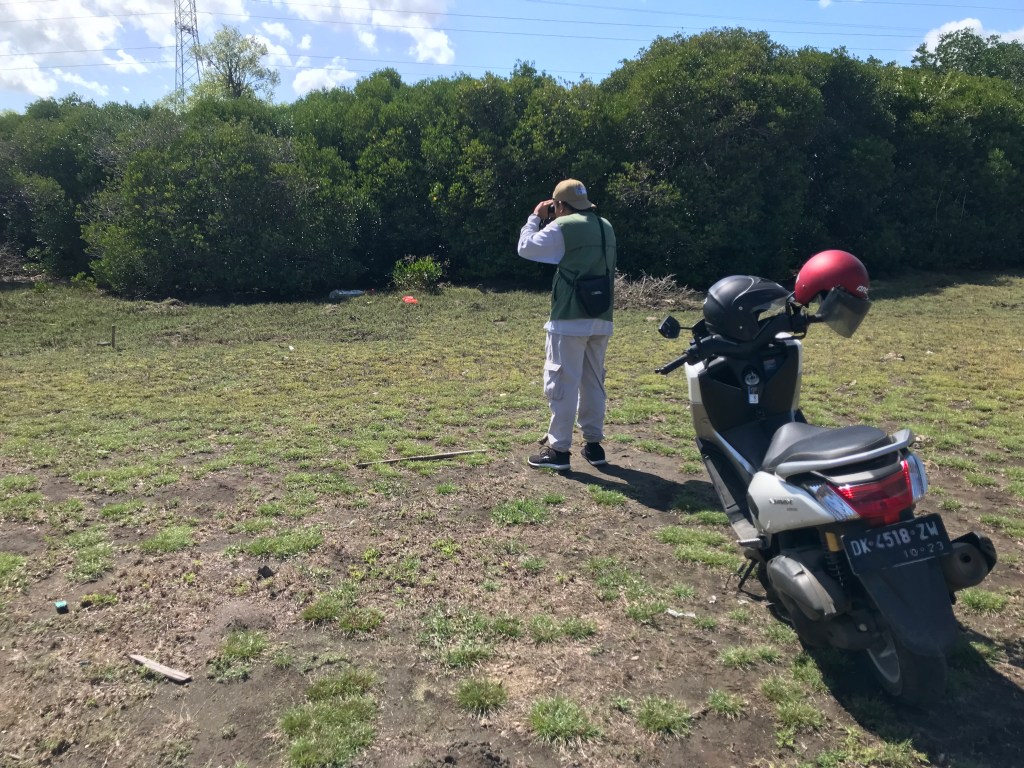
The morning was over all too quickly, but it was a really great day. Some truly incredible birds and a lot of interesting conservation thoughts.
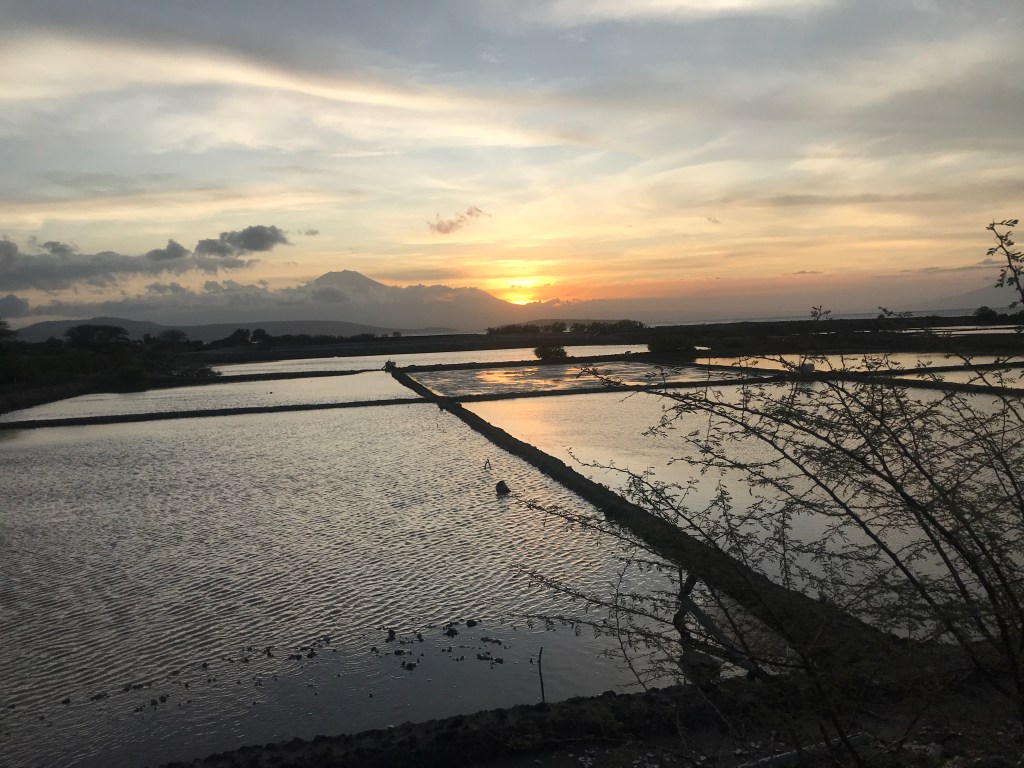
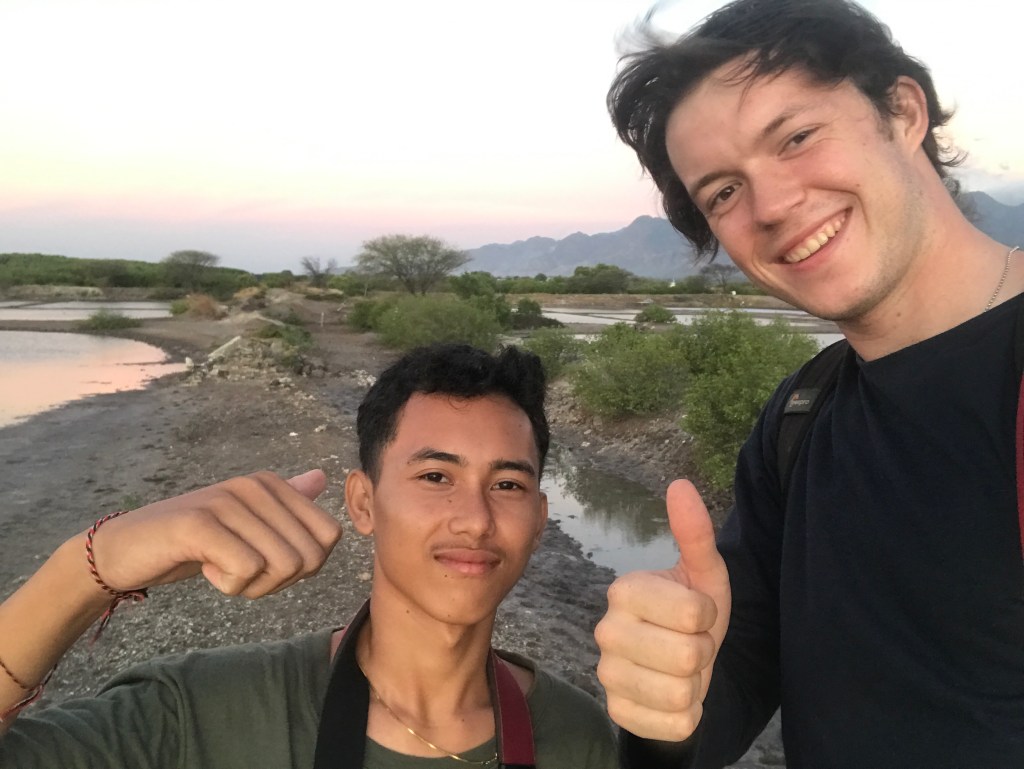
Later that evening, still not confident in my own ability to ride a motor scooter, I got a ride with one of the kids that hung out at my homestay to the seashore, where there was a pretty thriving salt-production area consisting of hundreds of shallow evaporation pools. I got the bird I was hoping for, Javan Plover, along with a surprise Changeable Goshawk (what a cool name) and a beautiful sunset.
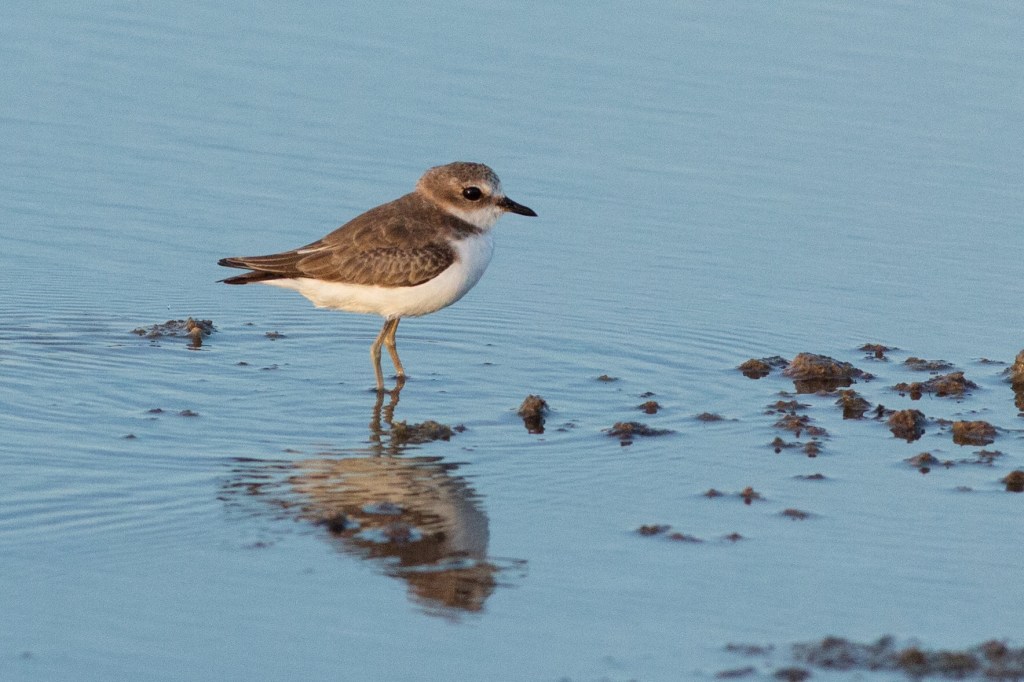
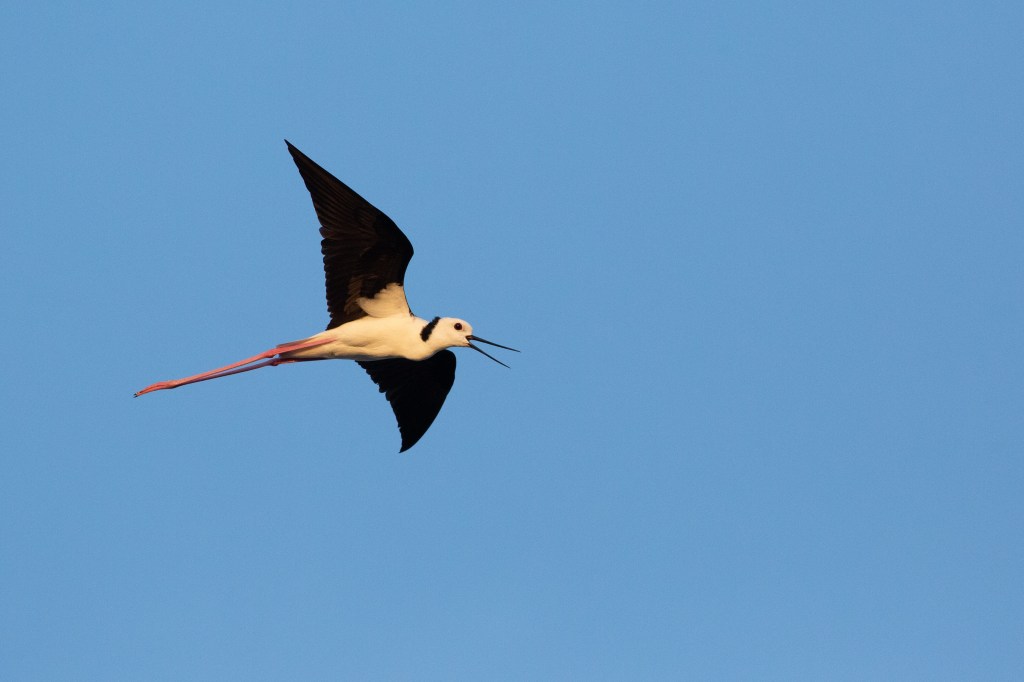
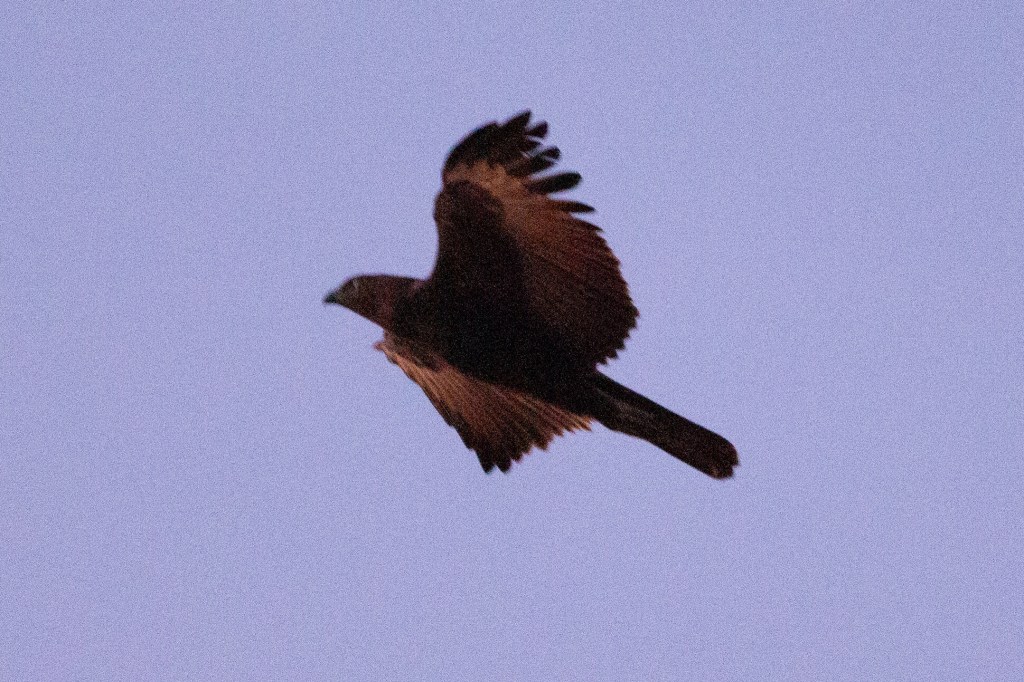
I gave Agus (the kid) my binoculars to use, along with a sizeable tip and a comment about how he was now officially a birding guide.
My next post will cover a visit to the home of one of the world’s most well-known animals, and some of the impacts of such concentrated tourist activity in an area.
Year List: 800 | Lifers this year: 519 | Life List: 1805


 Backcountry Birding
Leave a comment