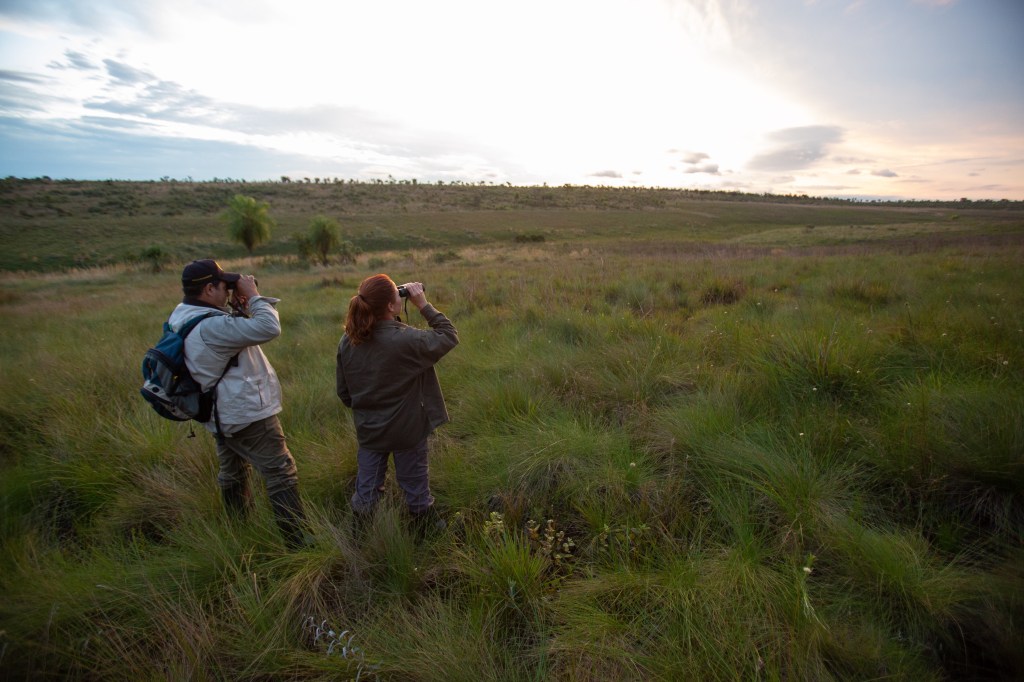
The sun hung low in the evening sky, casting a golden haze across the savanna of waist-high grass and short palms. A White-tailed Hawk swooped up to one of the few trees and shouted its existence through the shallow valley. Sixto gestured towards a small patch of bare, reddish earth. “It’s time to begin” he said. As the light faded the valley became a theater and the theater grew quiet, and the stage was set for one of the world’s rarest birds.

The orchestra for the evening: Ash-throated Crake trilling from the marsh in the lowest part of the valley, Tataupa Tinamou whistling from the brushy woods above the savanna, and Giant Snipe laughing from unseen wings overhead.
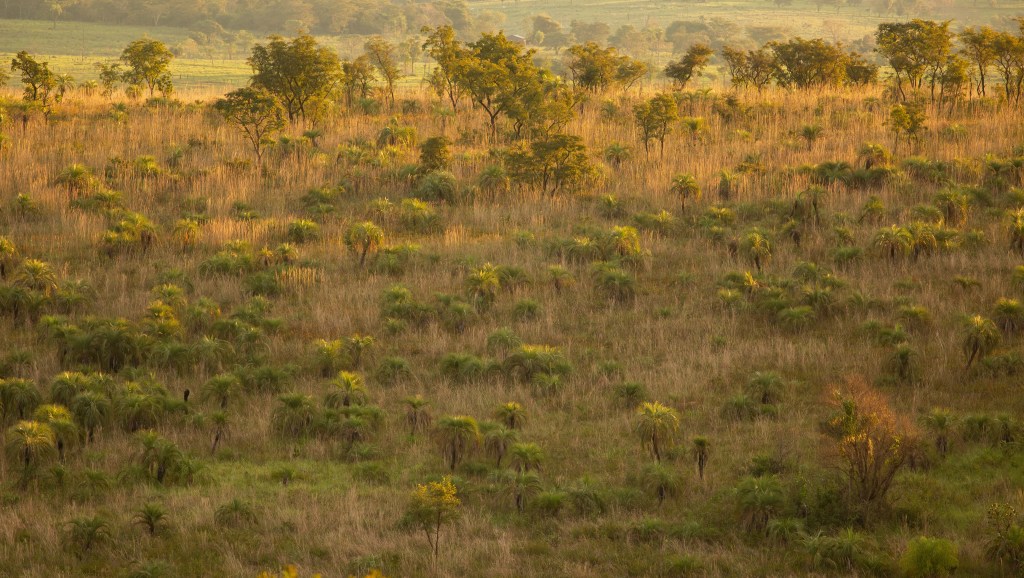
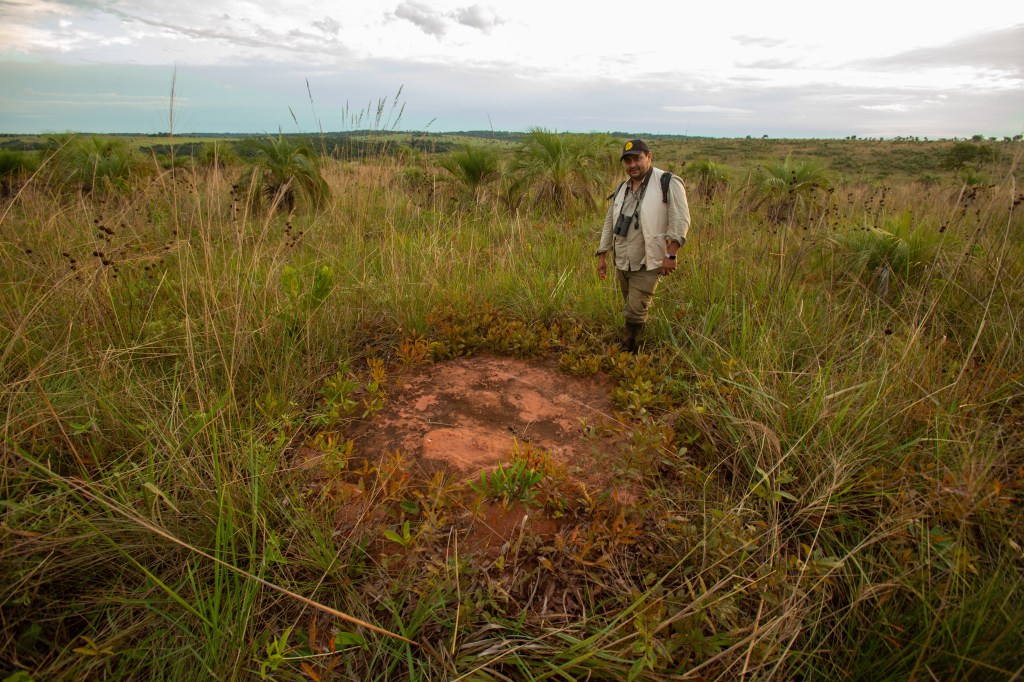
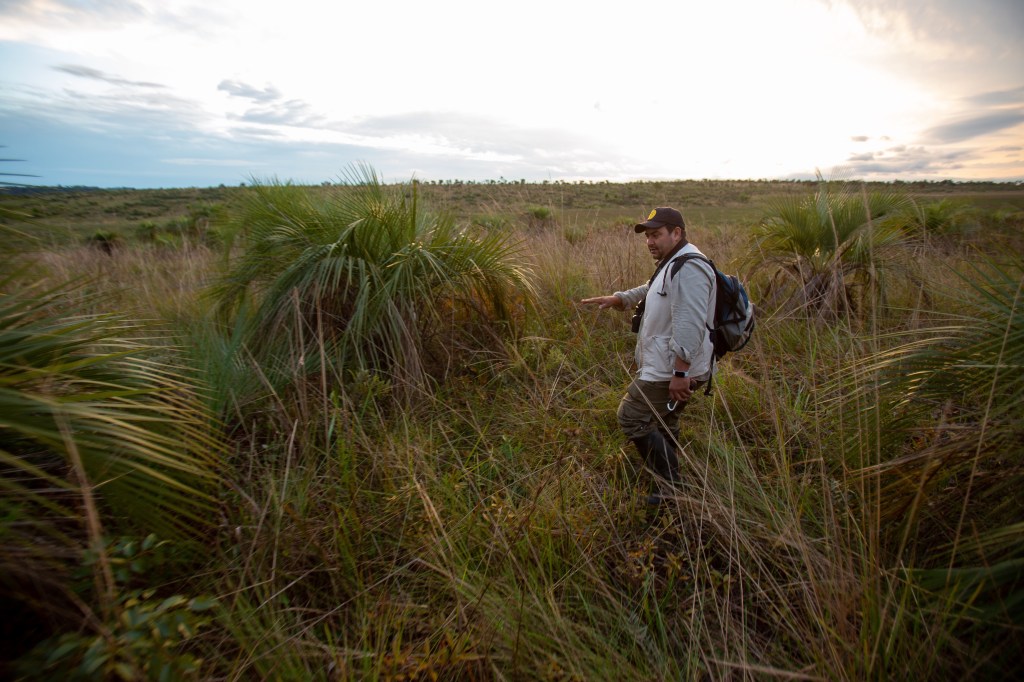
It was a pretty stunning landscape; the lowest part of the valley being a wet thicket, above which was a sloping field of Eleocharis sedge. Above the sedge was a zone of 3-4-foot tall grass and slightly taller palms, which got taller as we followed the slope back up to the vehicle which was parked on the edge of a scrubby forest. This was the final element of the ecosystem; sparse 10-20-foot trees covered the crest of each ridge. The zones of vegetation were so distinct that it almost seemed manicured; it was simply the natural distribution of each of these distinct communities. We were focused on the palm-dotted grassy section of the stage this evening.
After waiting for the sun to sink below the horizon, Sixto motioned for us to follow him, and we set off back down the slope. We had only taken a few steps down into the grassy zone when Sixto pointed his light: “Esta”—“It’s there.” From where we stood we saw the light being reflected from the eye of a small brownish creature, sitting in the middle of a patch of bare earth just as had been promised. It was unfazed as we walked right up to it; there was no reason for it to understand what these lights meant, so it just sat there. And we stood there, looking at it, a tiny, beautiful female White-winged Nightjar.
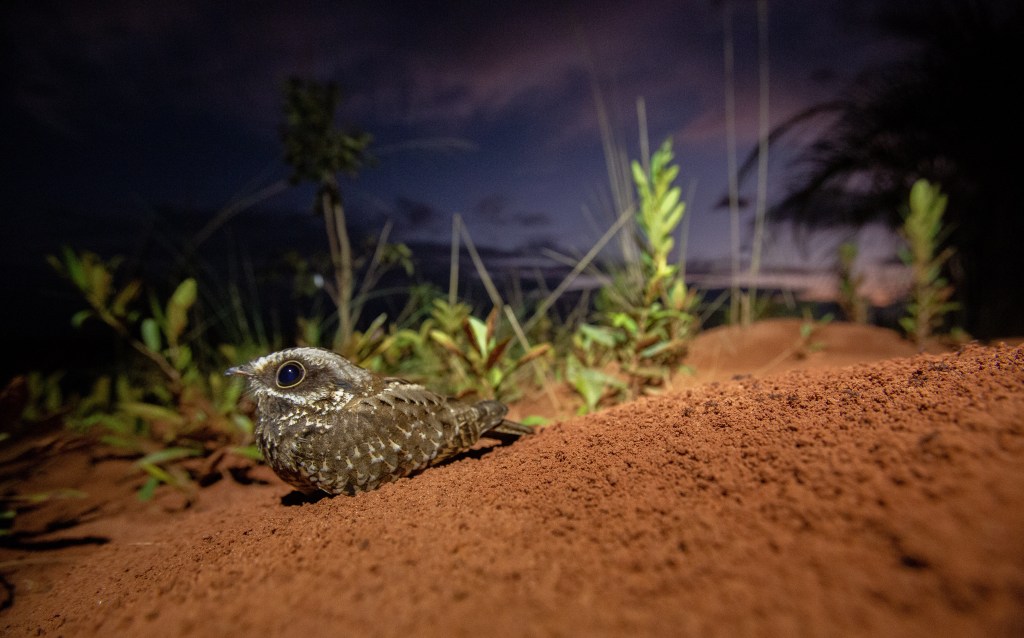
The White-winged Nightjar is only known from about six individual sites in the Cerrado ecosystem of eastern South America. This particular piece of Cerrado, known as Aguara Ñu, has been preserved as part of the Mbaracayu Reserve. It’s one of two sites in Paraguay where the Nightjar has been recorded. Sixto has been monitoring this population now for about 27 years, and has visited Aguara Ñu every month for the last two decades to track the status of the 70-100 birds that live here.
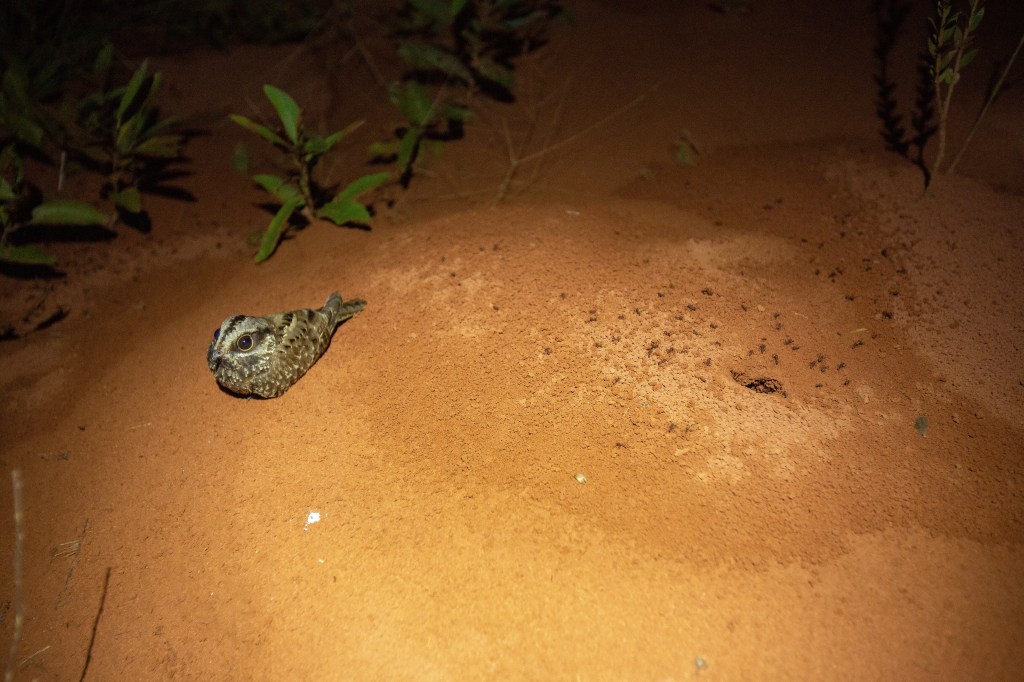
It’s extremely picky in its habitat preferences at Mbaracayú: Sixto has only ever seen them hanging out in savanna which has just the right height of grass and just the right height of palms, with a scattering of bare-earth mounds created by termites. This species is very unusual among nightjars in that it leks: the males gather in a loose group and display to the females, who circle each male until they decide that he’s the one. To facilitate this display (which Sixto has seen many a time) the male uses its namesake white wing-patches to perform a beautiful little dance above a termite mound like this one:
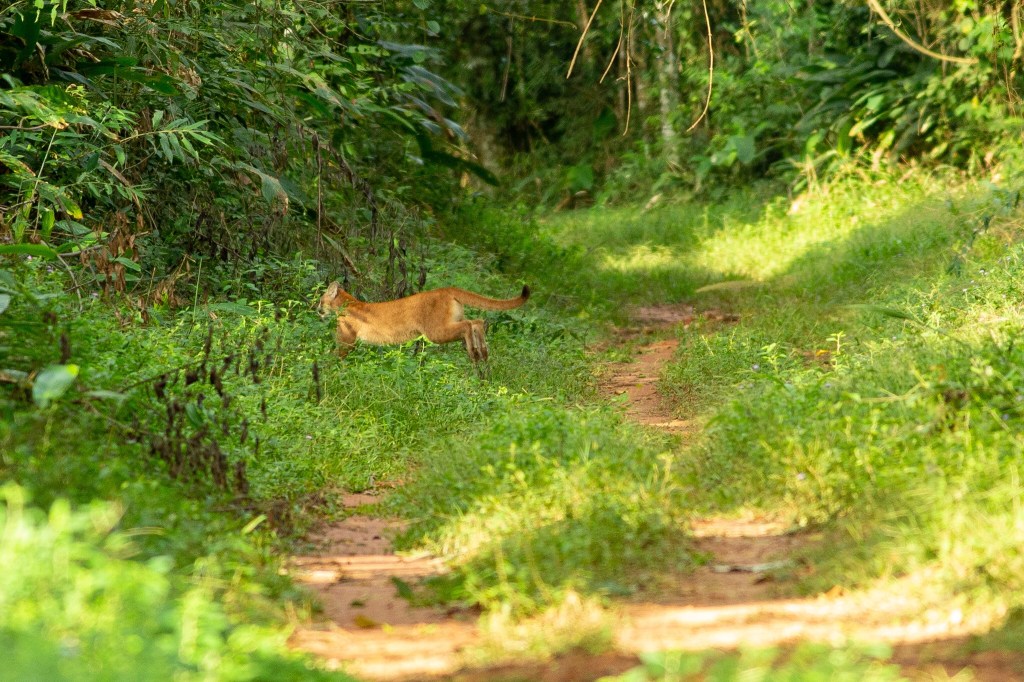
To get to the site, we crossed the entire reserve, more than 40km on a dirt road through the thickly forested interior. At one point, we rounded a corner and a young Puma took off running down the road away from us. I tried to snap a picture but missed just as the puma dashed around the next bend… Sixto said “Okay, we can still see it, get ready!” and absolutely floored it while I stuck my head and shoulders out the window with the camera. The animal came back into view just as it leapt into the underbrush, far down the road. I managed to get this shot:
We saw evidence of quite a few other mammals; prints from Agouti, Gray Fox and Jaguar (pictured) and scat from a Maned Wolf.
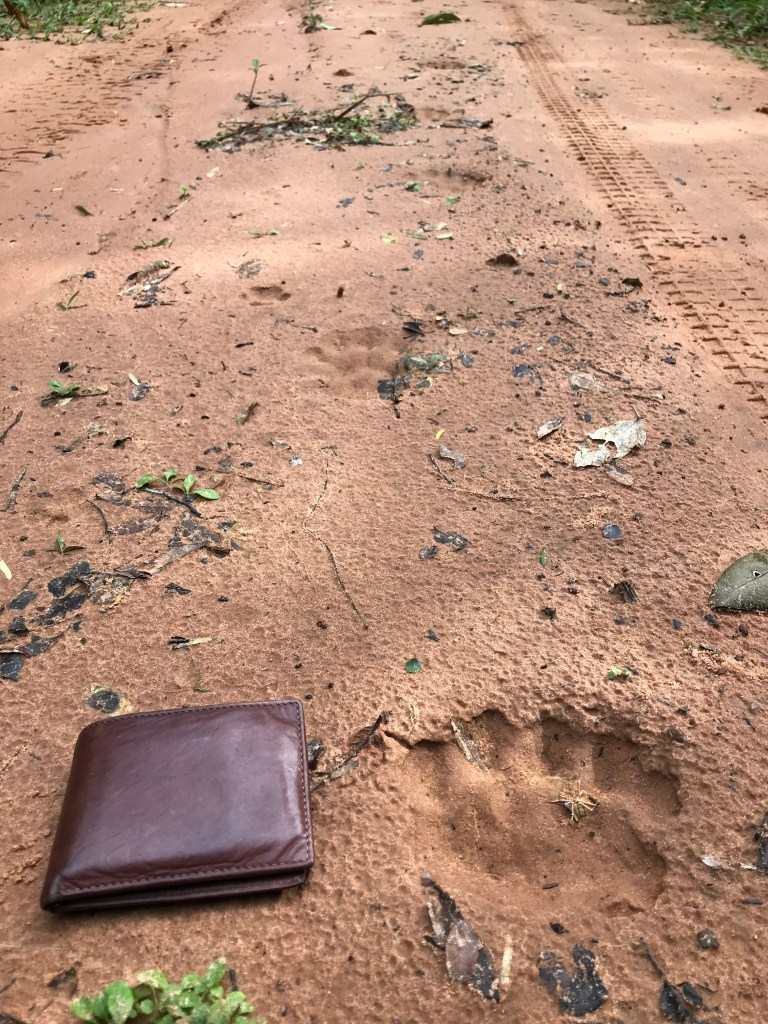
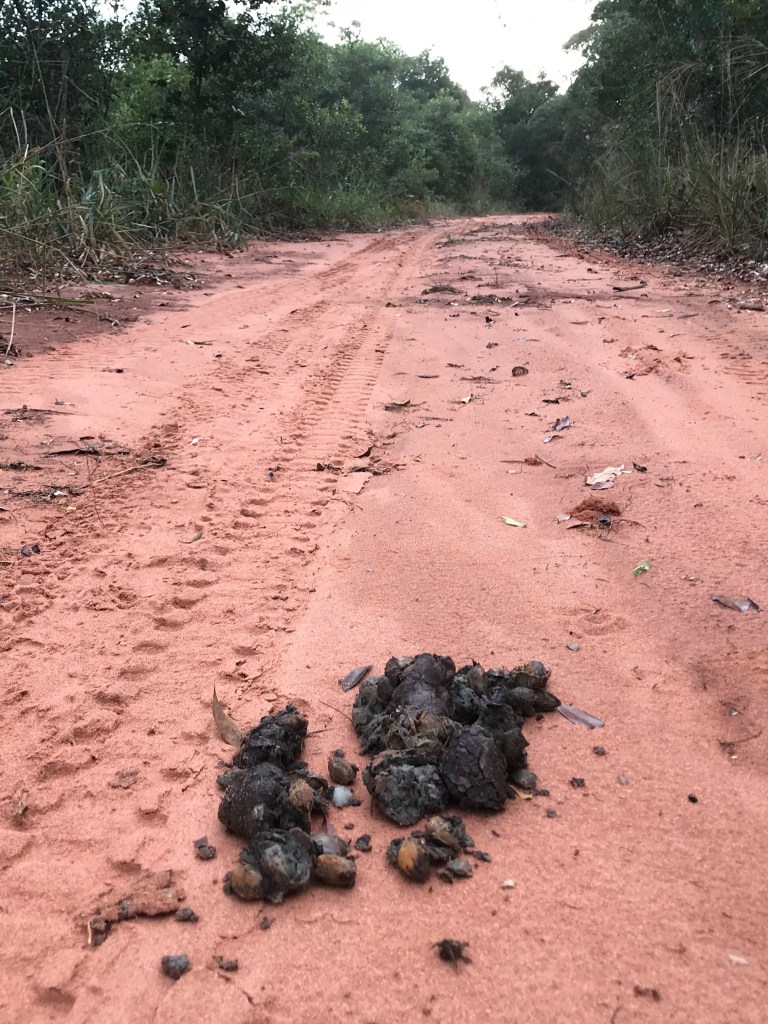
It’s not often that you see a puma in the forest like that, so Sixto and Vidal were quite pleased. We continued on across the reserve, and after another few kilometers we crossed the stark boundary between dense vegetation and entered wide-open scrubby grassland. If you didn’t know it was natural you might assume it was a human-made clearing, the boundaries were that well-defined.
We stopped at a spot where Sixto knew we could find Rusty-backed Antwren, another Cerrado specialist. After a few seconds of tape-playing, the bird responded and I got a few distant photos. The other super-cool lifer I got there was my first Red-legged Seriema, a crane-like bird that’s actually more closely related to a falcon.
The site itself really was something special. One of those places that just feels a little different, where the landscape is so complex, and yet so beautifully simple that it stands to reason the way the animals fit within the ecosystem, and the ecosystem fits within the place.
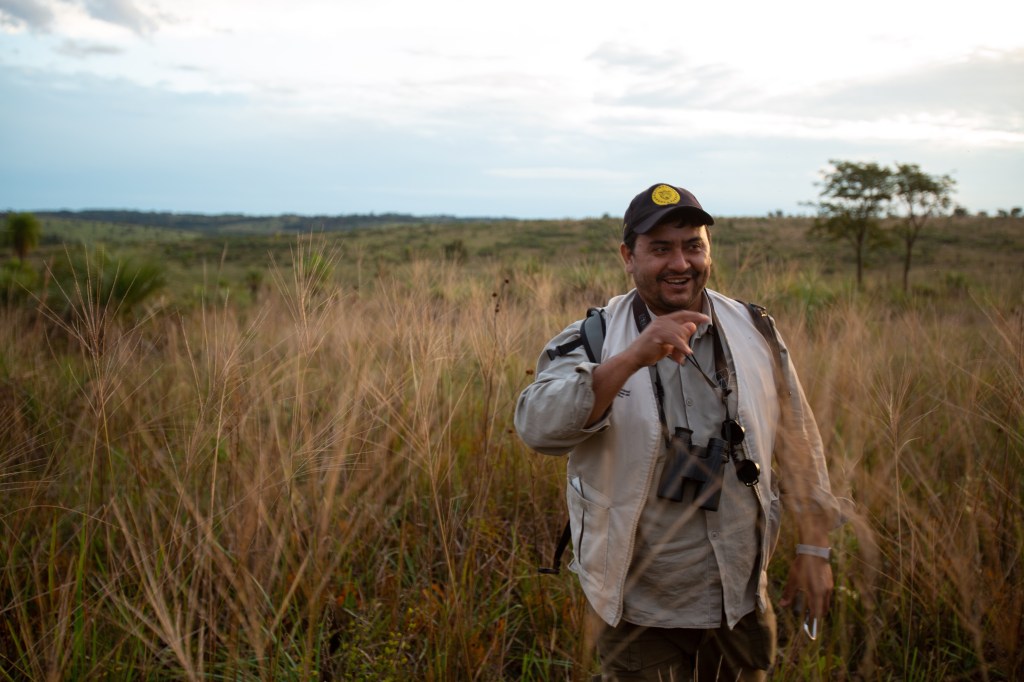
It was an honor to visit such a wonderful piece of Paraguay, and I’m extremely grateful for the people who take care of it.
Next I headed to the Chaco, one of the last new places I’d visit in South America this year.
 Backcountry Birding
Leave a comment