May 2nd-31st, 2023, Canindeyu, Paraguay.
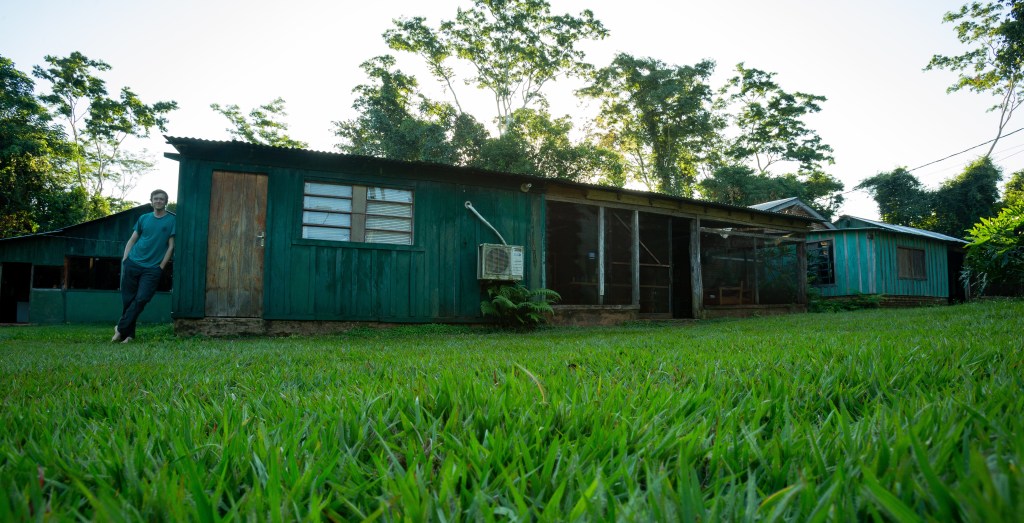
I spent the month of May working as a volunteer at Reserva Natural del Bosque Mbaracayú, Paraguay’s largest forest reserve, which lies in the eastern half of the country, up near the border with Brazil. It mostly consists of lowland Atlantic Forest and Parana Forest, with a small area of Cerrado savanna at the eastern edge. There are over 400 species of bird recorded from the reserve; as such it’s one of the most diverse in Paraguay. It was conceptualized in 1988 and approved in 1991, and is managed by the Moises Bertoni Foundation.
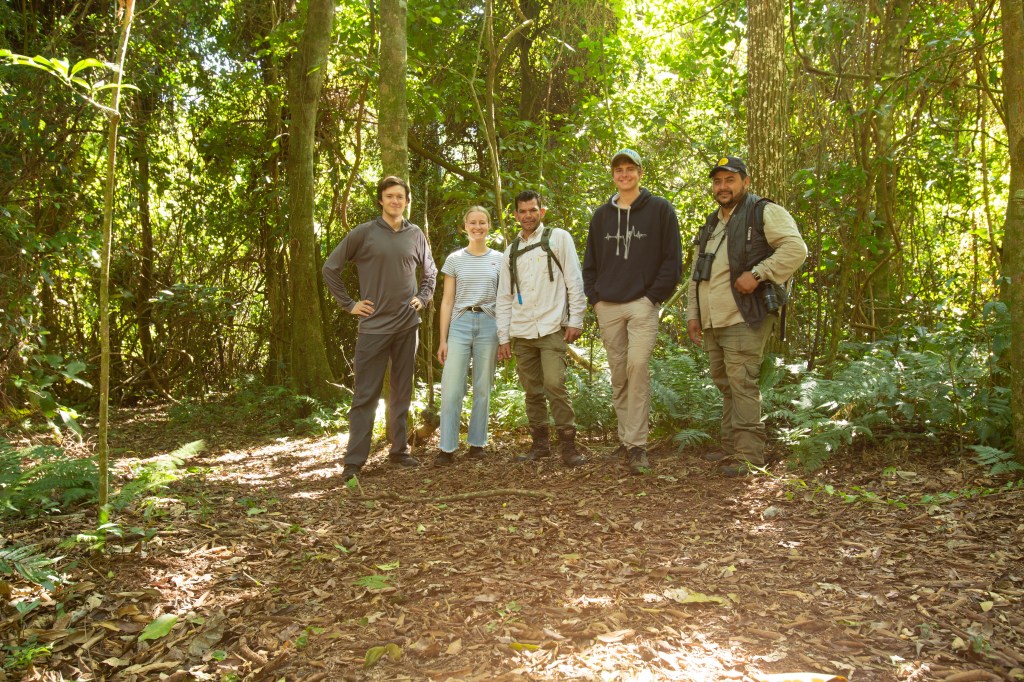
How did I end up here? The story starts when I reached out to Adam Betuel, a good friend and Paraguay fanatic at Atlanta Audubon last July, when I was in the earlier planning phases of the Watson. He gave me the contact info for Paul Smith, a long-time Paraguay bird guide (I actually ended up running into Paul in the Paraguayan Chaco by complete coincidence). He passed me the contact of Miryam Velasquez, the director of ornithology research at Moises Bertoni. I got in touch with Miryam and after a bit of correspondence she offered that I come to Mbaracayu to help with one of her projects: monitoring birds through audio recordings. That was an easy “Yes!” from me.
I caught a bus to Asuncion from Buenos Aires (a quick 20-hour ride) and visited the Moises Bertoni (FMB) main office the next day for an orientation. I learned about the organization and their mission in general, as well as the purpose of the bird project.
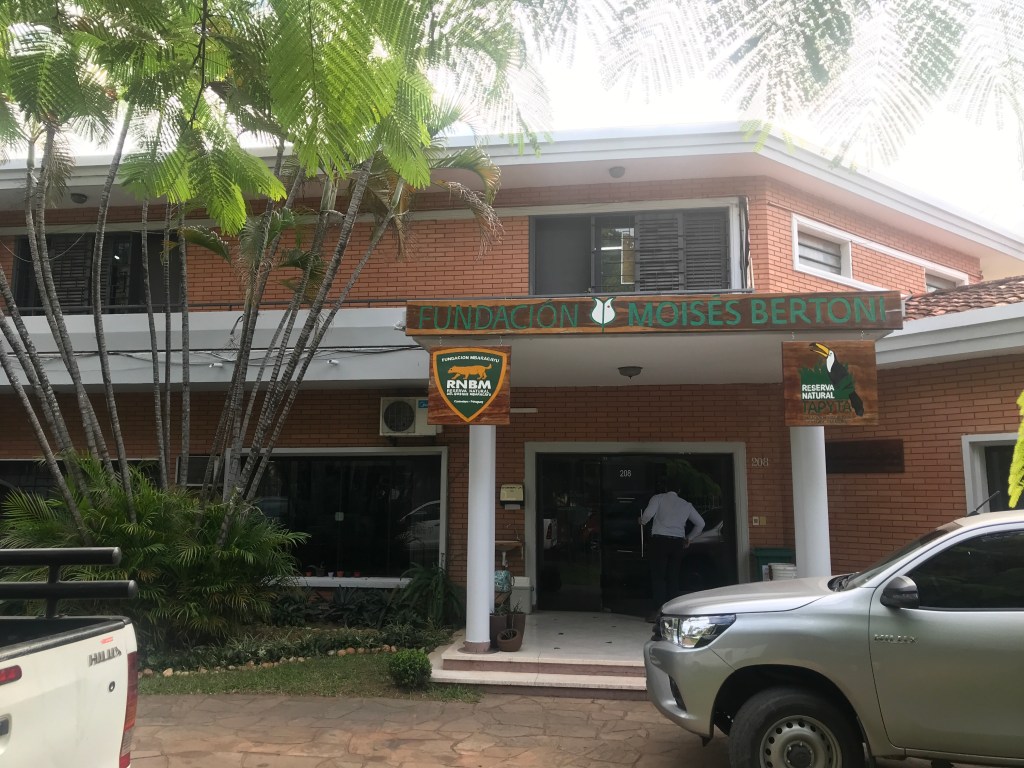
Moises Bertoni (the person) was a Swiss naturalist who came to paraguay in the 1800’s and was one of the first scientists to describe a tremendous amount of the natural history of the Atlantic forest and Río de la Plata region. He finally settled in Paraguay, and so when the Mbaracayu reserve was created, FMB was created in his honor to manage the reserve. With the creation of a couple more reserves, the foundation soon expanded its vision to support natural conservation, community development, and ecological research at a national level.
At Mbaracayu, I learned, there are five main organizational departments: Reserve Management, Community Outreach, and Education, Tourism, and Research.
Reserve Management is what you think of when you hear “park rangers.” The folks that maintain the trails and grounds, and staff the entrance gate houses. Mbaracayu also is where many new rangers get their education before heading to other foundation reserves.
Community Outreach at Mbaracayu involves several social and educational programs at the local town and the several indigenous communities that surround the reserve. While most people in Paraguay speak Guarani and Spanish, the local indigenous community near Mbaracayu speak Ache, and are still a distinct group. Out of respect for their traditional lands, the foundation allows the group unlimited access to the reserve as hunting grounds. I don’t have enough understanding to make a judgement about this, but I was surprised to learn that they’re not even prohibited from hunting the endangered Yacutinga (Black-fronted Piping Guan).
An aside: this was a question I was asked during the Watson interviews: “You meet a local guide, they take you through the forest to find a unique species that you really wanted to see, and after showing it to you they want to shoot it and eat it for their lunch. How would you react?” A very tricky question that I don’t think I can really answer, with a lot at play. I didn’t see any Yacutingas, dead or alive, which I suppose is a relief.
Education at the reserve consists of a girl’s high school where grades 10-12 spend 3 years living and studying in the forest. They learn all the typical math and literature from a regular staff of teachers, but they also learn about conservation and advocacy from staff at the reserve. While I was staying at the reserve, several researchers from the foundation came to give presentations about their work, and a podcaster came and gave a course about media production. What a cool opportunity to learn in a totally different setting than a typical school!
Tourism is one of the foundations strategies for helping to fund the reserve: there’s a fully-functioning birding lodge at the reserve which is a regular fixture on many guides’ Paraguay birding routes, as well as a destination for independent travelers. Each weekend there were typically 4-5 tourists’ cars parked near the lodge, and so it seems that it’s doing very well.
Finally, research was the area where I worked. There are dozens of recent and ongoing research projects at the reserve, and two full-time onsite employees in charge of the day-to-day work and monitoring. These researchers, Sixto Fernandez and Vidal Franco, were the two who I got to spend the most time with during the month I was there.
I was working on a project that aimed to use passive audio recorders to quantify bird species presence and diversity in native forest and at Yerba Mate plantations. During a loosely 9-to-5 work week for the four weeks I was there, I listened to audio and identified any bird songs I recognized, and used the pattern-matching program (Arbimon) to automatically find and validate bird songs out of a collection of 21,000 1-minute recordings from 5 field sites.
Yerba Mate is one of the main regional products from the Atlantic Forest region of South America, growing wild across native forests in the region and cultivated at a large scale since the arrival of the spanish. It’s a much more wildlife-friendly crop than Corn, Soy or Chia, providing at least some degree of cover that persists even after the harvest. Based on what I saw (and what I heard from Sixto and the folks back at Karadya Lodge in Misiones) it doesn’t seem like most plantations actually provide nearly any habitat for more than the most adaptable birds, like Great Kiskadee, Rufous Hornero and Picazuro Pigeon, which can all be found in downtown Buenos Aires.
The project at Mbaracayu and several local farms hopes to promote techniques of cultivation beneath an intact canopy, which can hopefully allow landowners to turn a partial profit while preserving bird habitat.
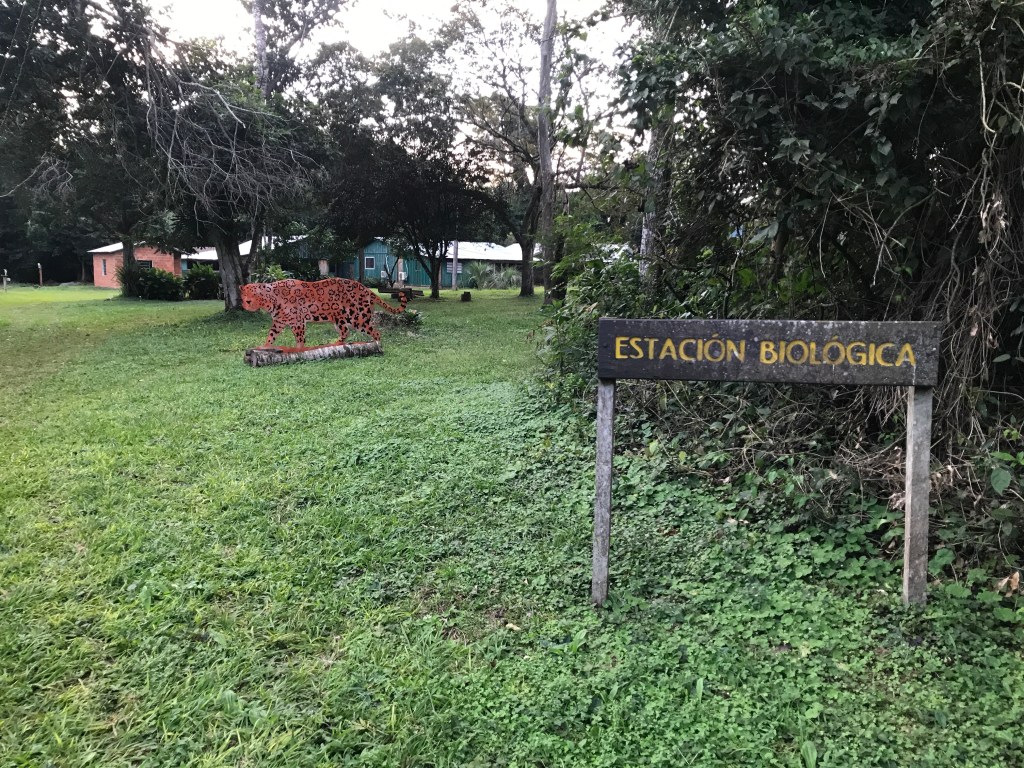
This was my first time staying at an actual field station for more than about a week, and as such it was a very cool experience. It was fantastic to be able to slow down a little bit and relax after what had been a generally fast-paced 3.5 months in Costa Rica and Argentina. No hostel-booking and bus-ticket fiascos, just simple and relaxing work in a very cool field station environment with some neat people.
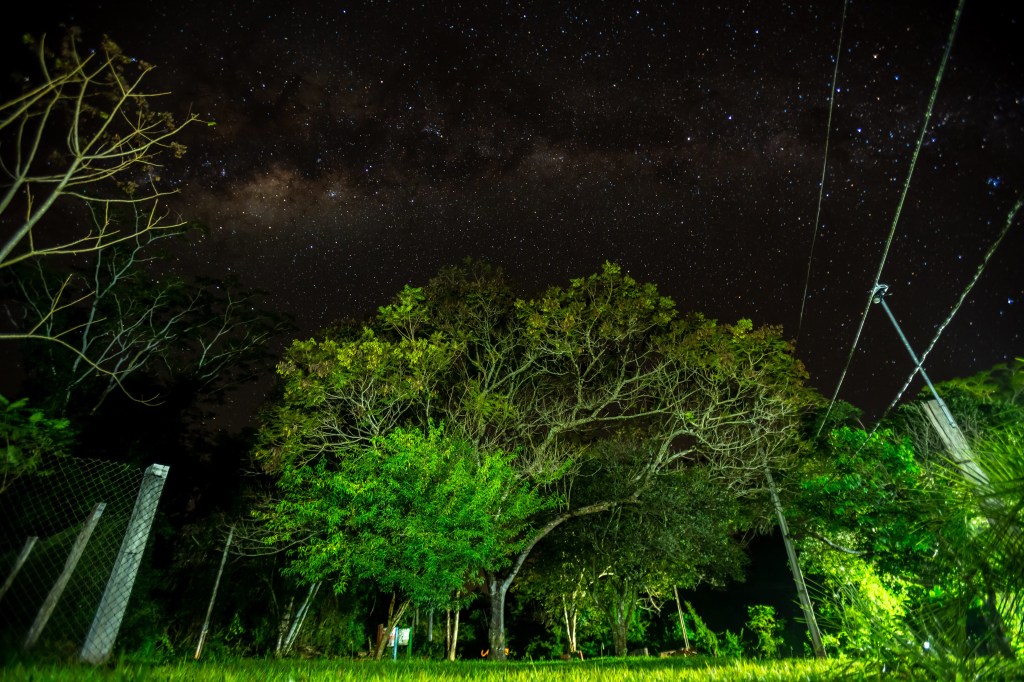
The other person staying at the field station was a gap-year student named Flo. He had been accepted into a year-long program doing similar volunteer work through AFS, an organization that sends lots of students to Paraguay. He had already been there for 9 months, and it was cool to hear his stories about life at the reserve. He had learned a fair bit of Guarani during his stay, and was able to have basic conversations with Sixto and Vidal in Guarani. I only learned a few terms which I am sure I am brutally misspelling here: “Ja-ha” (let’s go), “Ja-kare” (let’s eat), “Amoi-te” (over there), “Guira” (bird), and “Ma’ ena” (Aww, how sweet!). I also learned a bunch of bird names, but those don’t help much in everyday conversation.
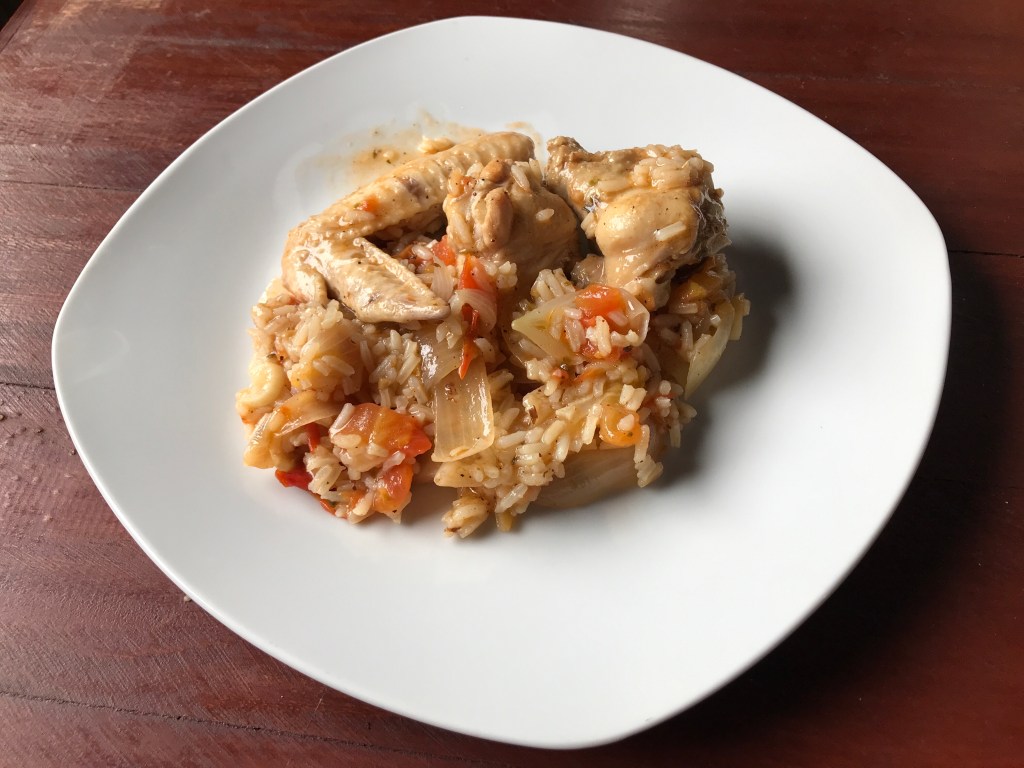
I also got to cook for myself a bit while I was there, which was very fun, even with the fairly simple ingredient selection available. Here’s a pretty good chicken-and-rice recipe that I came up with and made a couple of times, probably to serve about 4.
6 full chicken wings, chopped at the joint | 2 large onions, halved and sliced into slivers | 3 Roma or 2 larger tomatoes, diced | 1 full clove of garlic, minced | 1 cup of rice | Juice of 1 lemon or any sour citrus | vegetable oil | 2 stock cubes | Salt | Pepper | Oregano | Hot Sauce
Season the chicken wings with salt and pepper, then brown them for a few minutes on both sides in a soup pot with a little vegetable oil. Set them aside and add the sliced onion to the pan, turning down the heat a little after you realize it’s way too hot and the chicken bits left over are starting to burn to the pan, and add a little more vegetable oil. After 3-4 minutes add in the diced tomatoes and minced garlic and turn the heat back up because it stopped bubbling and your ADHD demands that the food make noise while you cook.
Once it looks like you should probably add something else, throw the chicken back in and add 2 cups of water and 1 cup of rice, along with enough oregano that you think “hmm, was that too much?” Add the stock cubes and some more salt and pepper, then give it a good stir and cover it with a different pan because the pot you chose didn’t have a lid that fit. Turn the heat down so that it stays at a simmer. Give it a stir every few minutes to make sure the rice doesn’t burn to the bottom, then after the rice is done (probably 20 minutes) add the lemon juice and the amount of hot sauce that you think your diners will like. It’s pretty bomb with this Tabasco-esque sauce that I got at a store here, but any will probably be good.
Serve it with boiled Mandioca, Yucca or Potatoes, depending on what you feel like preparing. If you have kids you should probably add some sort of green vegetable out of obligation as a side (That would not be authentic to the region). It might look something like this or it might not:
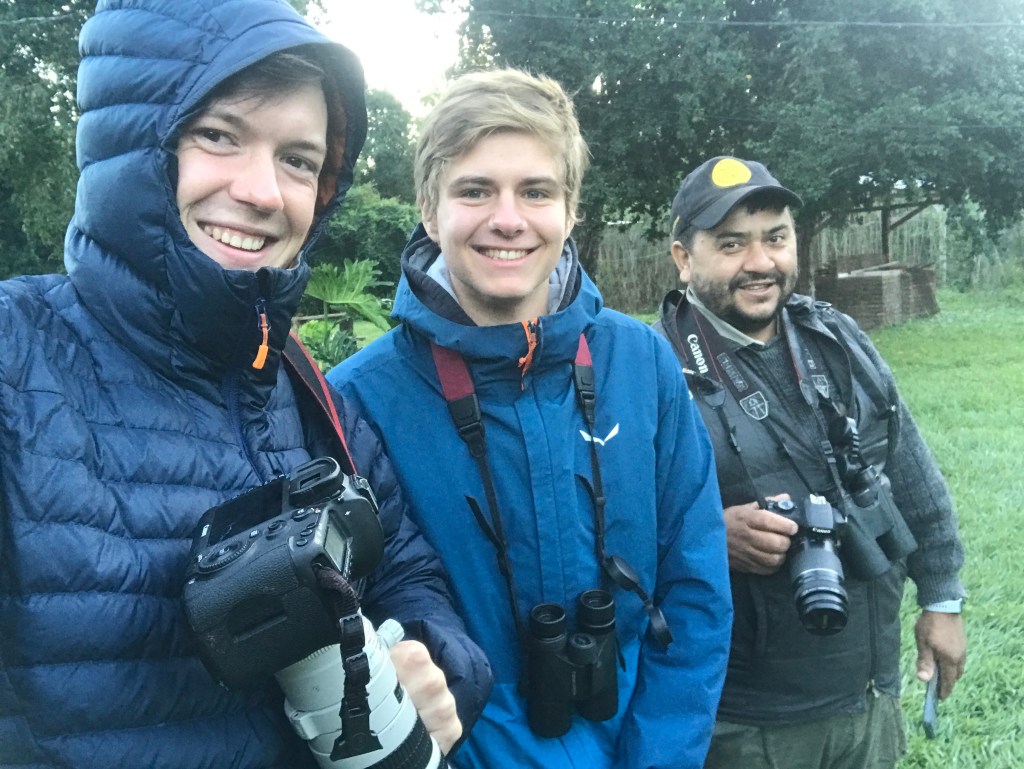
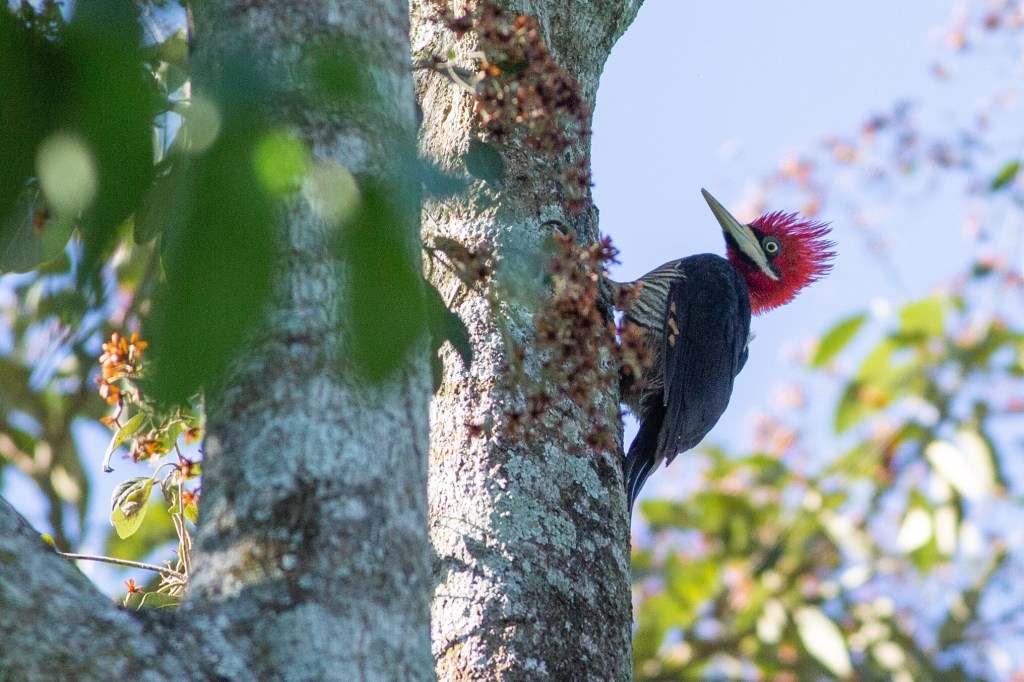
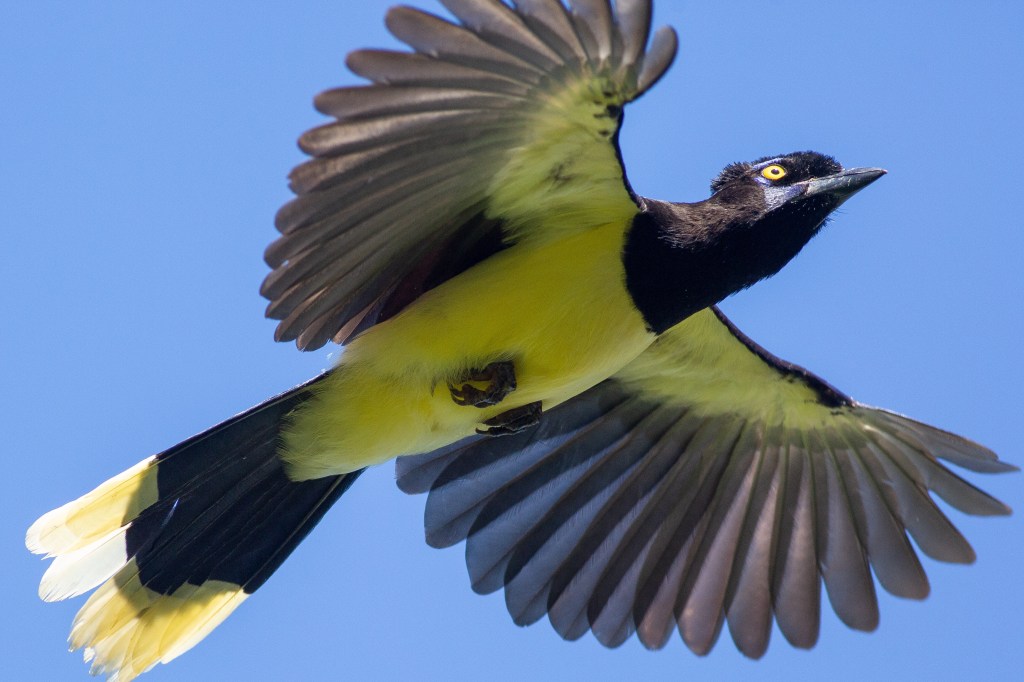
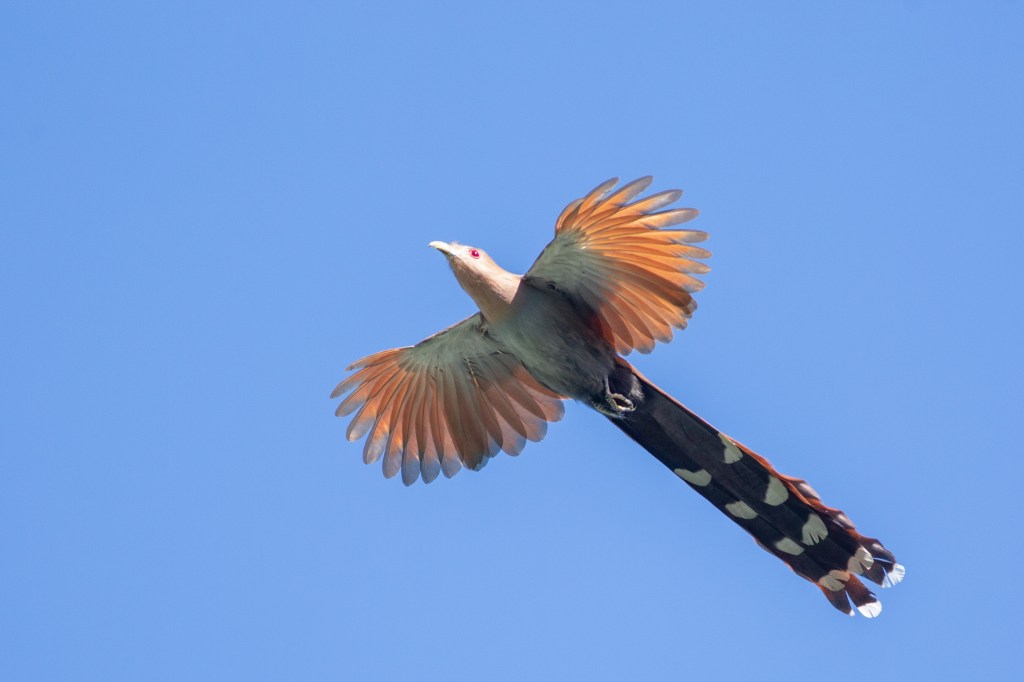
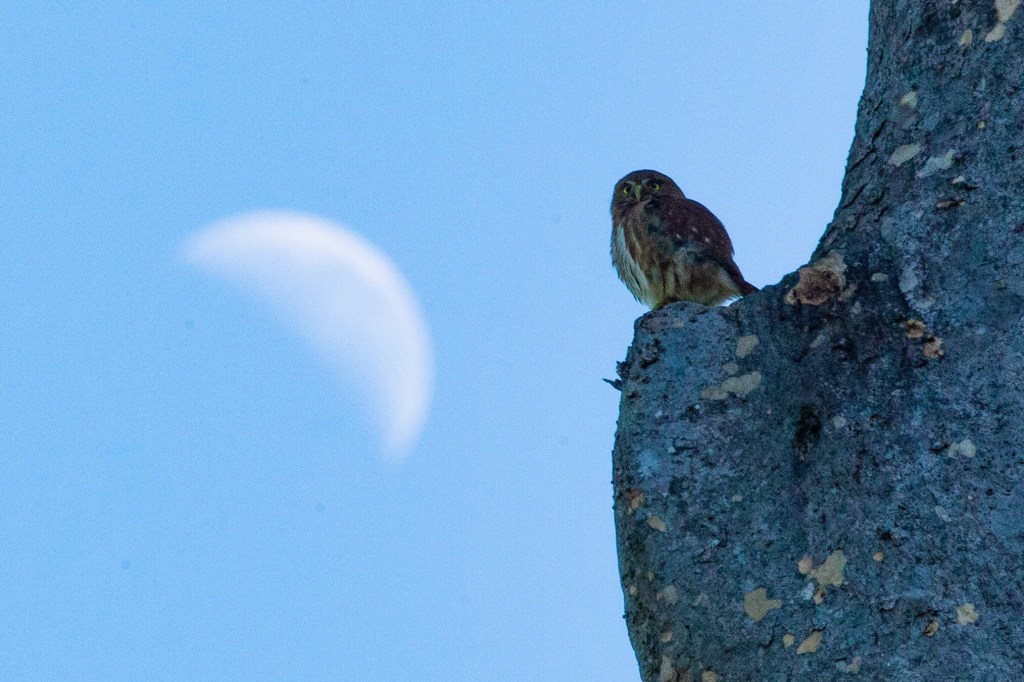
Other than cooking, I also participated in the eBird Global Big Day on May 13. We tallied 65 species, including Bare-throated Bellbird, which I heard on many days but only saw once from a long way off. Here are some photos from that day:
Towards the end of my time there, I got to go with Sixto and Vidal to do the monthly monitoring trip for a very, very rare bird which is known from literally a handful of sites in the world: the White-winged Nightjar.
Thanks for reading once again! Here are my stats as of the day before we went to look for the Nightjar:
Year List: 661 | Lifers this year: 387 | Life List: 1673

 Backcountry Birding
Leave a comment