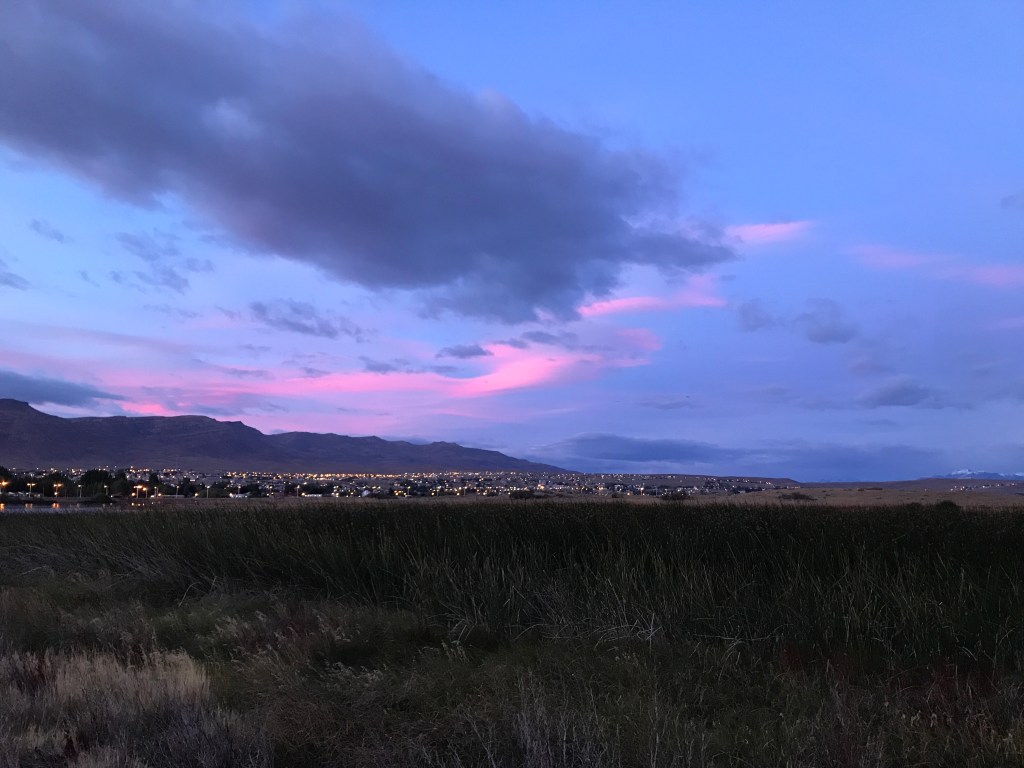
We sat quietly by the edge of the rushes, listening intently. The sun had yet to rise above the steppe, and the distant snow-clad peaks to the west were still a deep cobalt. From about 30 feet away, hidden deep in the reed bed was an Austral Rail, revealing itself only by its soft chirping call. Neither Cristóbal nor I could believe it: after just a couple of minutes of waiting we had found the bird we came to find. The most recent confirmed record from this reserve was 8 years ago.
We made a couple of recordings of the bird to send to Santiago Imberti, one of Patagonia’s foremost ornithologists, to confirm the record before submitting it to eBird. There were a number of other marsh birds to be found in the wetland, but none could really be mistaken for the distinctive chirp of the rail. A family of Cinereous Harriers circled the reed beds, patrolling for any bird or rodent that showed itself. Upland Geese watched from the shorter grass, and flamingos with heads tucked awaited the warmth of the rising sun.
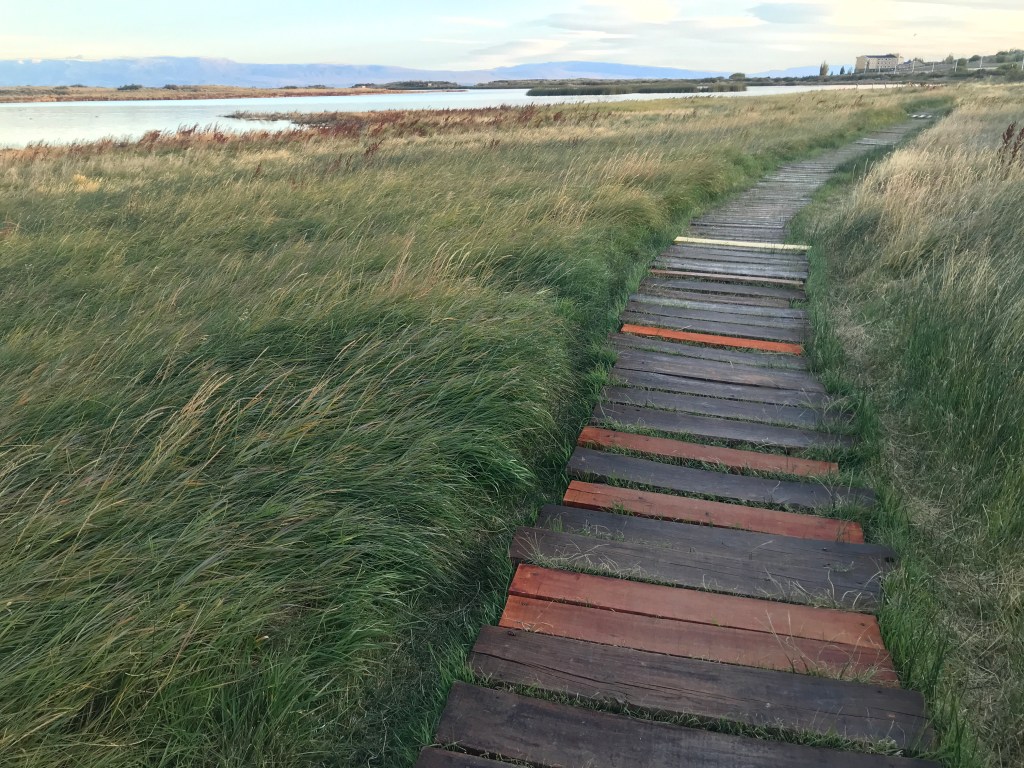
I was birding with Cristóbal Robinson, the president of the local Birding Club chapter, at the Reserva Laguna Nimez, an excellent wetland birding spot right next to the Patagonian town of El Calafate. For some reason it had almost exactly the same feel as the RSPB Minsmere Reserve in the UK, with loads of signage showing the directions for the trails and pictures of birds, excellent boardwalks and great observation decks.
I had swung by the day before (after the 29-hour bus ride from Bariloche) and struck up an interesting conversation with some of the folks working at the reserve. Cristian, who was working at reception, mentioned that he had worked for several years on a shorebird monitoring project with the Manomet Bird Observatory, and that his friend Cristóbal, one of the other observers in the project, was now working as a guide (and volunteering as the bird club coordinator).
He also mentioned that one of the hopes for the reserve was to support a population of the very rare and local Austral Rail, a bird once thought to be extinct, but since rediscovered in specific wetlands across Patagonia in 1998. There are several records at the reserve from the early 2000’s, but he explained that there had been no confirmed sightings since 2015. This sounded like the perfect thing to devote a little time to.
I messaged the Club de Observadores de Aves (@coaelcalafate) on instagram, asking if there were any outings planned for the next week. I got a response that no, there was nothing official planned but if I wanted to go birding there might always be interest. So I pitched the idea of going to look for the rail the next morning… I got a very quick response saying yes, that sounded very good indeed, and that I was talking to Cristóbal who also ran the instagram account. We agreed to meet the next morning at 6:30 (an hour before sunrise) to try to find the rail.
We walked straight to the spot (the rail strictly hides in stands of a single species of sedge: Schoenoplectus californicus), played the call once from the speaker and almost instantly heard a response. A second later we realized it was a Patagonian Mockingbird calling from the dunes beyond the reed bed.
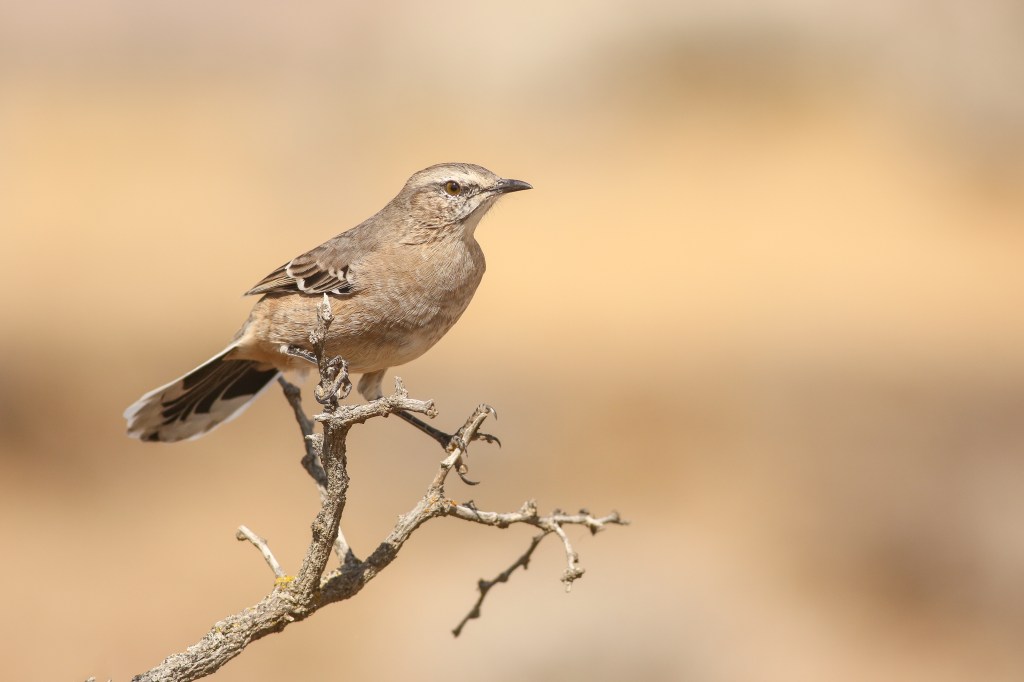
Laughing at the fact that we’d been tricked, we tried playing a different call, and this time heard a different response coming directly from the sedge! Without a doubt this was the rail, and we both were able to get decent audio recordings with our phones. In the interest of not further disturbing the bird, we didn’t play the tape any more. We never saw the bird, but it’s better to leave some that way. Elated, we walked back toward the reserve entrance just as the sun was rising.
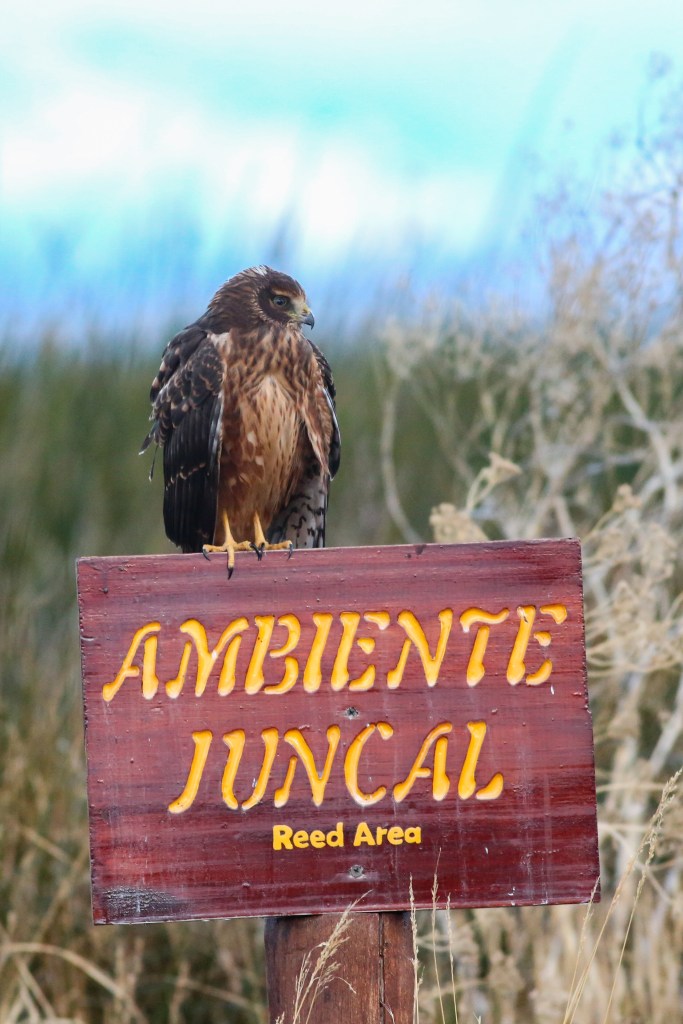
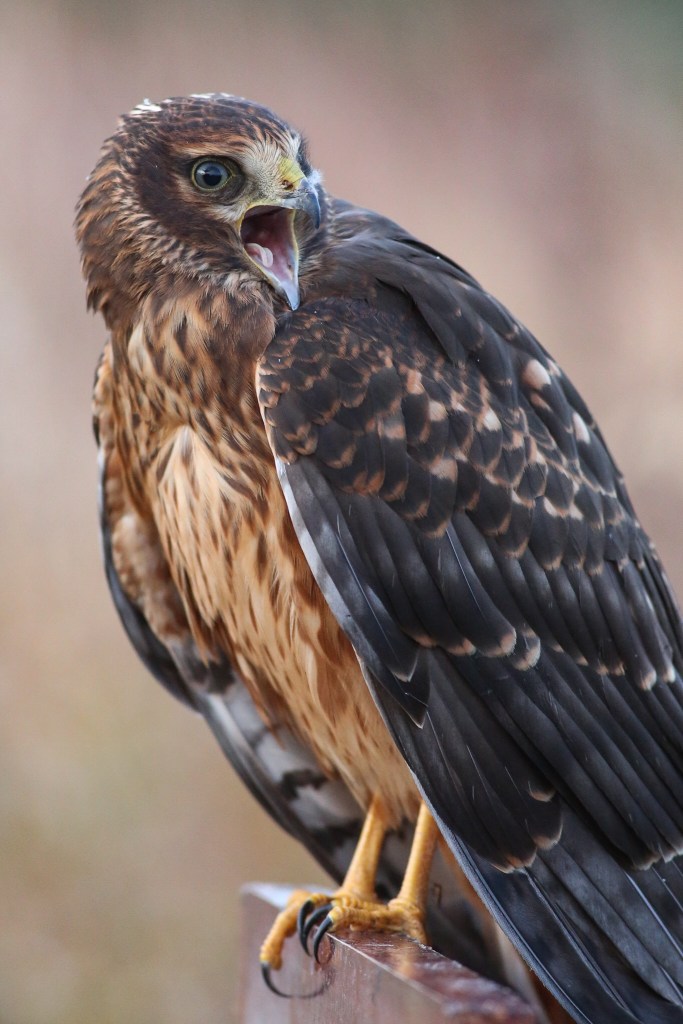
Three first-year Cinereous Harriers, hatched earlier in the season in the reserve, alternated between awkwardly circling the trail and perching on the “Reed-bed habitat” sign, obviously enjoying the well-placed interpretive materials as they were still learning about their environment. Who knew hawks in Patagonia could read!?

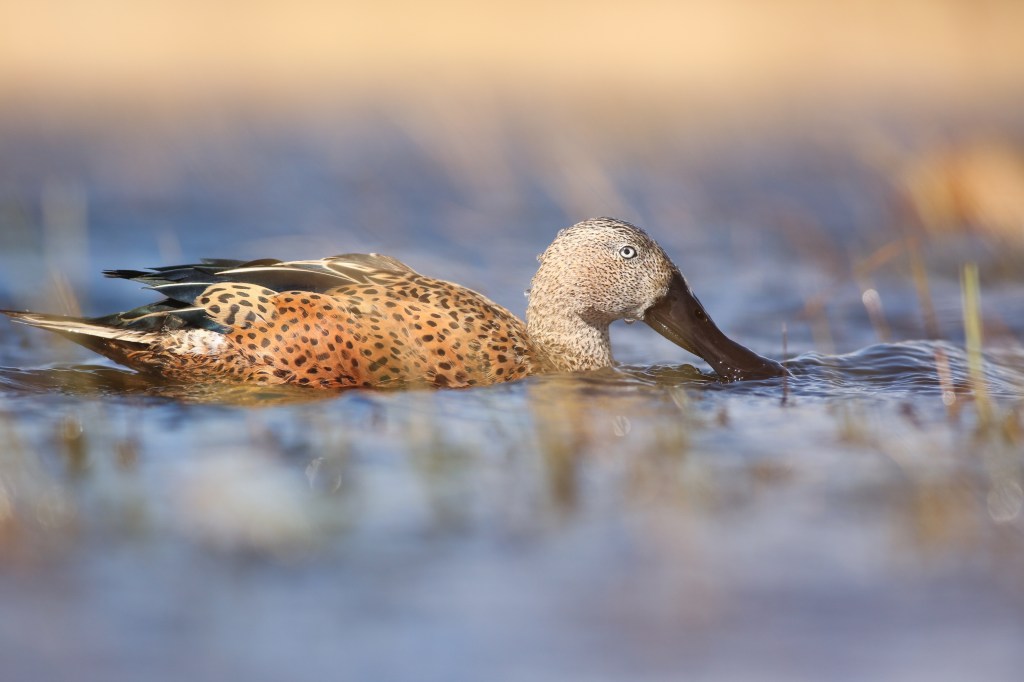
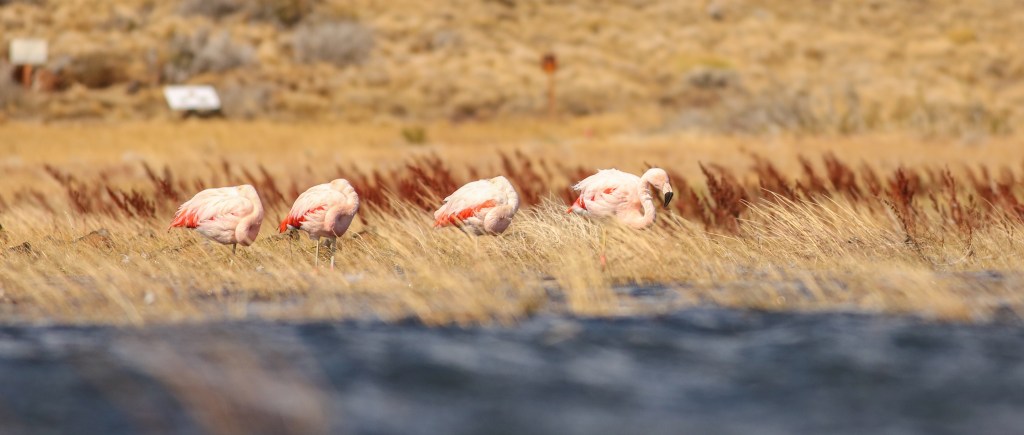
Red Shovelers, Flamingos, Black-necked Swans and other waterbirds were abundant. Here are a couple of photos I got over the three days I spent visiting the Reserve:
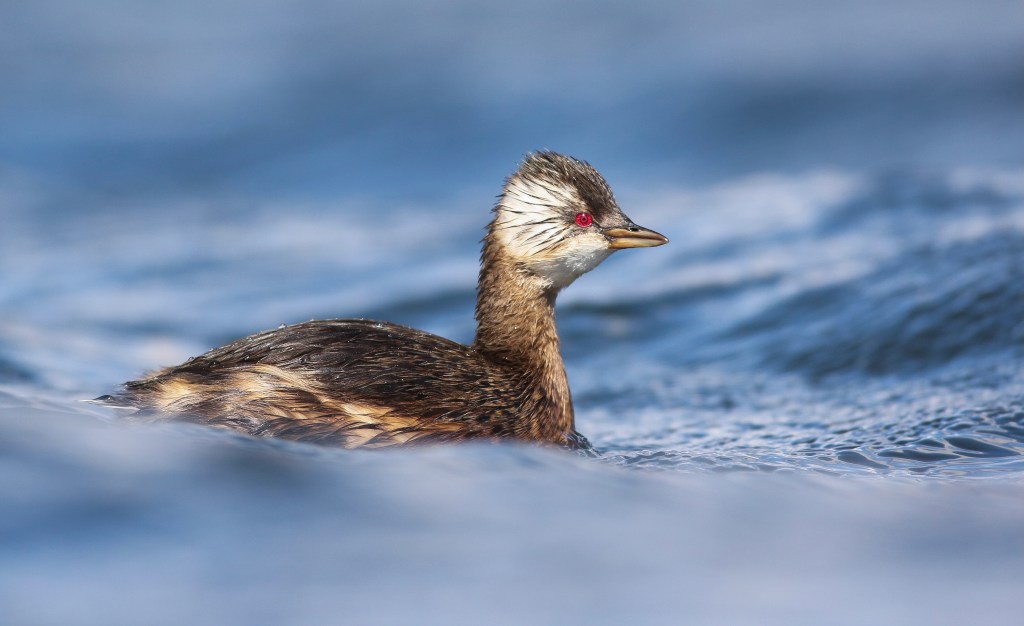
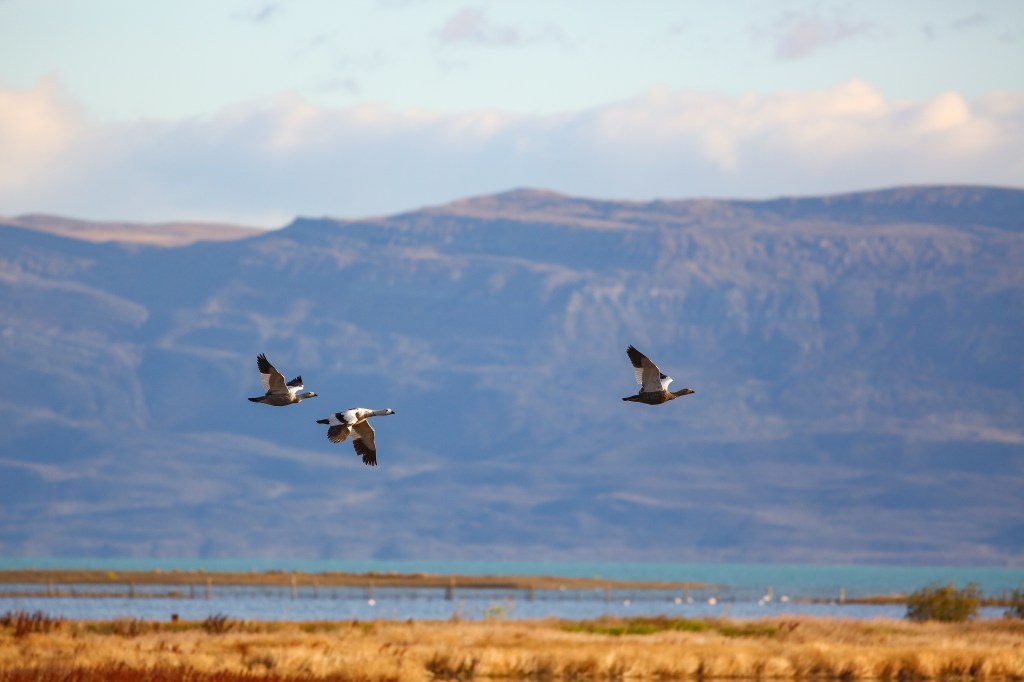
I also got to see a bird that I’d wanted to see for quite some time, the Many-colored Rush-Tyrant, or Tachuri Sietecolores. Here is a photo I was able to get, as well as an excellent poem by Pablo Neruda (he was a birder), from his collection “Arte de Pájaros.” It’s probably the best poem I’ve ever read about birds, awkwardly translated by yours truly.

“Sietecolores” by Pablo Neruda
En la laguna la espaldaña,
el totoral humedecido,
algunas gotas viven y arden:
he aquí de pronto un movimiento,
una minúscula bandera,
una escama del arcoiris:
el sol lo encendió velozmente,
cómo se unieron sus siete colores?
cómo asumió toda la luz?
Allí estaba pero no estaba:
no está la ráfaga, se fue,
tal vez no existe pero aún
está temblando la espadaña.
In the lake of grass,
the damp reed bed,
live a few burning droplets:
here comes a sudden movement,
a miniscule banner,
a rainbow-colored fleck:
the sun swiftly sets ablaze,
how did they unite its seven colors?
How did it assume the light itself?
There it was but there it wasn’t,
the flash isn’t there, it vanished,
maybe it didn’t ever exist but
even still the reeds are trembling.
I also have to extend one million thank-you’s to some family friends from Atlanta, Kim and Pierre Russell. In my first week in Costa Rica I dropped my beloved binoculars (a gift from the Cornell Young Birder’s Event which is coincidentally taking applications at the moment). They did not get along well with the slab cement floor and the focus henceforth has been different in each eye, resulting in skull-splitting headaches after about 30 minutes of use. This specific design (roof-prism) is tricky to service, and every binocular repair shop in Buenos Aires gave me the same response: “We can’t touch those things, we’re not certified.”
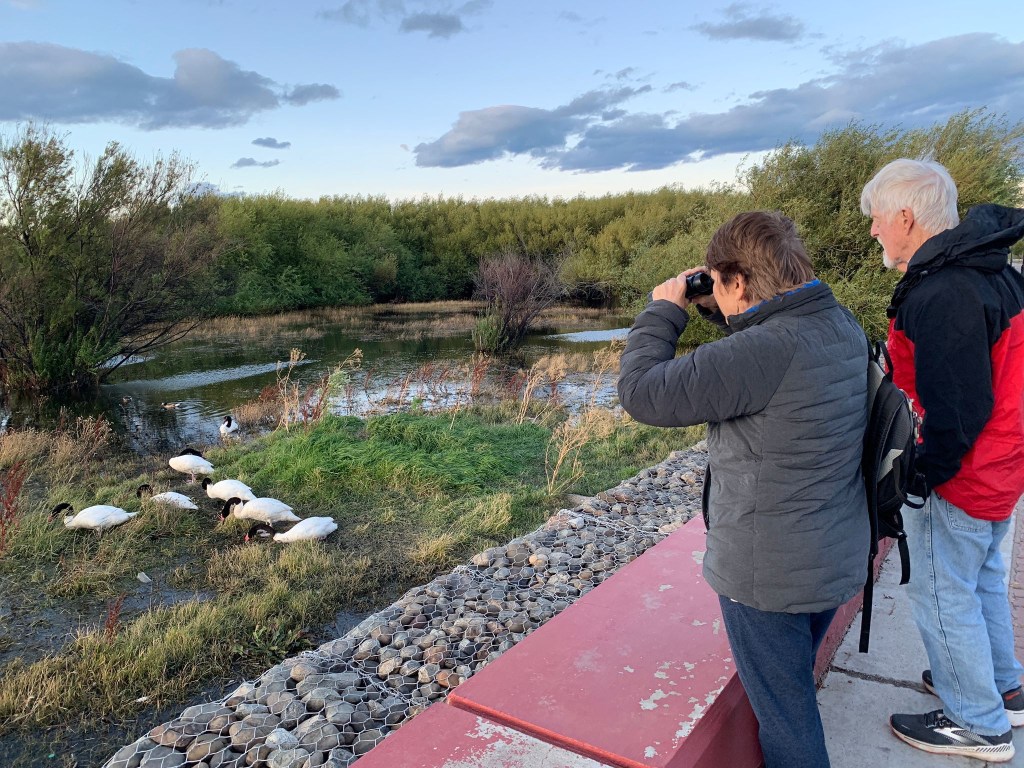
So when I heard that the Russells were headed to Argentina I realized what I needed to try to do. 2 hours of coordinating later and my dad had dropped off his pair of binoculars for the Russells to bring down here, and they had agreed to take my pair back to the US where they could be fixed. We had a really lovely couple of evenings in El Calafate, and we saw some Black-necked Swans and other birds at very close range. I am incredibly grateful for everyone involved.
Cristobal is currently working on his guiding certification (an extremely rigorous process equivalent to a college degree) and had a couple of exams over the next week. Instead of asking him if he’d be willing to balance birding and studying for a couple of days (I know what I have historically done in that situation) I decided to take the chance I had and head down to Tierra del Fuego, to Ushuaia.
I have wanted to visit the world’s southernmost city for quite a long time now, and the relatively cheap bus fare combined with the convenient week of unavailability on Cristobal’s part meant that it was too good of an opportunity to miss. I bought the bus tickets and packed my bags. Check out the next blog to read about the pretty spectacular few days that followed. Thanks for reading!


 Backcountry Birding
Leave a comment