
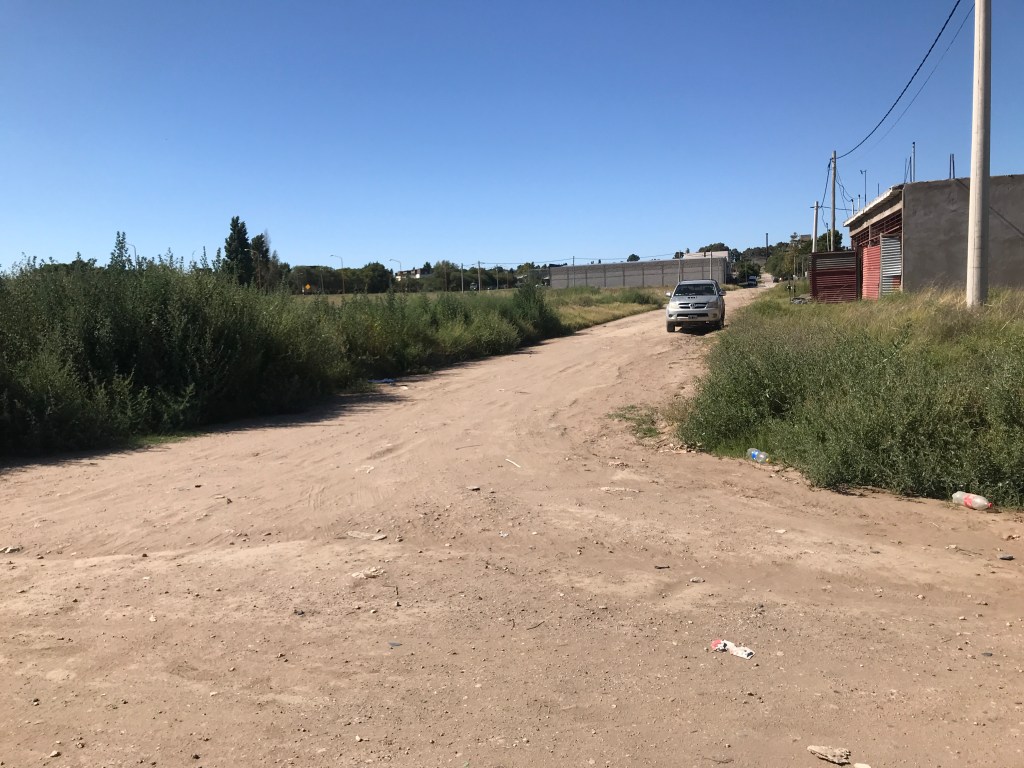
Bahia Blanca is the biggest town in the south of Buenos Aires province. A port city with several factories and diverse semi urban neighborhoods, it’s a very different vibe from the tight streets of Buenos Aires. Here’s a street in the neighborhood where I was staying:
The owner of my hostel heard that I was into birding and suggested that I visit a nearby colony of Burrowing Parakeets (Loros Barranqueros).
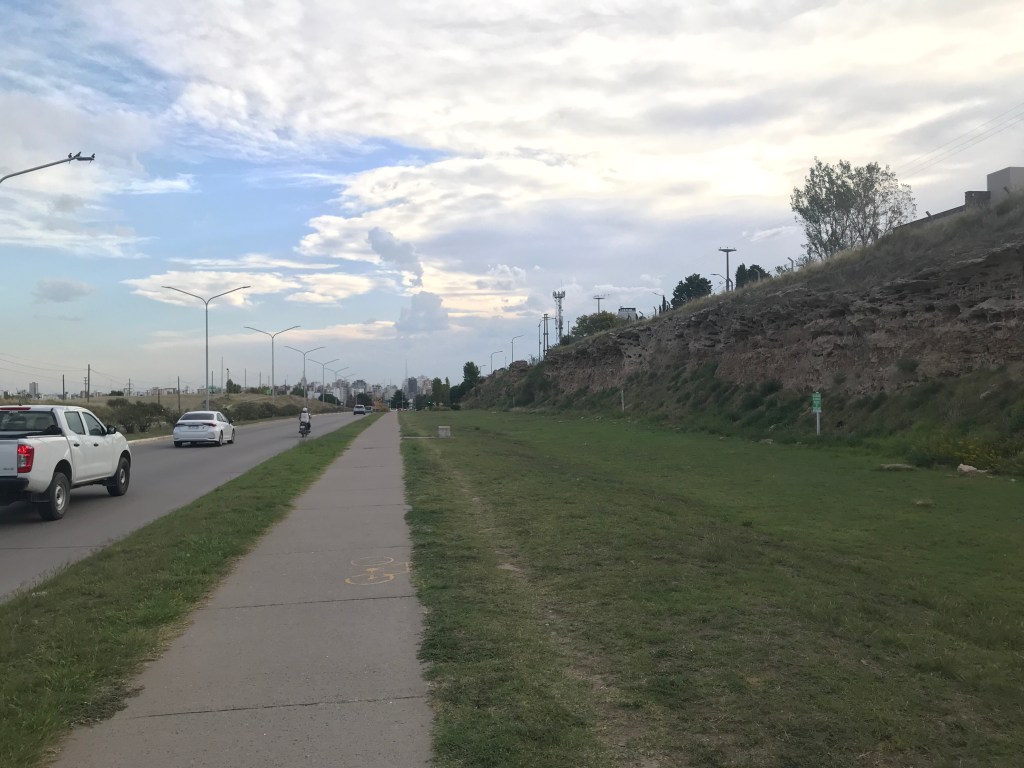
The earthen bank where the colony nests, as it turns out, has a pretty interesting conservation story to go with it. The land directly above the bank is owned by a group of Bahia Blanca’s wealthiest residents. It also lies near a country club and a private recreation complex. The parrots, needless to say, aren’t the neighbors these folks were looking for: loud, dirty and numerous (about 2,000 reportedly nest in the main bank according to a recent census). So naturally the homeowners started to look into options for removing the colony. Word of this got around to a few local newspapers and soon the colony had become a point of environmental pride for the city. This species naturally nests in more rural areas, and the fact that they still nested at this bank, now surrounded by the city, made them unique, along with the exceptional size of this particular colony. “Did you know that the world’s largest parakeet colony is right in our city?” was the headline of one article. “The most Bahia sound? learn the history of our urban parakeet colony” offered another. Long story short, the birds are still there, as they were before the country club and gated community. Now there are signs proudly proclaiming the colony’s existence, and there is a public nature park across the street where the city has planted native trees and created walking trails.

Getting there from my hostel was a bit tricky since I was far from an expert in navigating the local bus system. Everyone was extremely helpful, offering advice on where to wait for particular buses or what line could take me in the direction of the colony, but it still took a couple of hours to arrive at the shopping mall near the colony. The parakeets are only active at dawn and dusk, as they come and go from the burrows. I had a couple of hours to kill while it was still searingly hot so I sat in the shopping mall and had a frozen lemonade and a couple of Medialunas con Jamón y Queso (ham and cheese croissants). The funny thing about medialunas is you have to order them either salty or sweet. I’ve only tried the sweet so far; they’ve got a coating of sticky sugar or syrup which I think must be the Argentinian equivalent of the McGriddle (McDonalds breakfast sandwich made with two syrup-soaked pancakes).

At about 6 I ventured out to the park. After walking around for a while I ran into a guard who informed me that I wasn’t in the park but actually the private recreation center. Fair enough. He pointed me in the right direction and I headed over. Before meeting the guard I did get a fun picture of a Chimango Caracara dumpster-diving. As Johnathan Meiburg beautifully illustrates in his book “A Most Remarkable Creature” Caracaras tend to fill the niche of crows, jays, small hawks and vultures in many parts of S. America when those birds don’t occur. This one was very pleased to be acting like a crow:

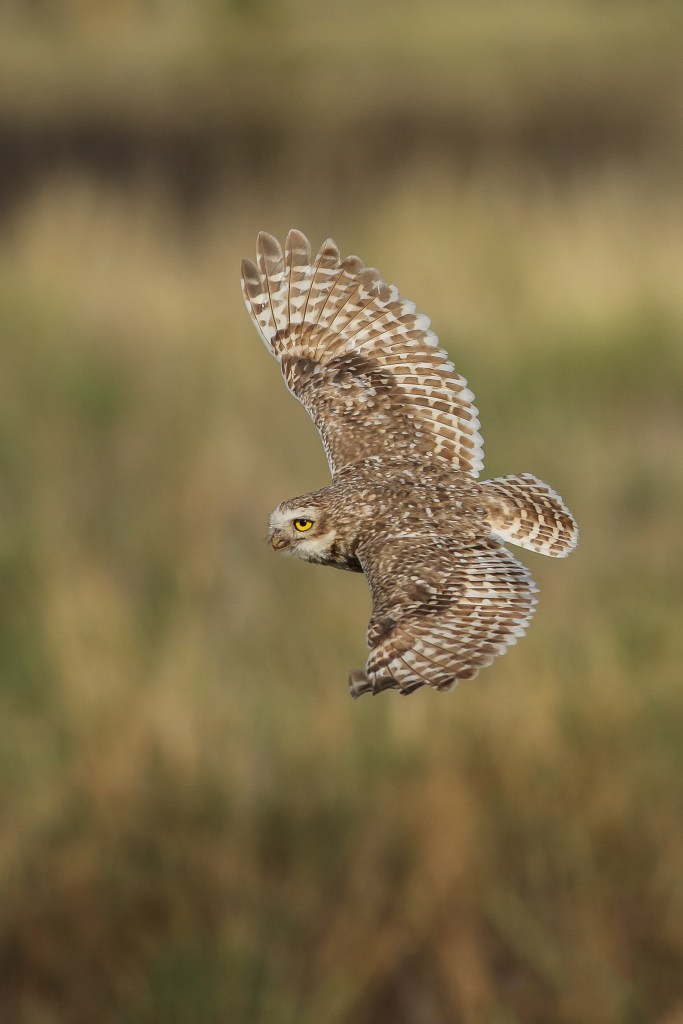
In the public park I was instantly surprised with a pair of extremely cute Burrowing Owls and their children. They weren’t quite so pleased to see me as I was them, but they didn’t care that much. Very pleased with a couple of the shots I got:

I saw a couple of parakeets hanging out on the telephone wires, but none seemed to be particularly interested in visiting their burrows. I think I must have been there just after the nesting season was over.

Their affinity for perching on telephone wires is the source of the first example of their conflict with Bahia Blanca’s human residents. The first telegraph wires installed to and from Bahia Blanca had a very peculiar issue. Between the hours of 6pm and 7pm there was a tremendous amount of interference that rendered them useless. When engineers went out along the line by train, they couldn’t find anything wrong. It wasn’t until a pair of technicians walked along the lines during the problematic hour that they discovered the problem. The two wires were installed one directly over the other, and before heading to their burrows the parakeets would perch in such large numbers on the upper wire that it sagged to touch the lower. Hence the regularity of the interference. The previous attempts to discover the issue had failed because any parakeets that heard the train coming would immediately fly away, leaving the wires looking as good as new! The solution: adjust the wires so they were side-by-side.
The parakeets definitely didn’t seem to be wanting to visit the bank, so I headed back to the hostel. And not a moment too soon, as I walked in the door it started pouring rain!
The next day I got up at 5 to try and find one of Argentina’s hardest-to-see birds (if you don’t have a car), the Pampas Meadowlark. But that’s a story for another post! Thanks for reading.


 Backcountry Birding
Leave a comment