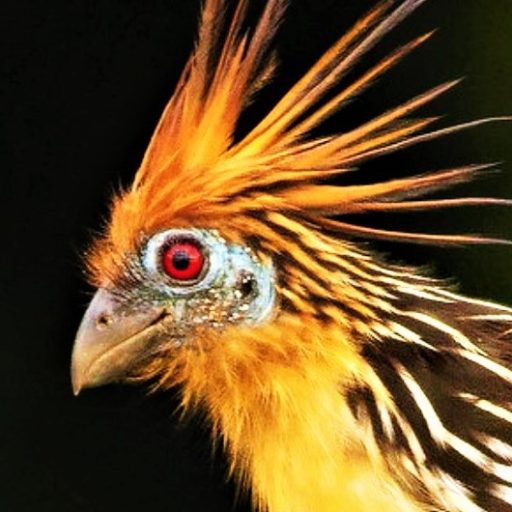
After exploring some areas around the Turrialba area, I headed down to Montezuma on the Pacific Coast. The Nicoya Peninsula is the large body of land in the westernmost part of the coast, and it’s faster to take a ferry across than to drive all the way around the gulf. I was headed there to see one of Costa Rica’s oldest reserves, Parque Nacional Cabo Blanco (White Cape).
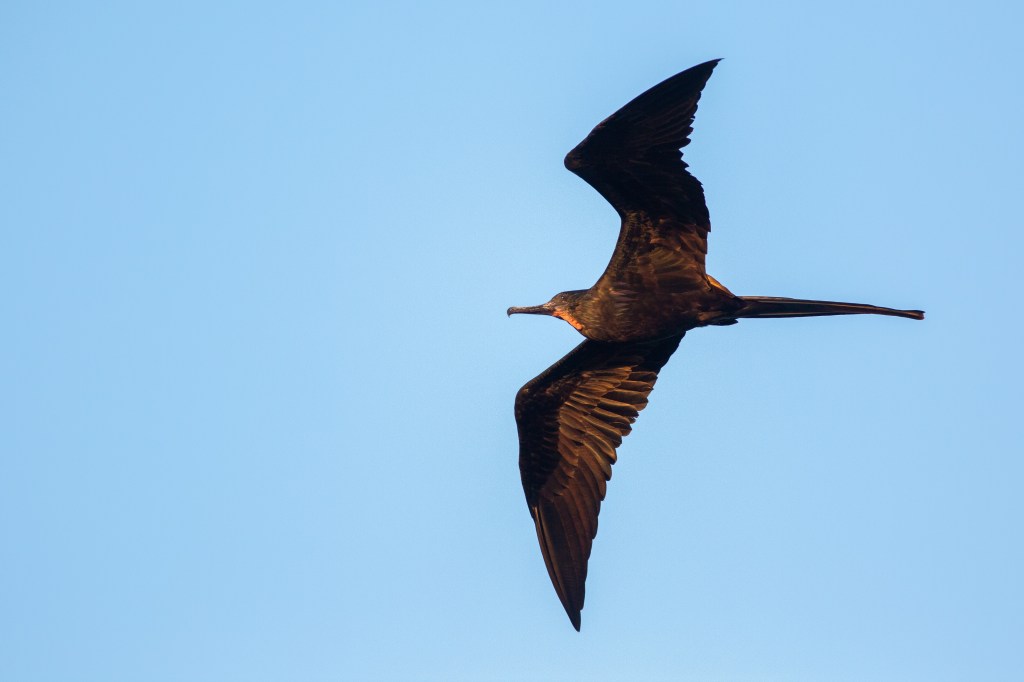
From the ferry there were great views of Magnificent Frigatebirds
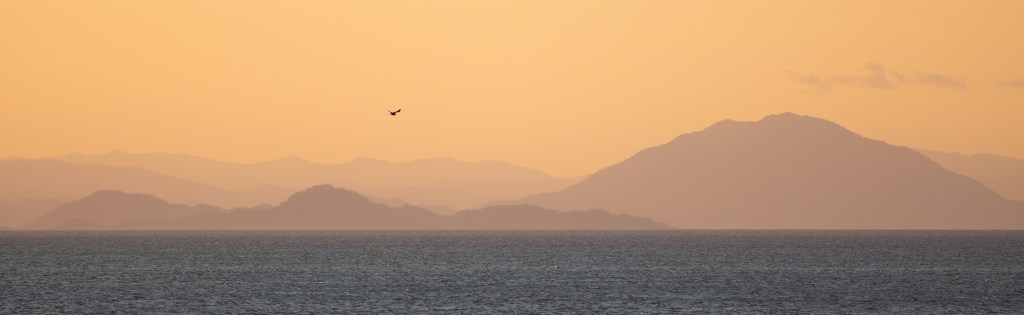
I got a couple of shots against the mountains of the peninsula just after sunset.
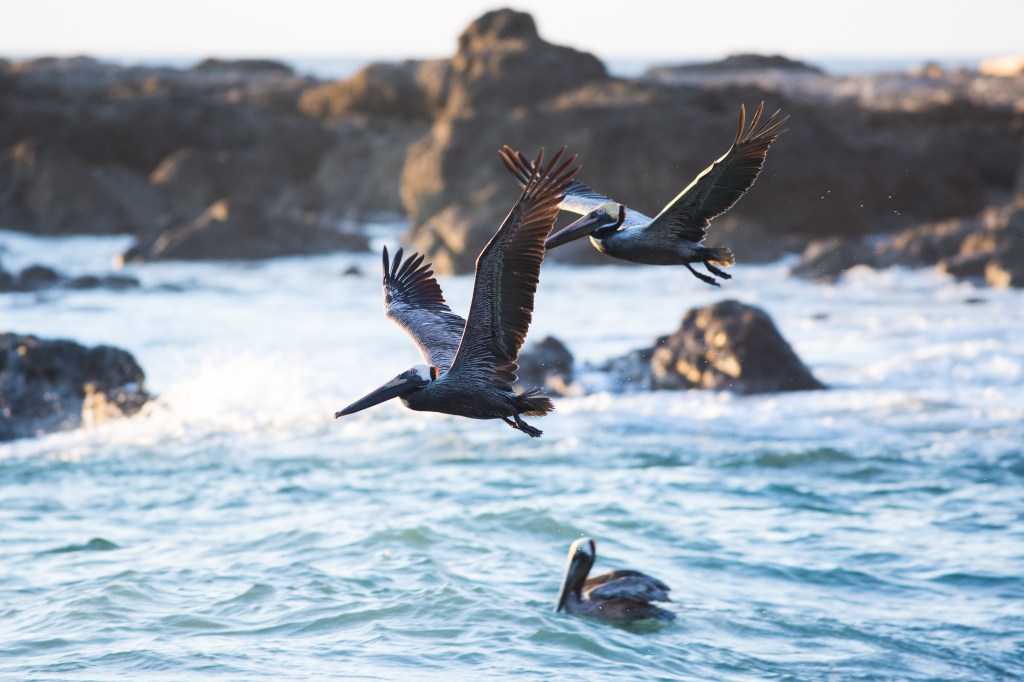
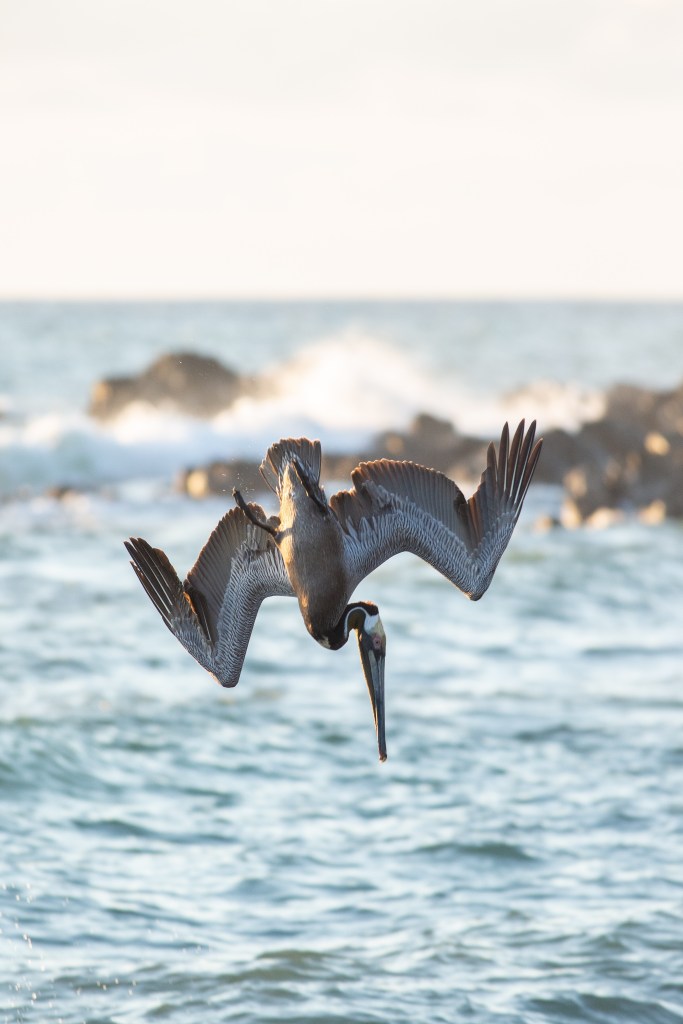
The next morning in Montezuma I had front-row seats to an early morning fishing exposition put on by the local flock of Brown Pelicans in the beach by the hostel.
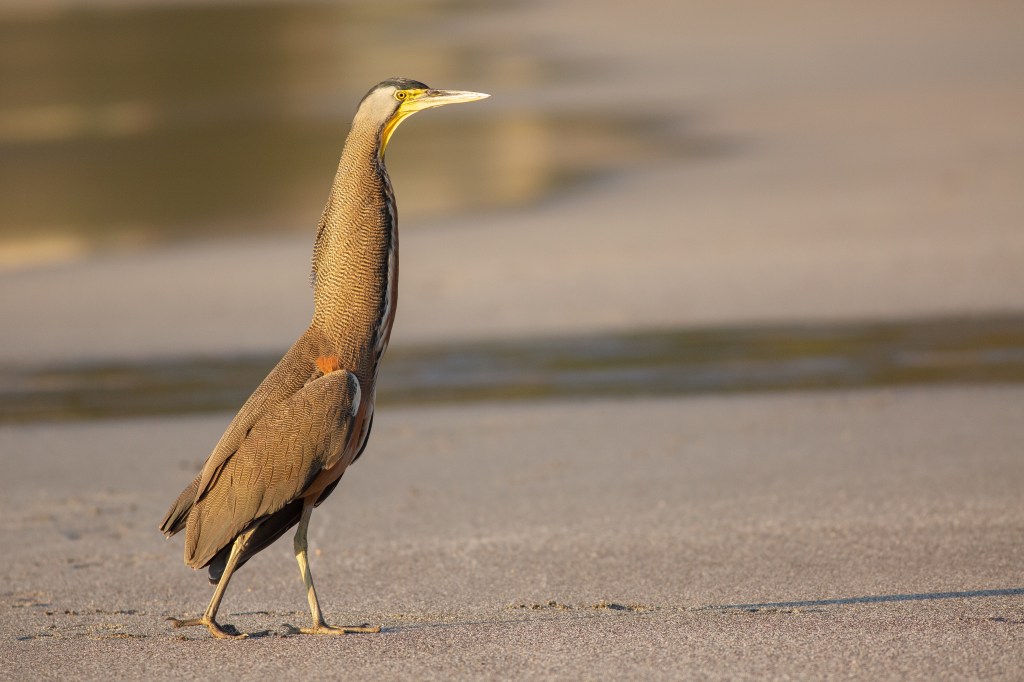
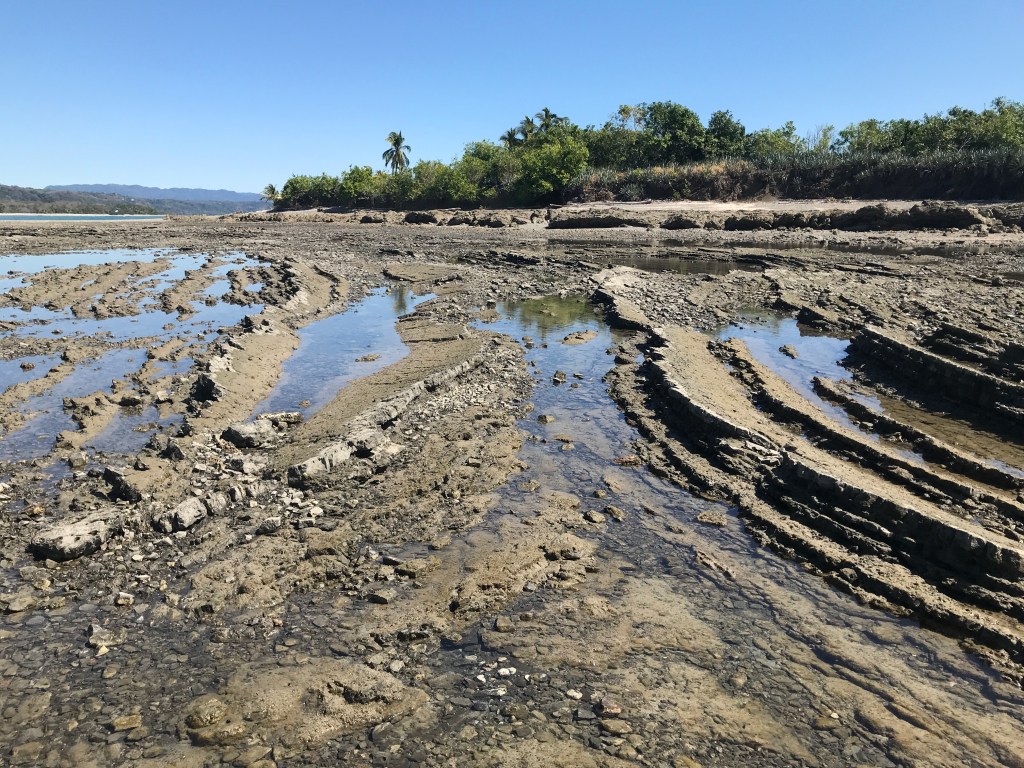
After that it was gallo pinto (beans and rice), eggs and toast for breakfast. Since the park is closed on Mondays and Tuesdays, I visited Cabuya Island, a small island about ¼ of a mile off the coast with a causeway that’s exposed at low tide.
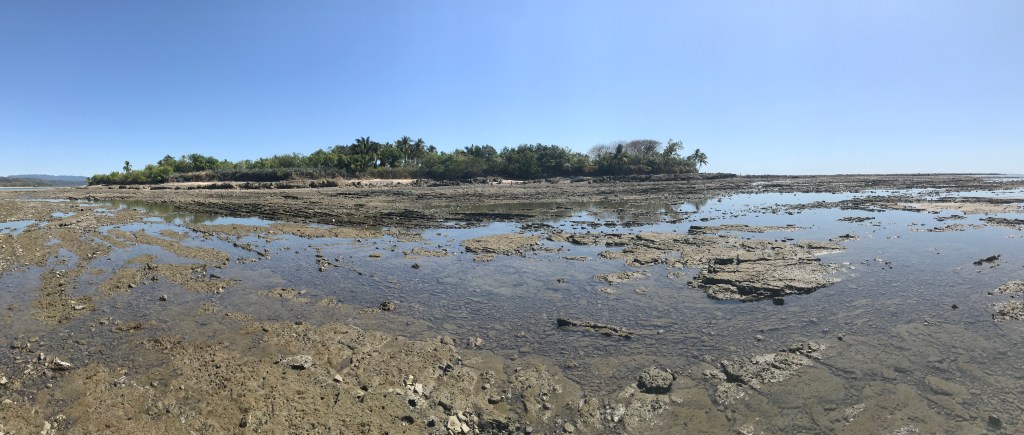
[Geology Break]
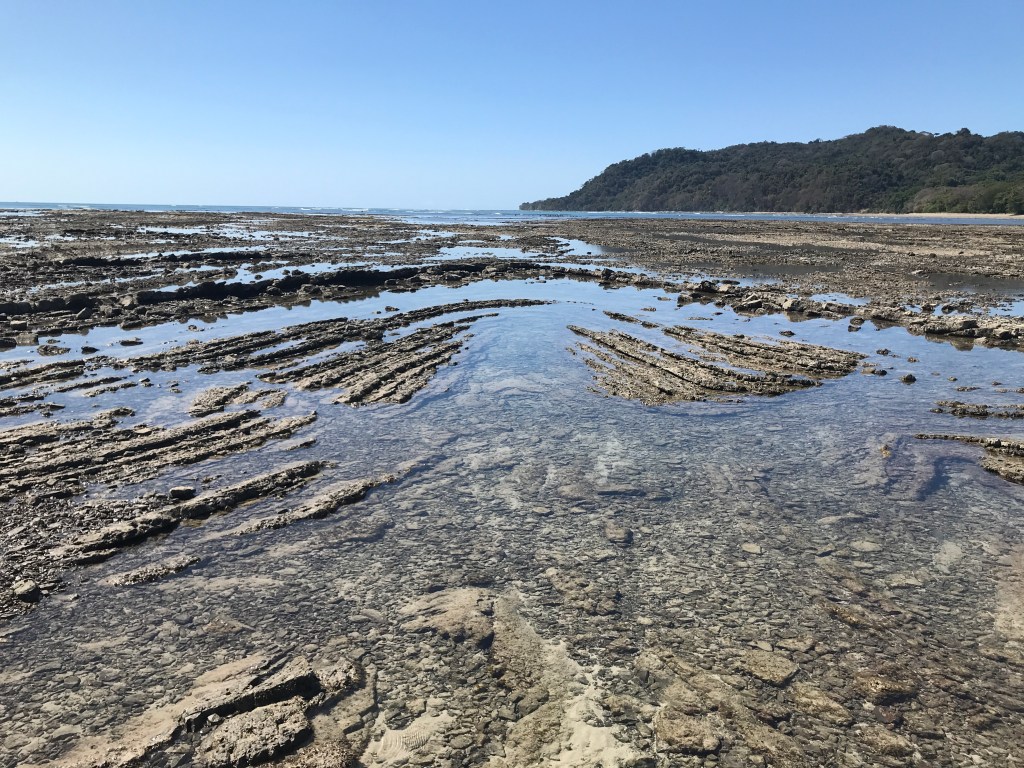
The shoreline here is made of some time of sedimentary mudstone or limestone with very thin layers. It’s been folded pretty spectacularly (I would guess because of tectonic compression between the Pacific and Caribbean plates) and eroded to reveal the folding structure in clear definition:
The next day I walked up the beach to the Reserva Absoluta Nicolás Weissberg, on the recommendation of a guy at the hostel who had been volunteering there. It’s a pretty remarkable historical site which has a lot to do with the establishment of the park system in Costa Rica. Essentially this reserve is the former property of a Swedish couple who moved here in the early 50’s after the trauma of WWII in search of a better place to live. They settled just north of Montezuma and started reforesting the 63-ha property, and soon realized that the nearby Cabo Blanco had some of the only remaining virgin forest on the Nicoya Peninsula. They worked with the Costa Rican government to convince them of the value of a National Park and after several years it was declared Costa Rica’s first.
The full story of Don Nicolas and Doña Karen as told by the Costa Rican Star.
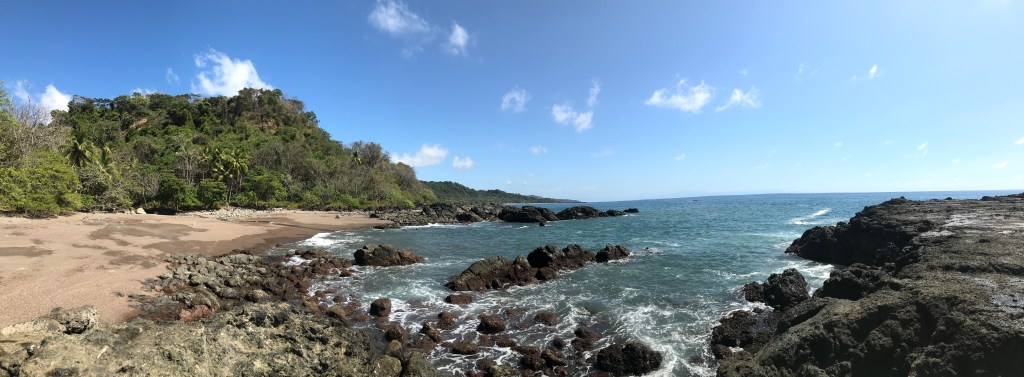

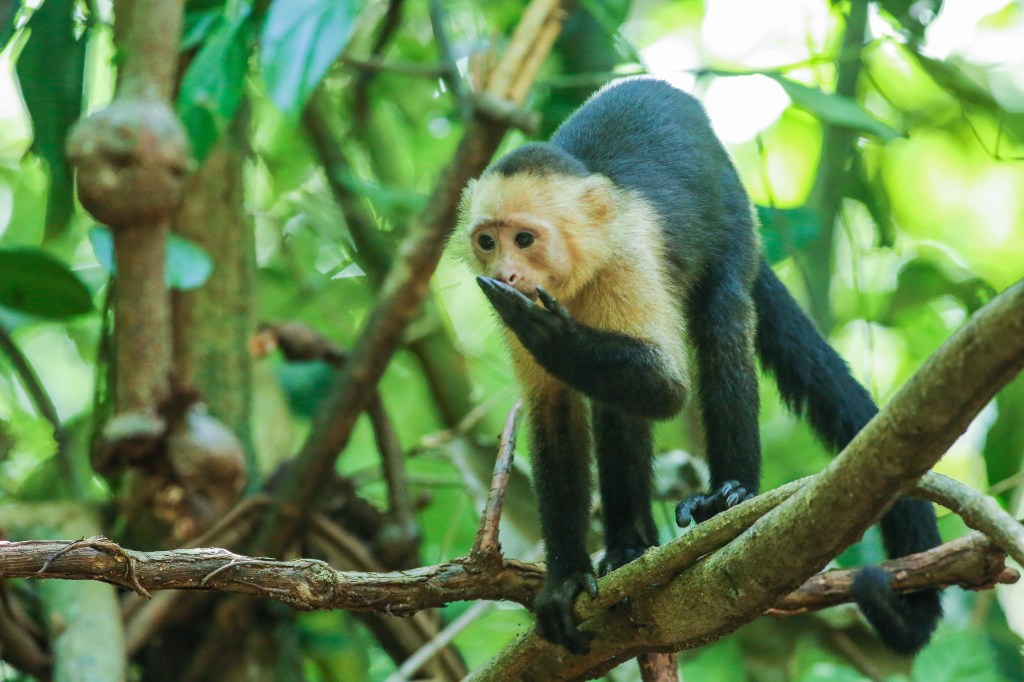
The couple’s former home is now also a Reserva Absoluta, the highest level of protection under Costa Rican law. There are no roads that lead there (only access is a walk along the beach) and there are two standing houses currently under renovation. The seaside location means that basically any metal rusts extremely quickly, and the ubiquitous capuchin monkeys are quick to dismantle anything in progress as soon as you turn your back!
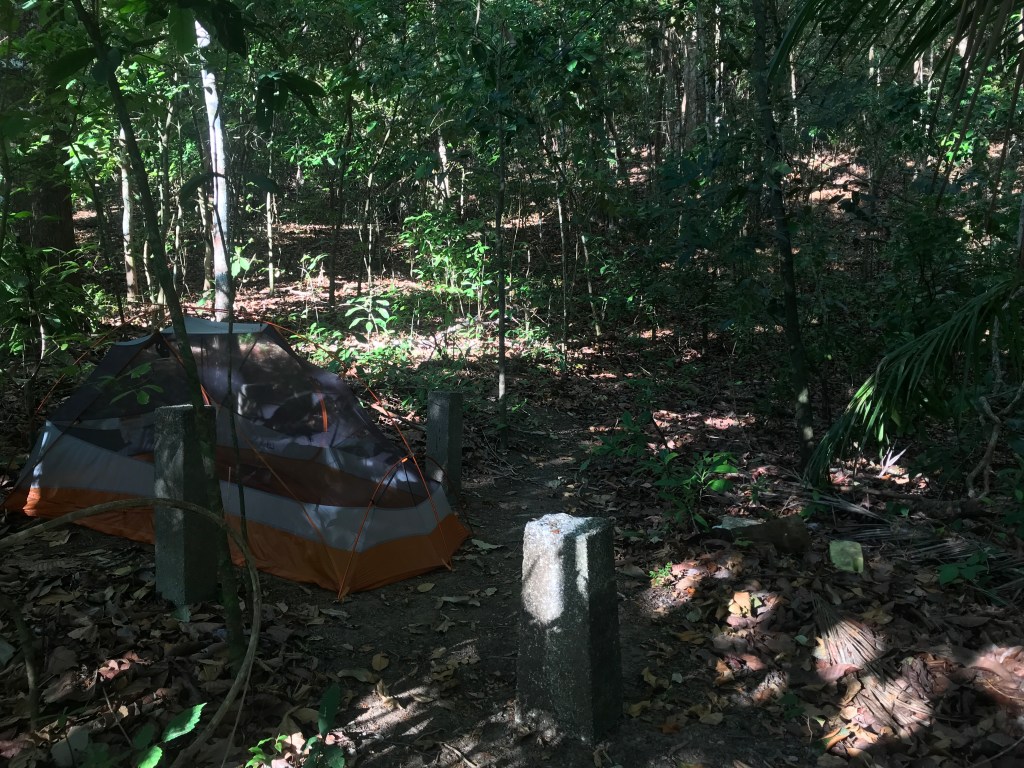
The project director, Elias, was very stoked to meet a potential volunteer and was kind enough to let me stay for a couple of days at the reserve, where I camped in the woods. Luckily it’s the dry season on the Pacific slope right now, so I was able to get away without putting on the stuffy rain fly.
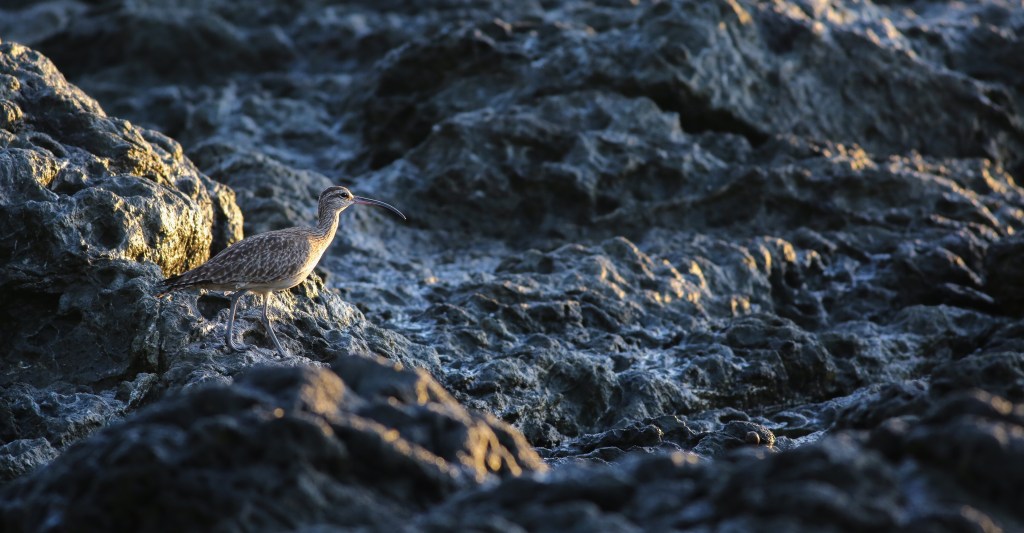
Early in the morning I got to photograph a Whimbrel on the volcanic rocks of the shoreline, which was very cool to see in contrast to the US mudflats where I’m used to seeing this species.
I also took some nighttime long-exposures from the beach while I was there. I’m definitely still getting used to this lens and camera, but they came out alright.

The story of this reserve is really interesting, a side of conservation that I hadn’t really considered before: the conservation of conservation, or the upkeep of all the world’s nature centers, visitor’s kiosks and ranger stations. I knew that this represented a real percentage of the work that national park workers do, but it’s definitely interesting to think about the importance of buildings on reserves that have real historic value. I think that there’s definitely something to be said for using and renewing existing structures, both for their historical value and because that’s often the easiest way to have a lower impact where a building is needed.
I also visited the larger Cabo Blanco reserve, where I had a bunch of good birds (eBird Checklist), including more than a dozen Long-tailed Manakins in several different leks. They have a very interesting call, like a tiny voice yelling “Toledo!” At regular intervals. None of the leks were visible from the trail, so I didn’t get to see them doing their famous cooperative dance.
After the bus ride back to San Jose (the bus goes on the ferry!) I had a couple of days to relax a bit before heading to Argentina. I wrote up a little summary of my Costa Rica trip as an eBird Trip Report. And here’s a link to all the photos I’ve put in the Macaulay Library so far.
I’m now in Buenos Aires, and wow it’s a huge city. 12 million people. I met some birders yesterday at Reserva Costanera del Sur, and they invited me to join them and other birders for the quarterly bird survey that will happen this Saturday! It’s quite literally a different world down here, and the birding is pretty insane so far. New post coming soon!


 Backcountry Birding
Leave a comment