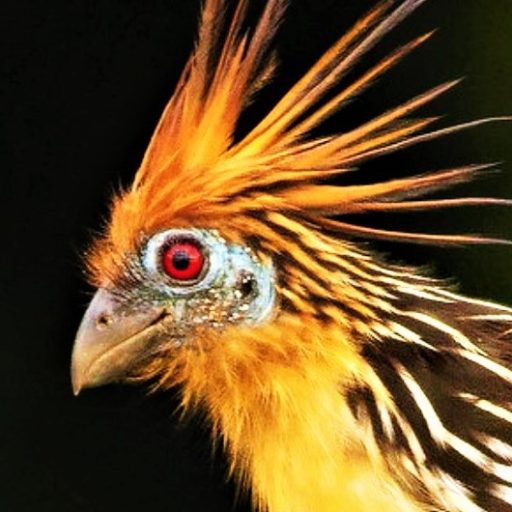
How do we secure the future of natural places?
This question has many answers, most of which require some form of economic incentive. One such answer is ecotourism.
Ecotourism at its core is visiting a place to observe its ecology, whether that be elephants in Africa, penguins on Antarctic icebergs or Quetzals in the Central American cloud forest. For ecotourism to occur, just like any form of tourism, you need to have something (Eiffel Tower, Giant Antpitta, Great Wall of China) that people really want to see. Here I’ll be discussing how a waterfall and a whole bunch of birds have helped a Costa Rican family to conserve a fairl large piece of land called Finca Ecológica San Luis.
The Story
This is the (much-abridged) history of the property as told by several family members during my stay at the farm.
About 60 years ago, Miguel Leiton married a girl from down the hill named Alicia. They moved up to his property and started a family. Miguel also started to clear the land to grow coffee and milk cows, the two industries typical of the region around Monteverde (and much of Costa Rica). With the help of their children the farm grew, and became one of the best in the region. This unfortunately came at the expense of the forest, and although the coffee and cows were doing well, the once-familiar local birds gradually disappeared. Geovanni, one of Miguel’s sons and the current manager of the farm, remembers seeing quetzals on the property when he was very very young. One of his dreams, he says, is that he might live to see their return.
As Miguel’s children got older and started families of their own, they were confronted with a hard decision: stay on the farm which was nearly inaccessible by car, or move down the hill to the main road so their children could attend school. One by one, they moved away from the farm and Miguel and Alicia found themselves alone again. Without the extra hands to help they were forced to start downsizing the farm, selling off the dairy cows. Alicia recalls the day that Miguel had to make the other hard decision: “‘We can’t keep up with it anymore’ he said, and he had to go out and cut down all of the beautiful coffee” she told me.
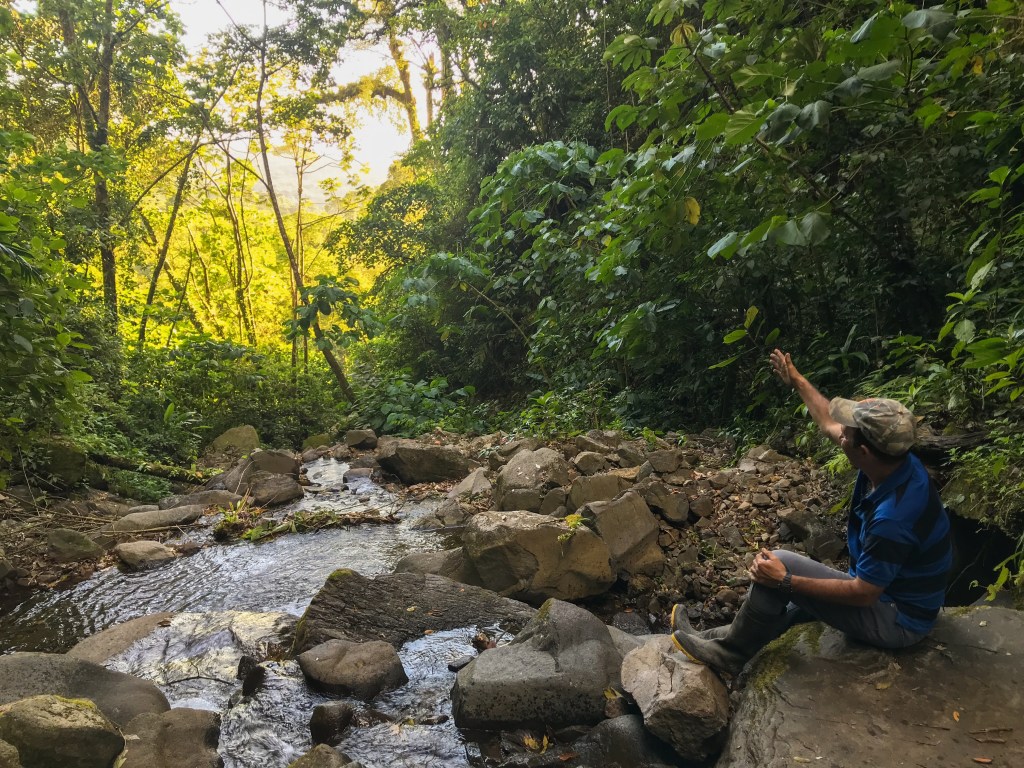
From this point forward, one of the main sources of income for the farm was taking tourists on horseback tours, and Geovanni remembers his father working for months to carve a trail into the steep side of a canyon to take tourists up to the property’s famous waterfall. As more and more of the ‘original eco-tourists’ started to visit the Quakers of Monteverde (attracted by the english-speaking population), more and more birders started to visit the farm in search of birds instead of horseback rides.
As Miguel realized just how many species of birds could be found on the property, he and his sons decided that their main goal should be to promote the property’s bird life in hopes of attracting birders, and they started letting the forest reclaim the land. That was about 30 years ago.
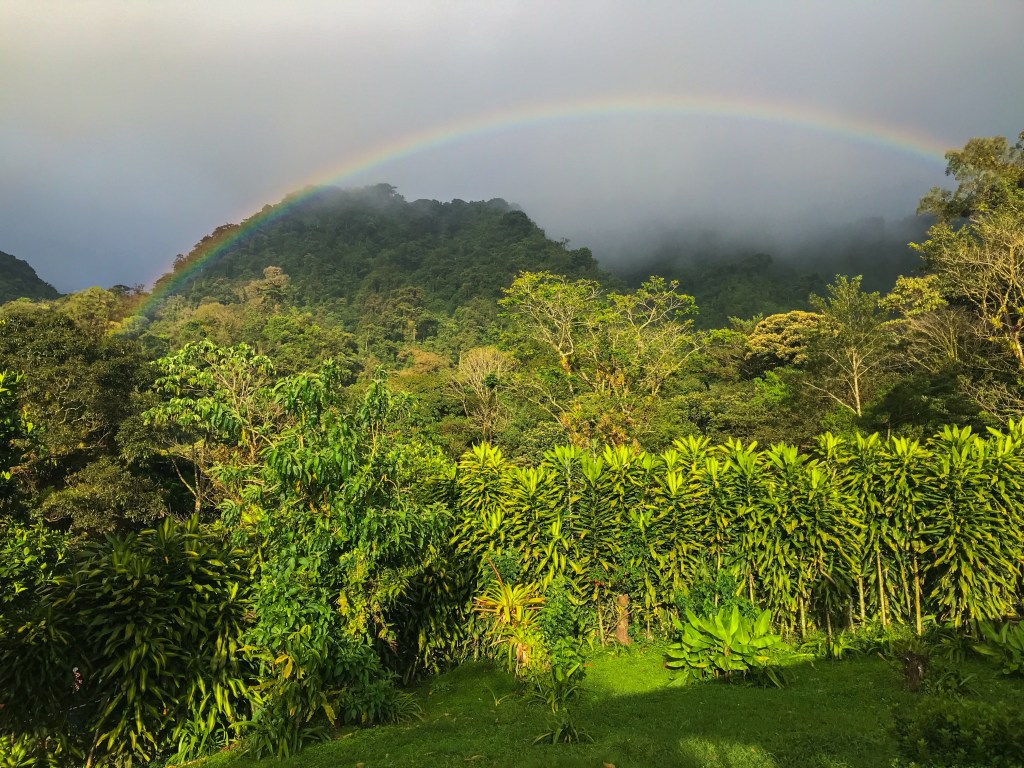
Today what used to be grassy fields are now lush early-growth forests, with trees full of bromeliads and over three hundred species of birds.
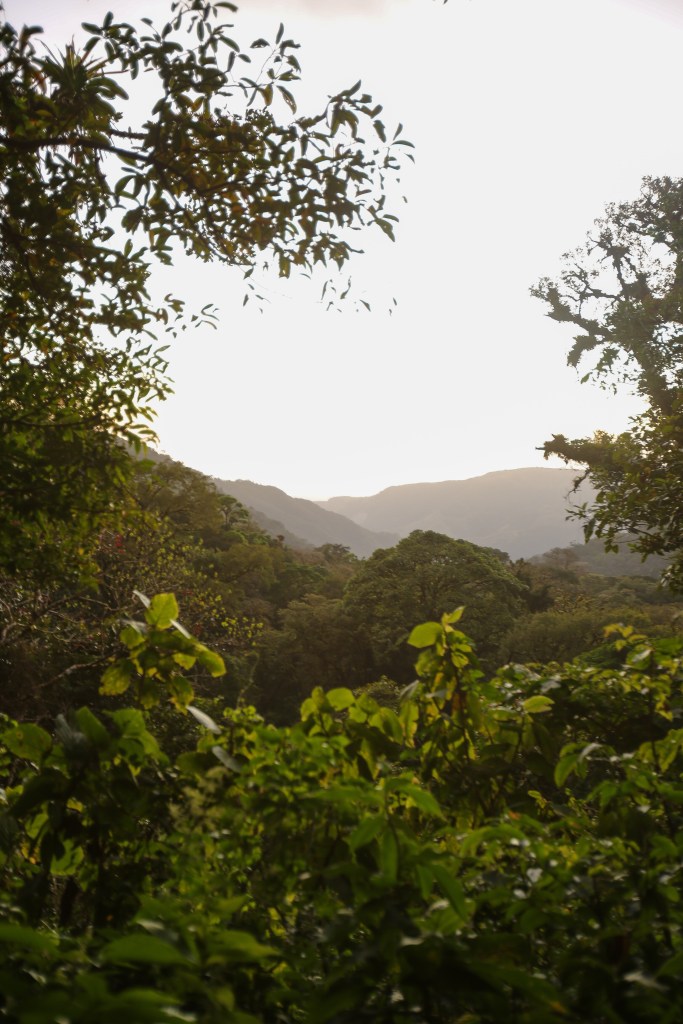
On Monday I caught a ride with Sergio down to Finca Ecológica. Geovanni had offered that I could stay with his mother Alicia as she had a spare room. It turns out that room was previously also used for exchange students doing homestays! So it was nothing out of the ordinary. Geovanni had offered that I might stay at the farm to learn more about what he’s been doing there, with the condition that I help out with some farm work and translate for any English-speaking clients that might arrive.
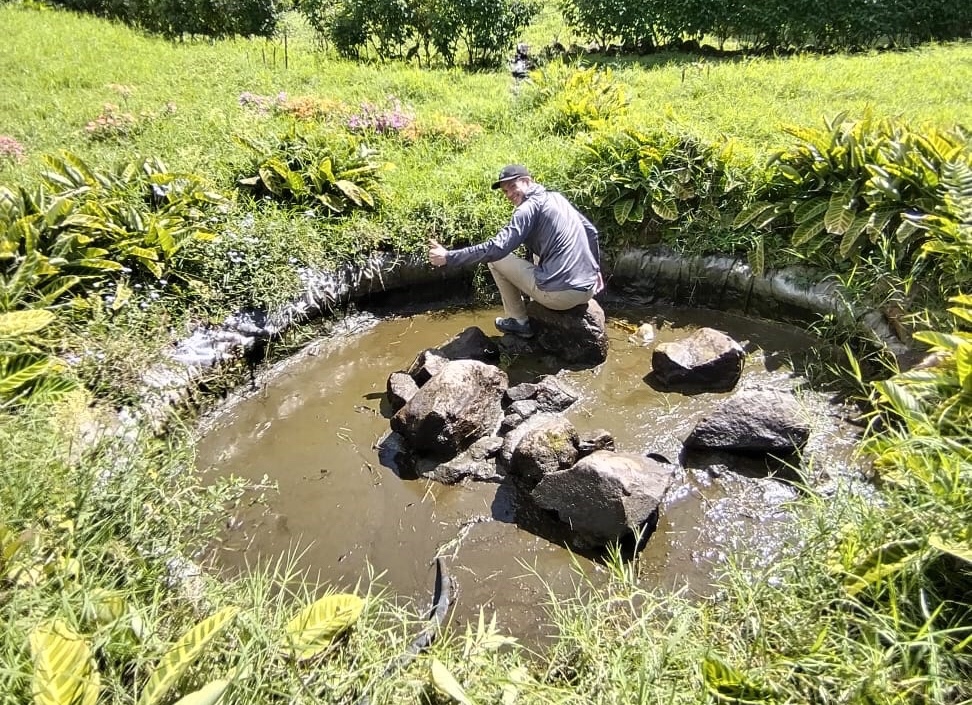
The afternoon that I arrived, we ended up cleaning out the frog pond he had installed several years ago.
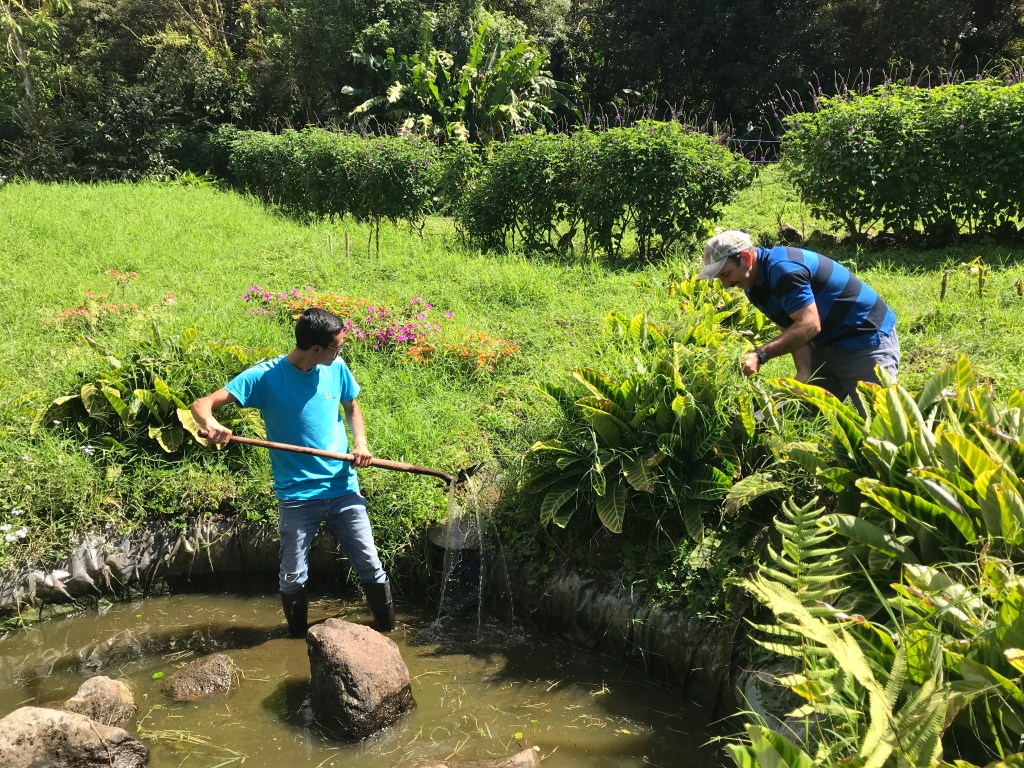
He had built it in hopes of attracting frogs to breed, and they did for a while, but eventually fish started colonizing the pond. The new job to do was emptying the pond and letting it dry out for a couple of days so the fish which had been eating the frog eggs would be gone.
That evening I asked Alicia about the history of the farm. She spoke openly about the troubles and successes they had experienced over the years, and since it was a particularly windy day, she touched on one particular way the farm has changed:
“The way it used to be, the wind—and what a wind—would come and scatter the laundry, lash your face, and grab at your hair” she ruffled her own hair. “It’s better like this, with trees to protect us.”
The next thing she said was particularly beautiful and it’s frankly hard for me to type without tears coming to my eyes:
“The forest here protects us. It’s still my farm,” she said with a sudden pride in her voice, “It’s still my farm, but protected by the forest that has grown here.”
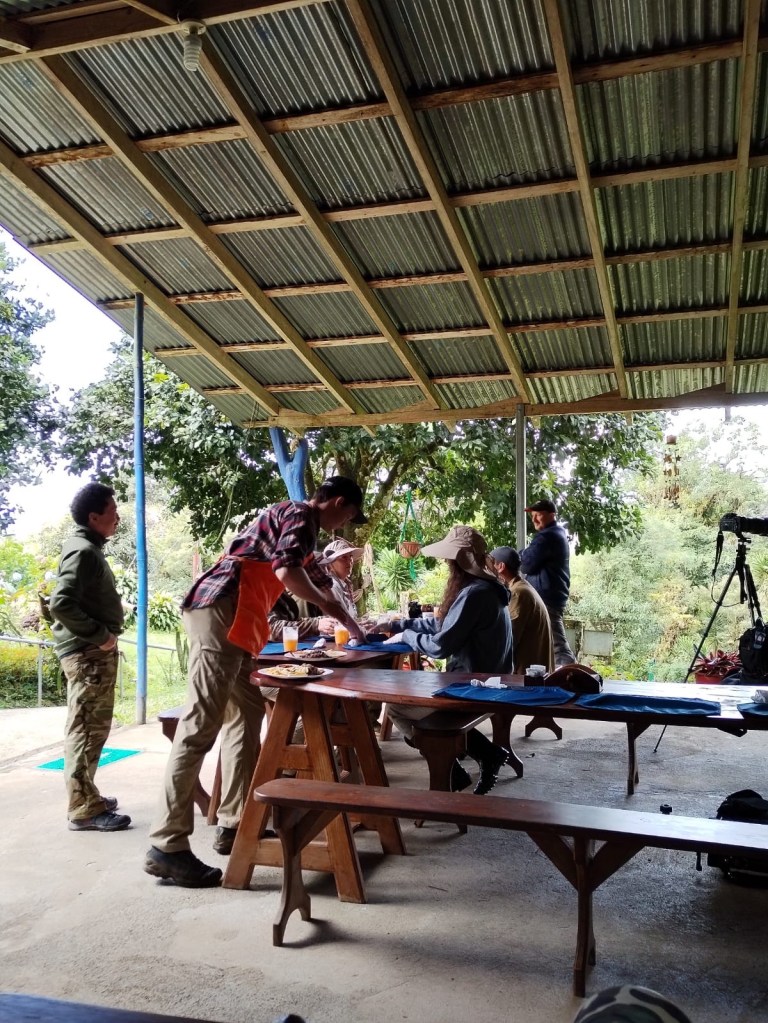
Geovanni’ sister Selmira runs a pizza restaurant on the property. I asked her the natural question: why a pizza restaurant? “Year’s ago,” she explained “people who came to watch birds would always ask: ‘Do you have pizza?’ ‘Could you make a pizza?’ And I finally said ‘Ok Selmi, we are going to make pizzas.” So now she has a full pizza oven and makes all types of pizza for tourists who visit her farm. She also serves breakfast, and I got to help out the first morning I stayed there:
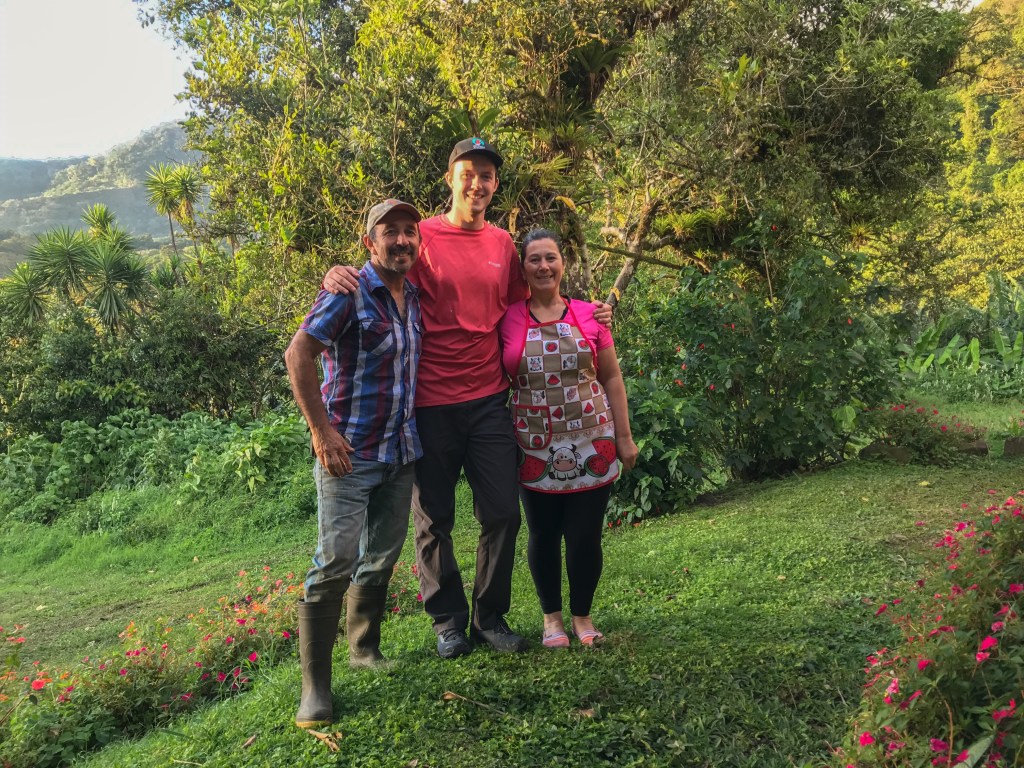
I think it’s safe to say that this is a best-case scenario example for the ecotourism approach to land conservation. Geovanni makes enough money to keep the farm in the family, and he is certainly committed to preserving the forest. Every week, new bird species are returning to the farm; since I first visited, Red-headed Barbets have started visiting the banana feeders. The weeks prior marked the first time Keel-billed Toucans started coming.
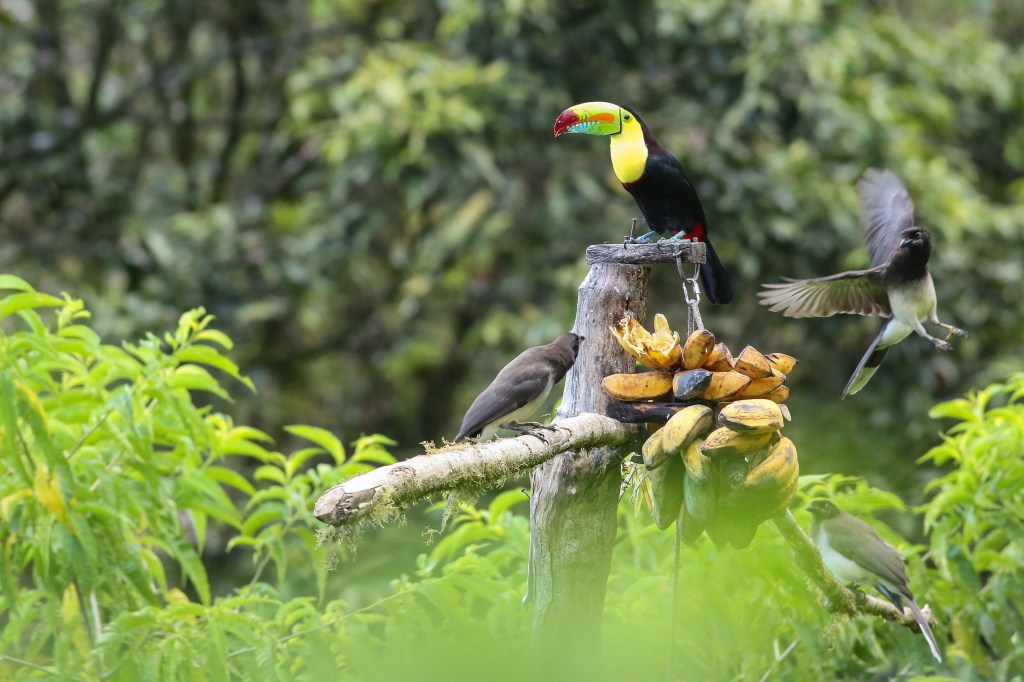
One thing that was really surprising to see was how Geovanni’s passion for birds is one and the same with his passion for supporting his family. He was overjoyed to see new birds on the farm just as someone might be thrilled to hear that they passed a job interview. Each bird species that comes to the banana feeders means the property is more likely to attract paying clients, which in turn means he will be able to avoid selling parcels to support the family. My initial reaction to this was to recoil from the notion that birds were being ‘used’ as a source of income, but I quickly realized how shameful that perspective was after hearing Geovanni explain his feelings about his work.
“The thing is, it’s possible to live here, to live among the animals.” He said. “This is what I do every day. My dream is to take this”—he cupped his hands in a bowl shape and looked fondly at the brightly-colored birds on the feeder—“and share it with people like you. People that wish to come, relax and enjoy the environment.”


 Backcountry Birding
Leave a comment