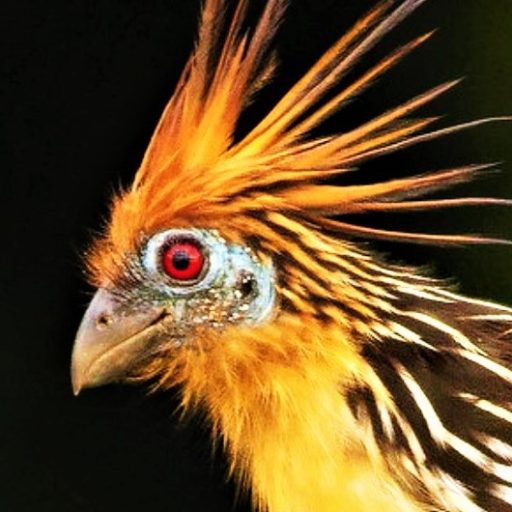
This post represents an interlude in my stay at La Finca Ecológica (covered in a forthcoming post). Sergio picked me up at about 5 in San Luis and we drove up to his family’s property in Boca Tapada, near San Carlos by the Nicaraguan border. It was about a five hour drive because of a road bike race (complete with crazy team car drivers, weeping crash victims and all) which meant we had to drive a little less than 25 mph for quite some time. I simply cannot imagine racing in such intense heat… an incredibly sweaty ride for sure. We made it there in the afternoon. As we pulled up there were about 7 King Vultures sitting in a snag above the house, the first time I’ve ever seen one well.
The only other King Vulture I’ve seen must have been about 10 miles away in the Ecuadorian Amazon, which was barely visible in a 60x Scope. You could tell it was a King Vulture because it was a big soaring white bird with black primaries that wasn’t a Wood Stork, so a rather unsatisfying way to see a lifer. That’s not to say that I wasn’t pretty stoked about finding one. Anyway, you may be wondering why 7 were sitting in a tree above someone’s house.
The answer brings up a surprisingly complex issue: feeding wild animals. I’ll talk a little bit about that after talking more about my time at Mirador el Pizote, Sergio’s family-run business and the surrounding forest.
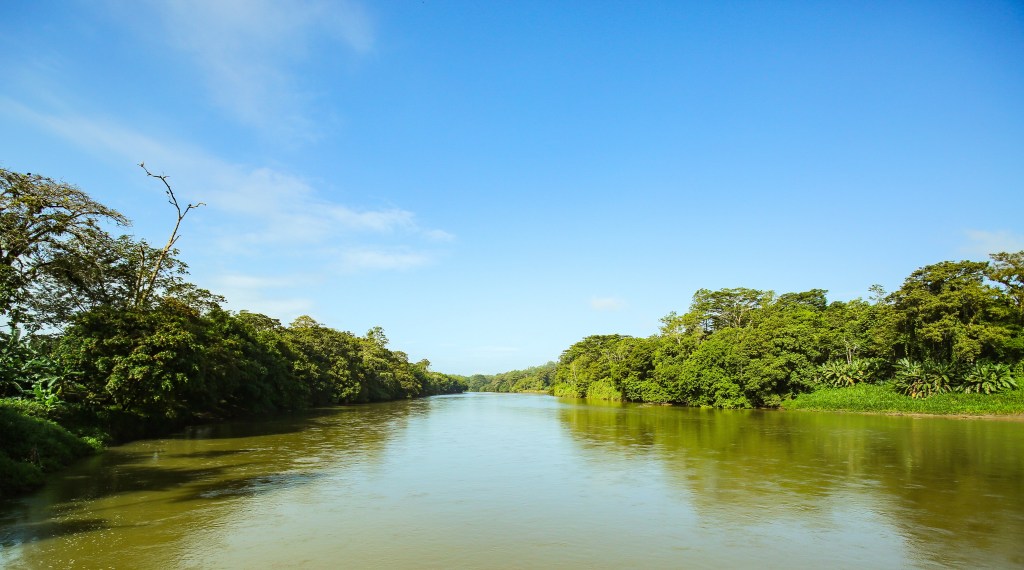
In the afternoon it was sunny, so I did laundry and then tried to dry it. Unfortunately the evening was rainy so the laundry didn’t dry for the rest of my time there (it got dry eventually but I had to wash it again). The property is sandwiched between the main road into town and the Río San Carlos, which was almost at. full flow level, with only a small sandbar exposed about ¼ of a mile away upstream. Thick forest lined the opposite shore, and Great Green Macaws flew in pairs to and from the 80-foot almond trees up the hill behind the house on this side of the river.
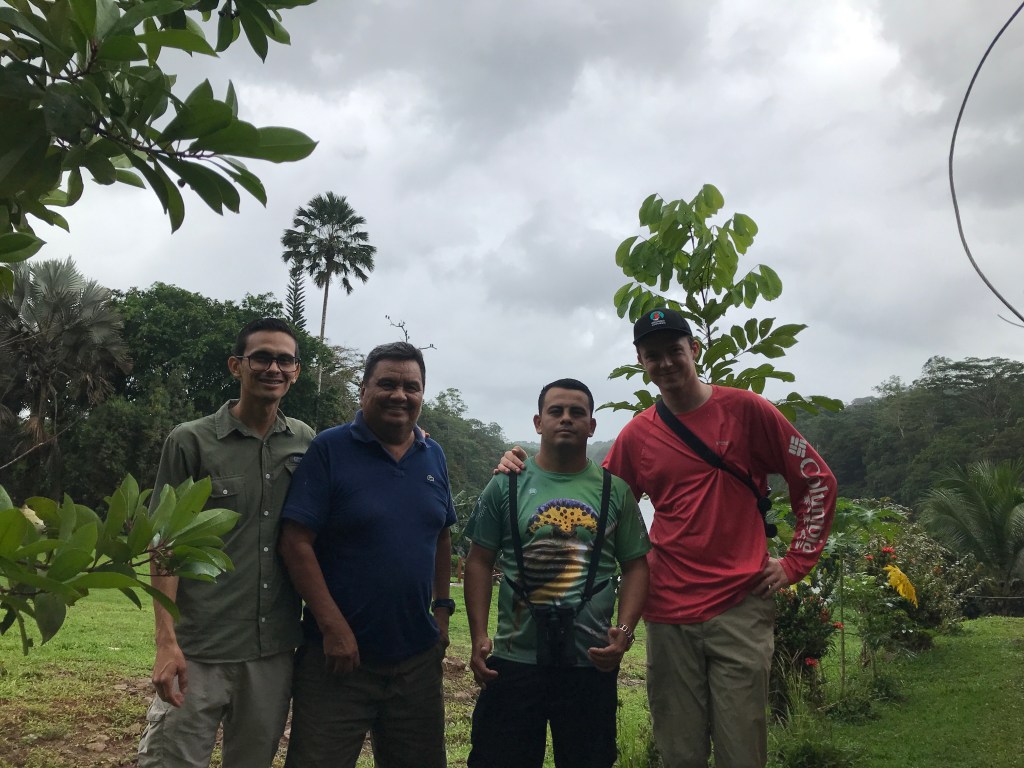
That evening Sergio’s mom cooked us dinner (she cooks for all the guests that stay at their several cabinas) and we sat around chatting. My Spanish has gotten miles better since coming here but it’s still tricky to understand or talk about some things, especially when I work myself into a corner where I need a specific word or complicated verb tense. Something to work on for sure.
After dark it was really cool to hear several Great Potoos yelling (or screaming) from the trees across the road. It’s an otherworldly noise, like a fully-grown man yelling “GUAAAAAAAAAUGHHHHH” at the top of his lungs. Sergio’s father told us a pretty cool story behind his nickname for the bird, “El Chanchero.” When he was younger, living up the road in the town of Boca Tapada, he and several other sons would have to get up well before dawn once a year to drive their pigs (Chanchos) to market. This being the very same road, there were always Great Potoos calling, and so Sergio’s father coined the name Chanchero, roughly “Hog Herder,” way cooler than the official name. If you read my first post about Finca San Luis, you’ll know that I’m a huge advocate for non-English bird names.
We also discussed the importance of the number of birds reported to an eBird hotspot in terms of attracting birders to that spot. For example, some of the best bird lodges in the Ecuadorian Amazon had over 700 species reported from a single spot, and I know that at least I was more tempted to try and pay for a night there, or at least to visit there because of that fact. There are a few other birding spots near El Pizote that have had many, many more visitors: Laguna Lagarto Hotel is one, with nearly 1600 checklists in eBird compared to El Pizote’s ~160. These other spots definitely overshadow El Pizote’s 259 species with numbers in the 400 species range. So the goal for the next day was to simply find as many species as possible in one day at the property, and also to look for any easy additions. I had the advantage of knowing how to ID warblers which are in this area right now, and that I had the whole day to burn. A challenge that I was down for.
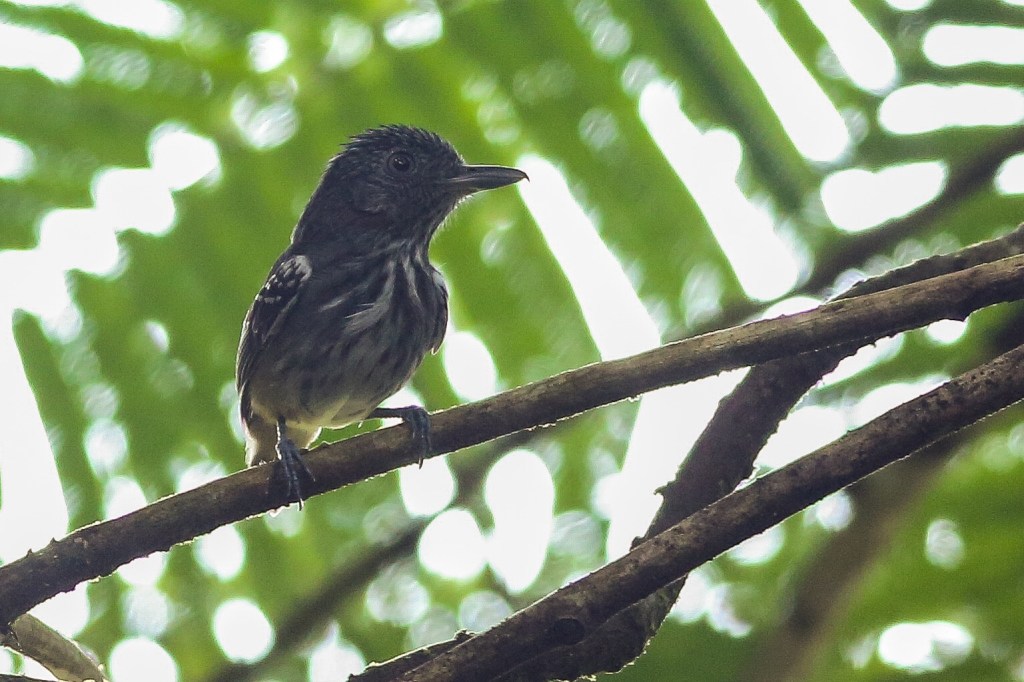
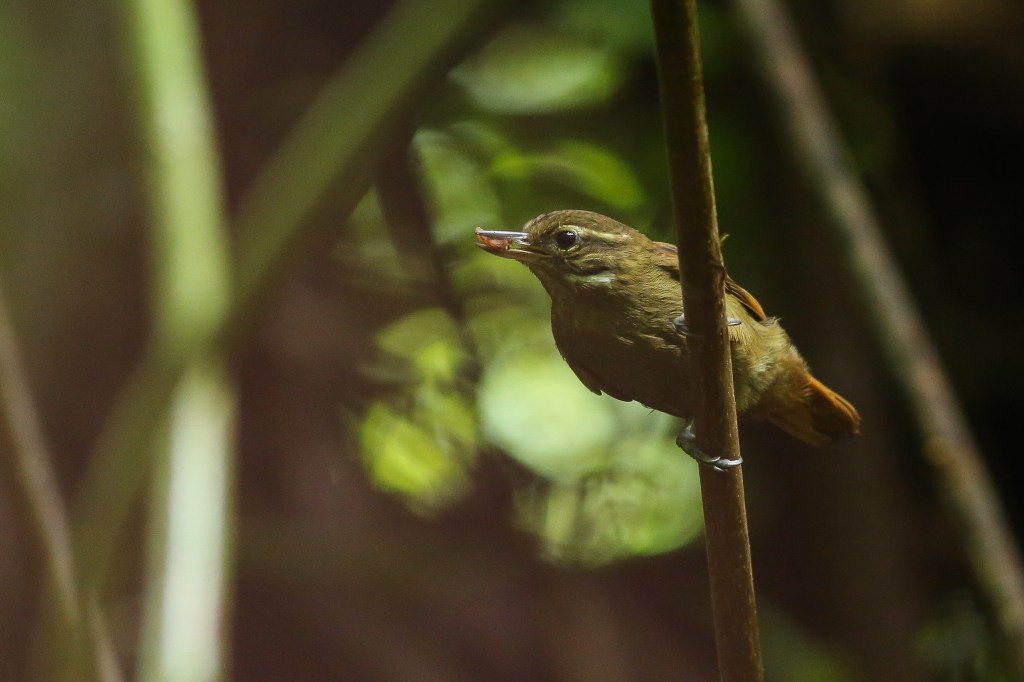
The next morning started at 5:30, picking up Middle American Pygmy-Owl and a couple of Chancheros that were still calling from across the river. There were several species of flycatchers calling, and Sergio showed me the way up the hill to a forest road. By the time I walked back down I was at 33 species, including Acadian Flycatcher which was new for the property. Great Potoo had also never been reported to eBird so far. After stopping by the blind to watch and photograph the King Vultures, I spent the rest of the day mostly just hanging out, talking with some of the other visitors, and adding to the list. The other new species for the property were Black-throated Wren (a lifer) singing from the other side of the river, and Louisiana Waterthrush and Prothonotary warbler bathing under a dripping gutter downspout. I ended the day with 78 species, five of which were new for the property and 11 of which were new to me. For some reason every big day of birding seems to bring 11 new species of birds. Here are a couple of photos of forest birds, my favorite type to try and see:
Feeding Birds
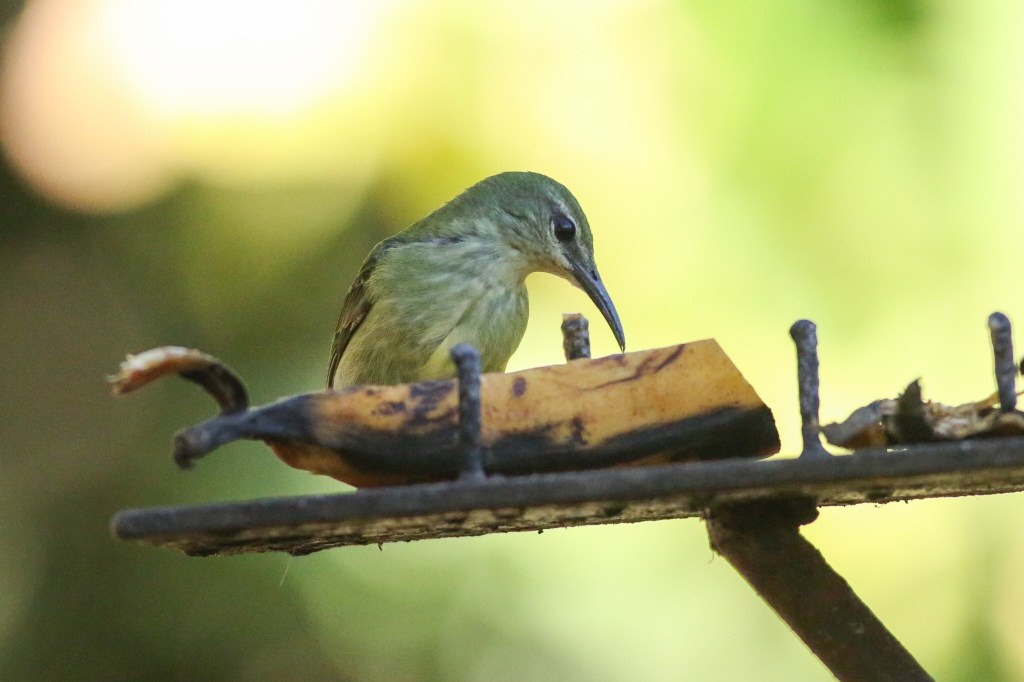
Probably millions of people across the US alone feed birds. Deer hunters feed deer. Most tropical lodges in South América have at least hummingbird feeders if not also banana feeders, and I think it’s safe to say that feeders are one of the main ways people experience many types of birds. Costa Rica seems to not really be enforcing their ban on providing any food to animals (bananas included), because places like Stella’s Cafe in Monteverde have permanently installed bird feeders with bananas. That’s how I got my lifer Red-Legged Honeycreeper this past week:
Obviously practices which harm animals in order to attract tourists aren’t great. But do bird feeders harm animals? Birds supposedly don’t usually rely on feeders for survival, as the volume of food people usually provide doesn’t compare to the volume available over a whole bird’s range, it’s just more concentrated and a bit easier to get.
Then there’s the issue that many, many people in Costa Rica directly or indirectly depend on bird feeders for a living. Places like Finca San Luis would just be forest reserves without their feeders; the majority of the visitors spent most of their time simply looking at the feeders. Without the feeders there could be a significant decrease in the number of visitors, and this source of income is pretty much the only thing keeping several family members convinced that they shouldn’t sell off parcels of the farm.
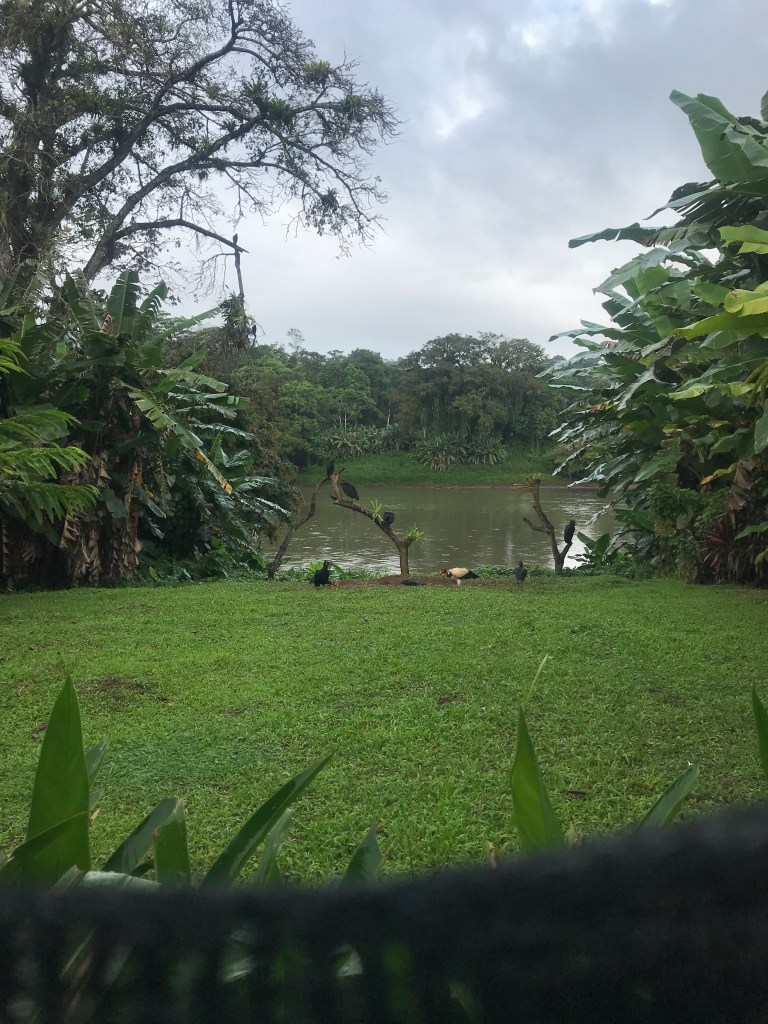
Sergio’s family had very little income before he built a bird blind and set up banana feeders… now it’s become their main family business. But their biggest source of income now is the King Vulture tour. To make it possible to reliably get photos like the ones below, they buy hog’s heads from the local butcher and tie them to the ground near a large blind, in a small clearing surrounded by trees on three sides and the river on one. Each morning when there are paying visitors, they put out a head and the King Vultures come down to eat the meat.
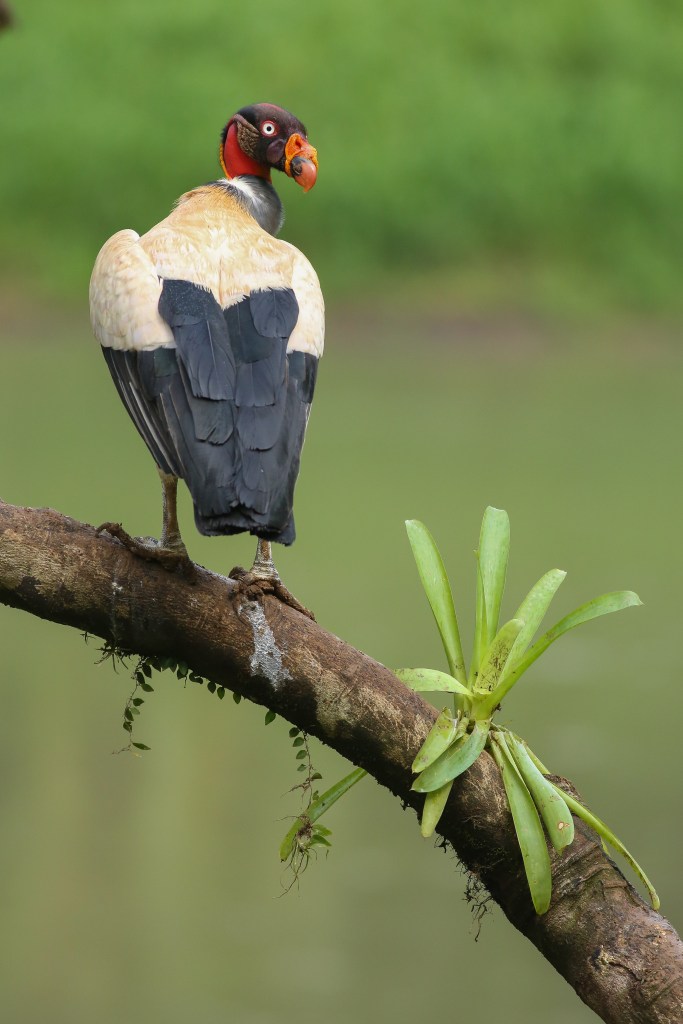
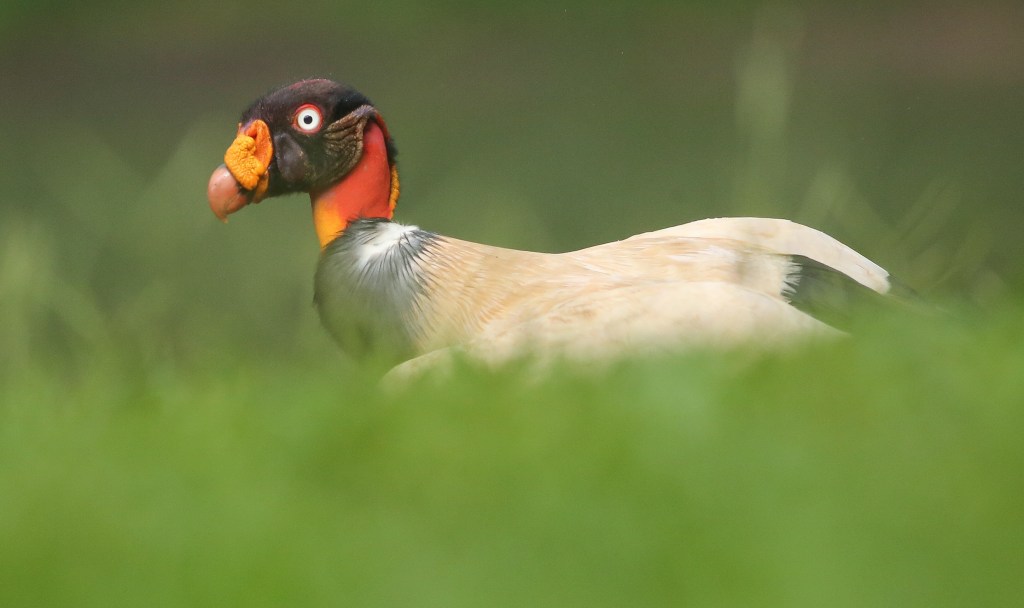
The presence of meat definitely casts a sinister shadow over the operation, but it’s difficult to draw the line. King Vultures are not an endangered species, and they’re not being harmed as far as I could tell, as the blind was a very respectful distance from the feeding site and the meat is fresh each day. In the wild, vultures would be congregating at carrion sites at similar densities and with similar interaction.
What do you all think? I would love to hear what amount of bird feeding (if any) you are in favor of in the comments.


 Backcountry Birding
Leave a comment