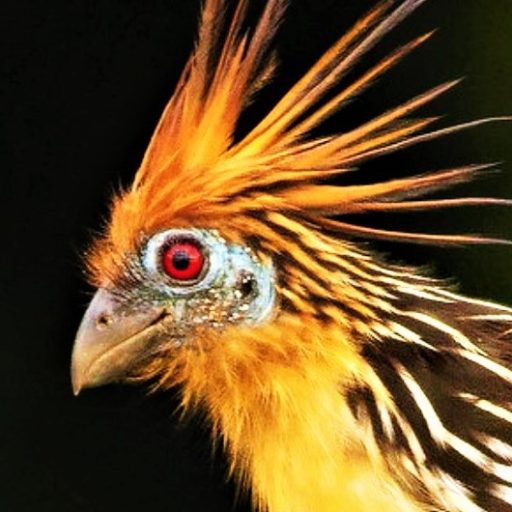
The fun bird pictures are at the bottom of the post! But you should read through the whole thing for the full context.
After arriving in Santa Elena I decided to take the next morning slow, so I woke up late (in birding terms, at 6:45) and enjoyed the free breakfast at my hostel. Afterwards I went up to the tourist information center just to see what they had to say (expecting them to be pushing zip lining and bungee jumping) and was pleasantly surprised! The woman I asked for information instantly understood that I was a birder and I even ended up asking her about how I might find information particular to my Watson project. She suggested a couple of places to try where people might have helpful information and opinions about conservation, and gave me some good intel about which grocery store had better deals and fresher fruit.
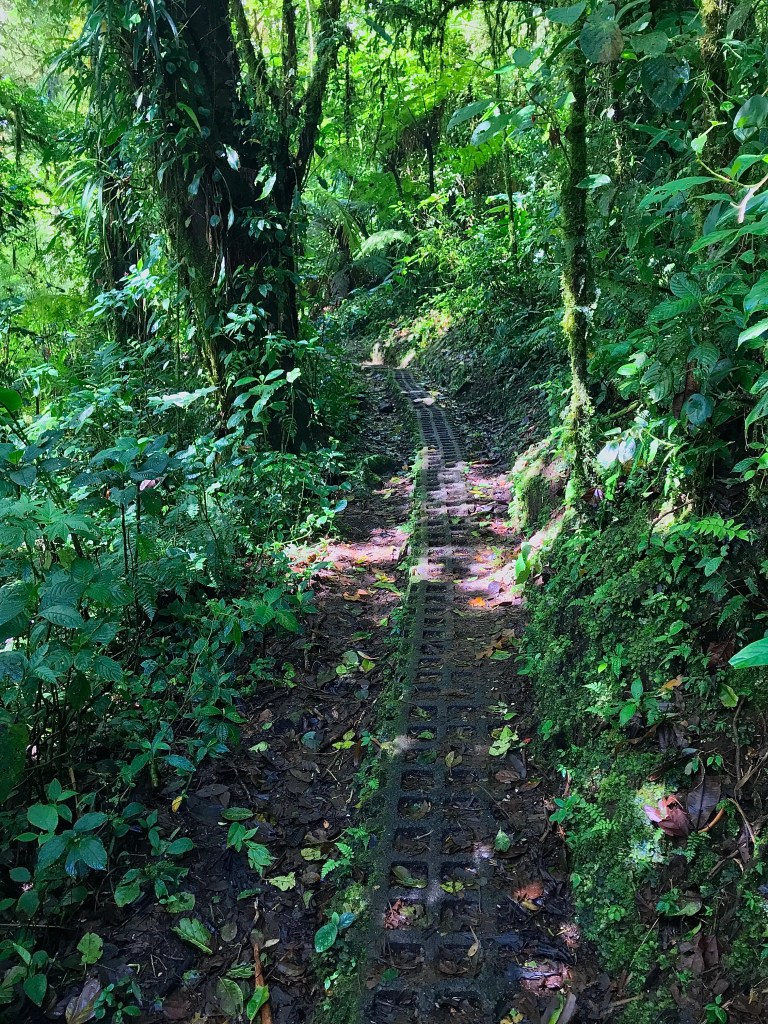
I bought some oranges and caught the bus from Santa Elena up to the cloud forest reserve where there were quite a few people. I had to wait a few minutes for a couple of groups to leave because the reserve was at full capacity. TO be fair, I was arriving at peak non-birding tourist time, at about 11am (eek for the birders reading this, I know). I knew what I was getting into though, and although I didn’t see many birds at all, I really enjoyed walking the trails, which were immaculate and extraordinarily well-built:
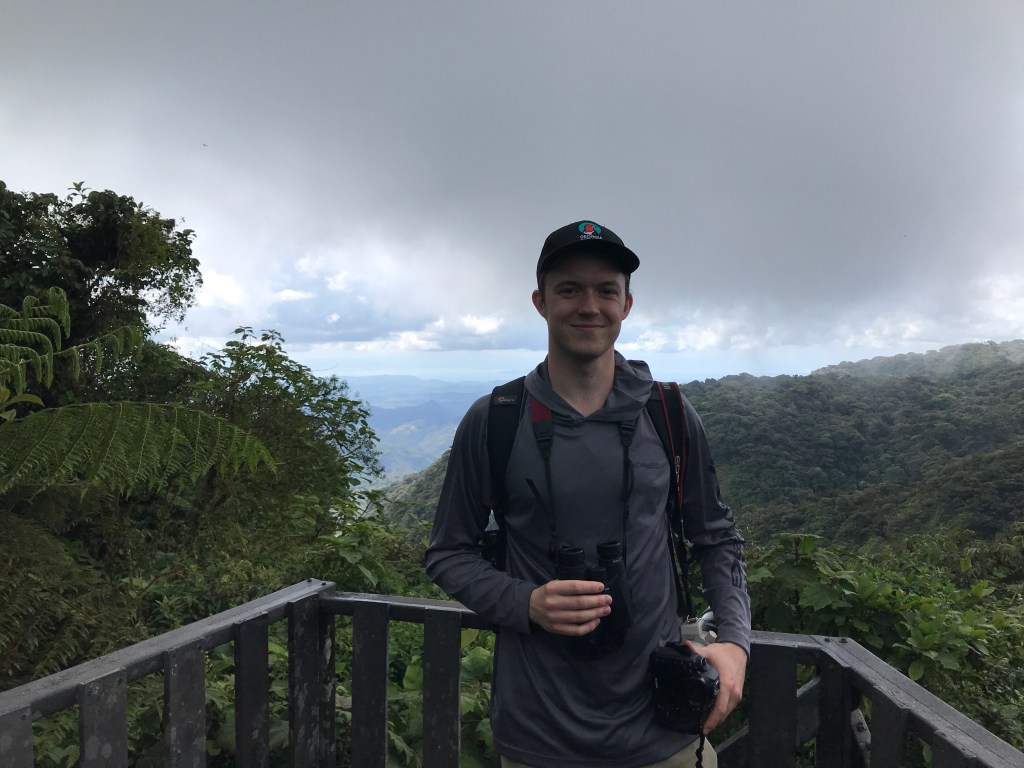
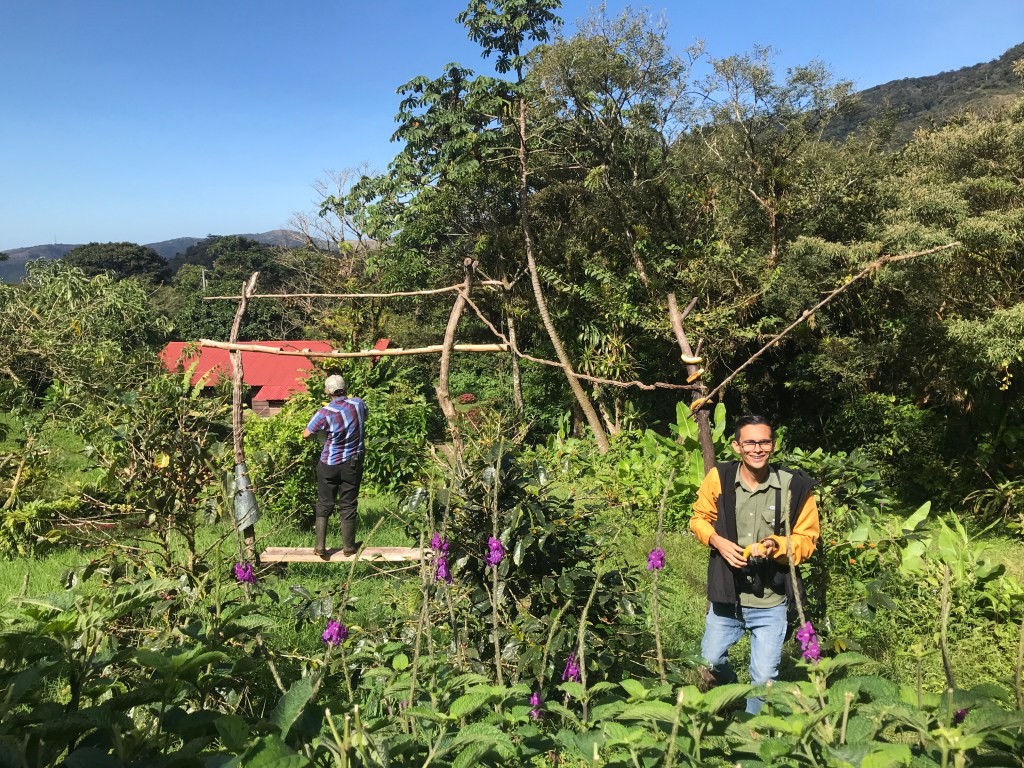
I met several folks from the UK and a few from Canada, so I had the guilty pleasure of speaking English a bit (so far I have been speaking 100% Spanish with everyone, asking folks politely to use Spanish since “I’m trying to learn and practice”). A British biomedical researcher was kind enough to take my picture at the top of the hill, at the continental divide (Caribbean vs. Pacific here):
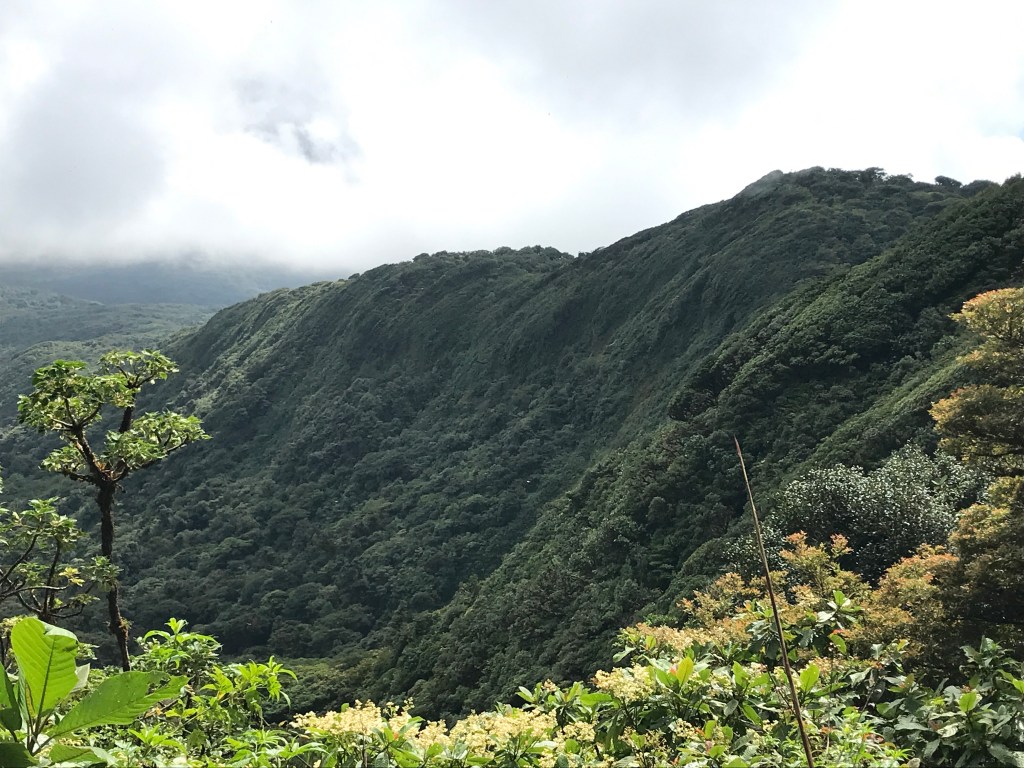
The weather was great the whole time I was there, lots of sun interspersed with light overcast and misty bits. I guess this is the beginning of the dry season, as well as the beginning of several birds’ breeding season.
Inside the forest it was pretty tricky to spot birds, and any birder who has visited a new place after getting proficient at sound ID will know, it’s incredibly frustrating to hear birds and have NO idea as to what they are. So I spent most of my time peering into bushes or treetops trying to get a view at birds I was hearing, with mixed luck. Being here earlier would have probably made a lot of difference but I was enjoying the challenge.
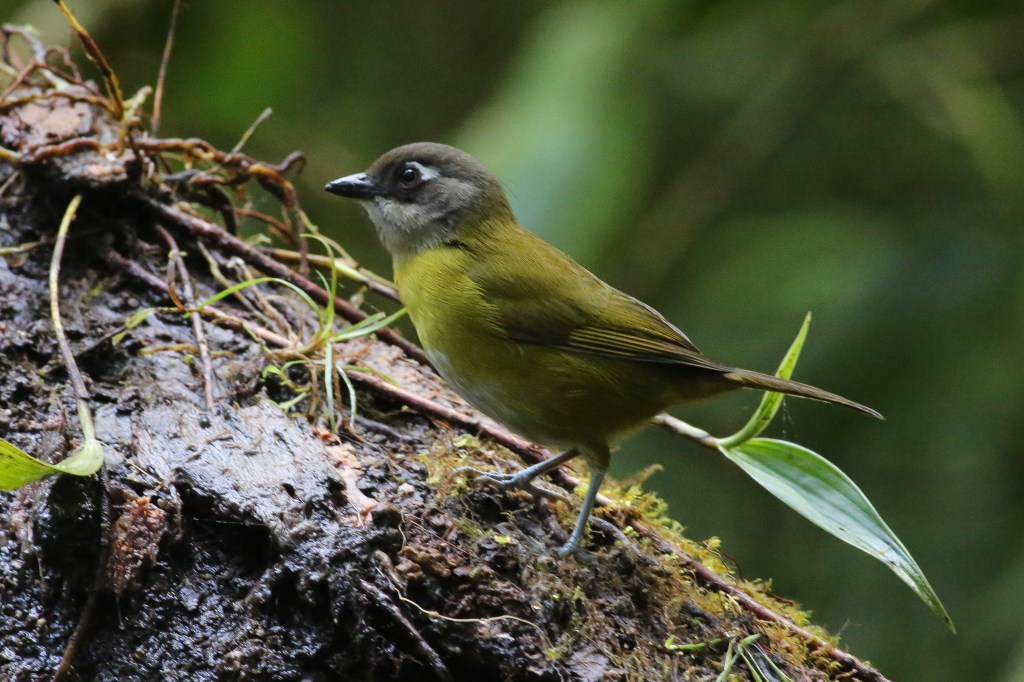
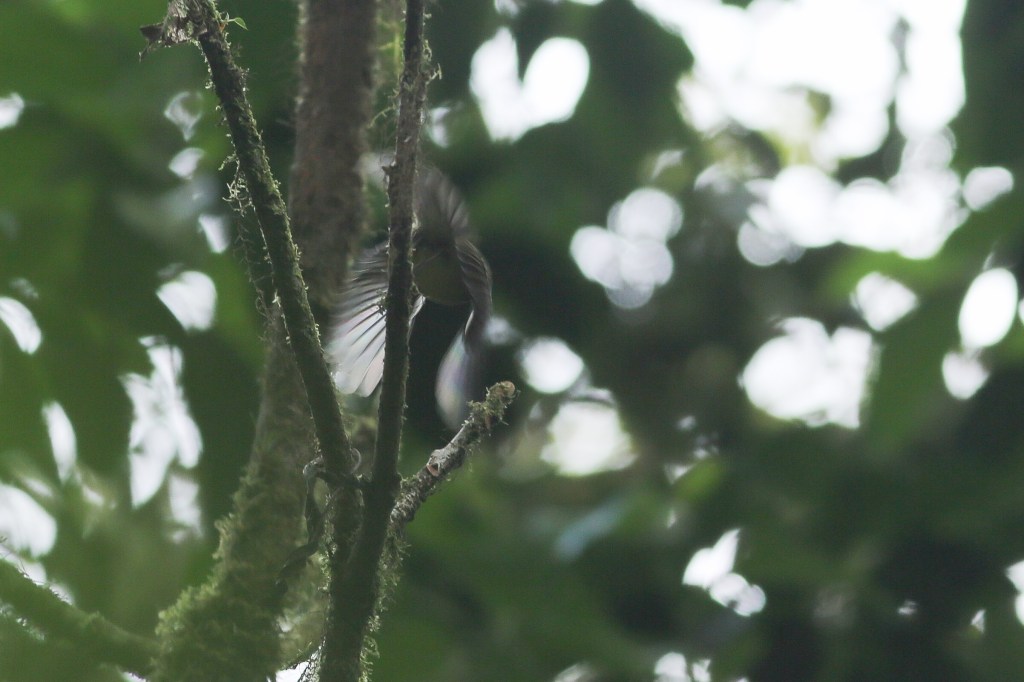
I would like to pause here to recognize something important that is a VERY common misconception. A lot of folks visit rainforest environments picturing documentaries they have seen where there seem to be animals everywhere, monkeys being eaten by eagles, snakes ambushing rodents, and large, colorful birds flying every which way. Unfortunately for people who aren’t documentary film crews, seeing that much wildlife (and capturing it on film) typically takes months or even years. I bring this up because each time anyone walked up on me as I peered through binoculars at a Chlorospingus (above) or flycatcher (below) they excitedly asked what I was looking at. I had to reply “sorry, it’s a very small, green bird” after which they would nod sadly and walk dejectedly down the trail. The point being that unfortunately many people have very skewed expectations for what a great day of observing animals is like. I had a great day for the time I was there; I got to see some beautiful pristine cloud forest, and a few birds.
The highlight of the day was definitely running into a group of students form the Costa Rican National University who were surveying wild avocado trees (Aguacatillas) as part of a project to better understand fruiting patterns. Aguacatillas are the name of the game when it comes to finding perhaps the two most sought-after birds of Monteverde if not Costa Rica: the Resplendent Quetzal and the Three-Wattled Bellbird, both of which are altitudinal migrants, moving to stay in zones where Aguacatillas are fruiting. These students had a list of individual trees, and had to locate each one (it seemed they had their locations memorized perfectly) and determine what percent of the crown of the tree had flowers or fruit. As far as I was able to understand with my very poor scientific spanish, each of the several hundred trees near to the reserve’s trails is surveyed every month, and this particular project has been going on for just over a year now. It was very kind of them to let me tag along and to explain very slowly and clearly to me what they were doing and how their system of codes worked, etc. I walked around with them for about 45 minutes until 3:45 when I ran back down to catch the 4 PM bus.
Before I hopped on the bus I asked one of the guides if they knew anyone who might be available as a bird guide one morning in the next few days. For context, I plan on spending at least one day with a guide in each place I visit, and offsetting the cost by eating rice and beans for a couple of days. There’s probably not a better way to get acquainted with local conservation projects and to learn local birds. She gave me a name and I gave her my WhatsApp number, and she said she’d ask him to contact me. I hopped on the bus and rode back down to Santa Elena, where I had a great personal pizza at the restaurant next to Bar Amigos:

That night I messaged with the guide, Sergio Vargas, and he was available the next morning! This got me super stoked, and we arranged to meet at 7 at Pensión Santa Elena to go to one of his favorite spots.
La Finca Ecológica San Luis
Sergio Vargas: Instagram, Facebook, WhatsApp: (506) 8450 5671
Finca Ecología San Luis: Facebook
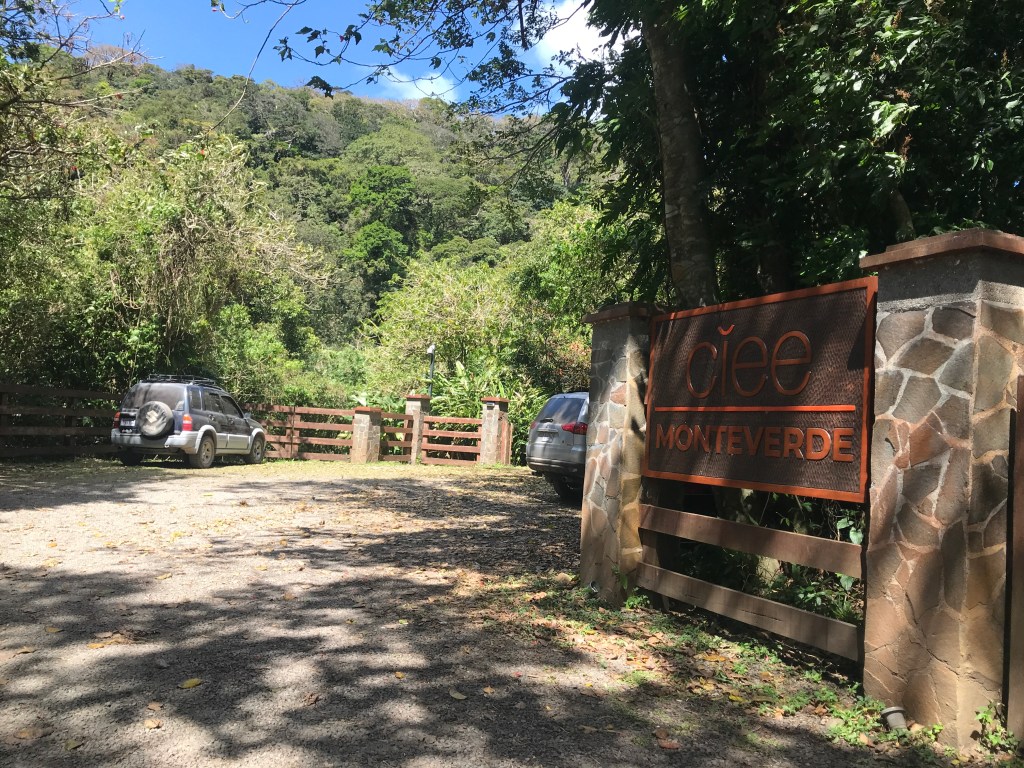
The next day started with a 20-minute car ride down the mountain to the southeast, past the UGA CIEE Costa Rica Campus (which was very surprising to see since I had no idea it was going to be there) and up a short hill to a really incredible property owned by a man named Giovanni.
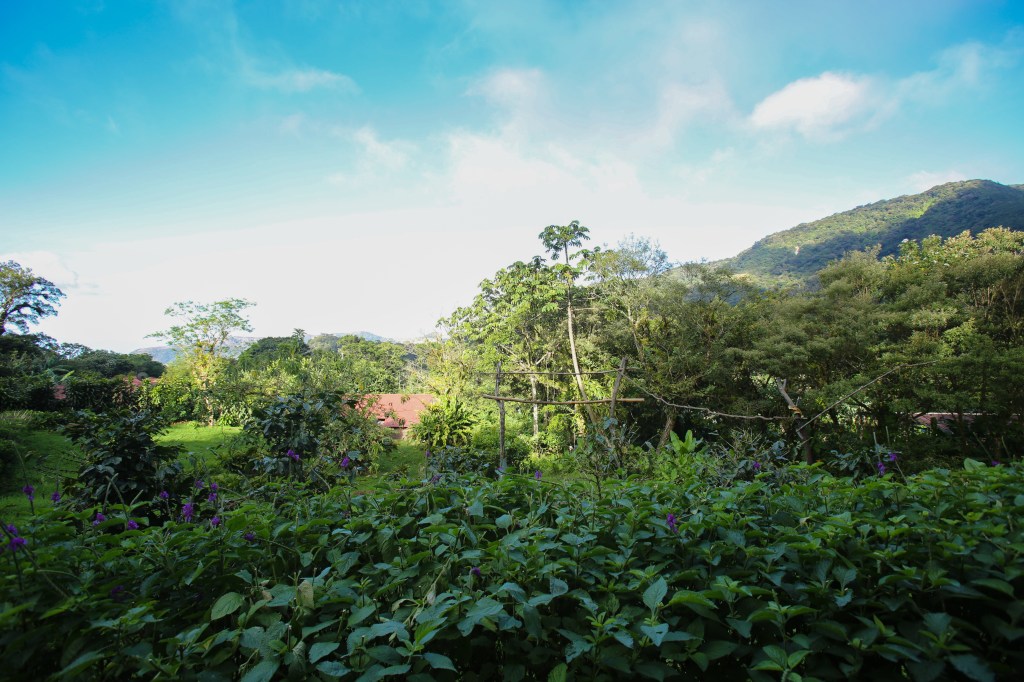
Tucked away just a few kilometers from the incredibly busy Monteverde/Santa Elena area was this farm (finca) that sees relatively few visitors (especially for the quality of birding there). As Sergio and I pulled up, Giovanni beckoned excitedly, and we hurried up a short path to a feeding station where there were several branches with Bananas that Giovanni had placed to attract birds into view.
The reason we had to hurry was a Keel-Billed Toucan which was visiting one of the feeding stations, and even if it had been the first one I’d ever seen I don’t think I could have been as excited as Giovanni, who was really stoked since this bird had only recently started to come to visit the feeding station.
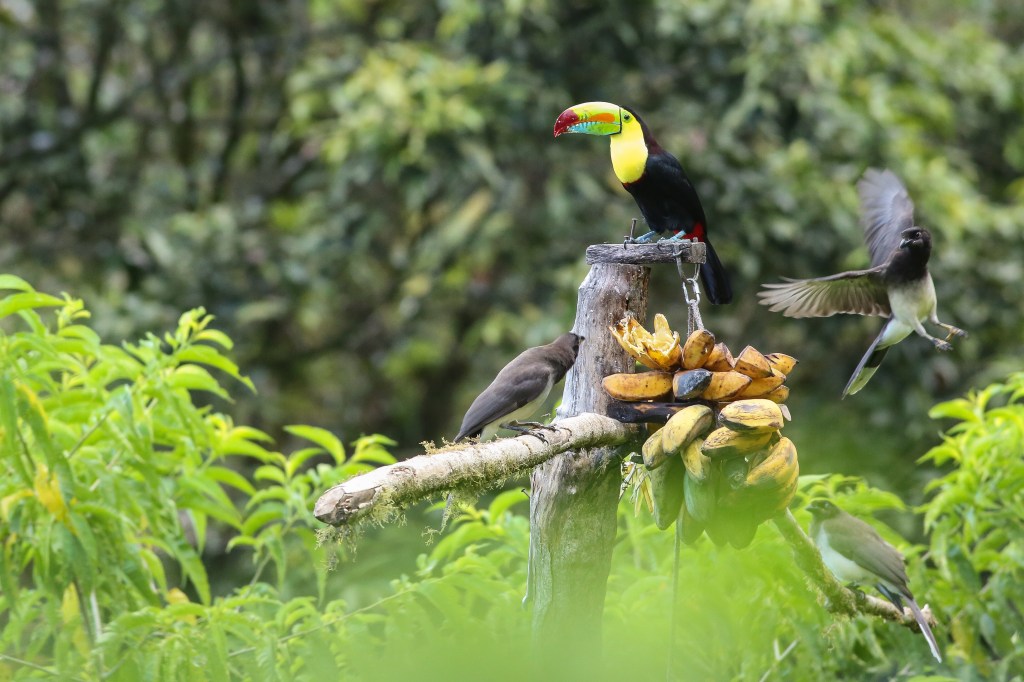
There were of course tons of other birds, which I’ll get to in a second. The coolest part for me was meeting Giovanni, who was over the moon about this toucan.
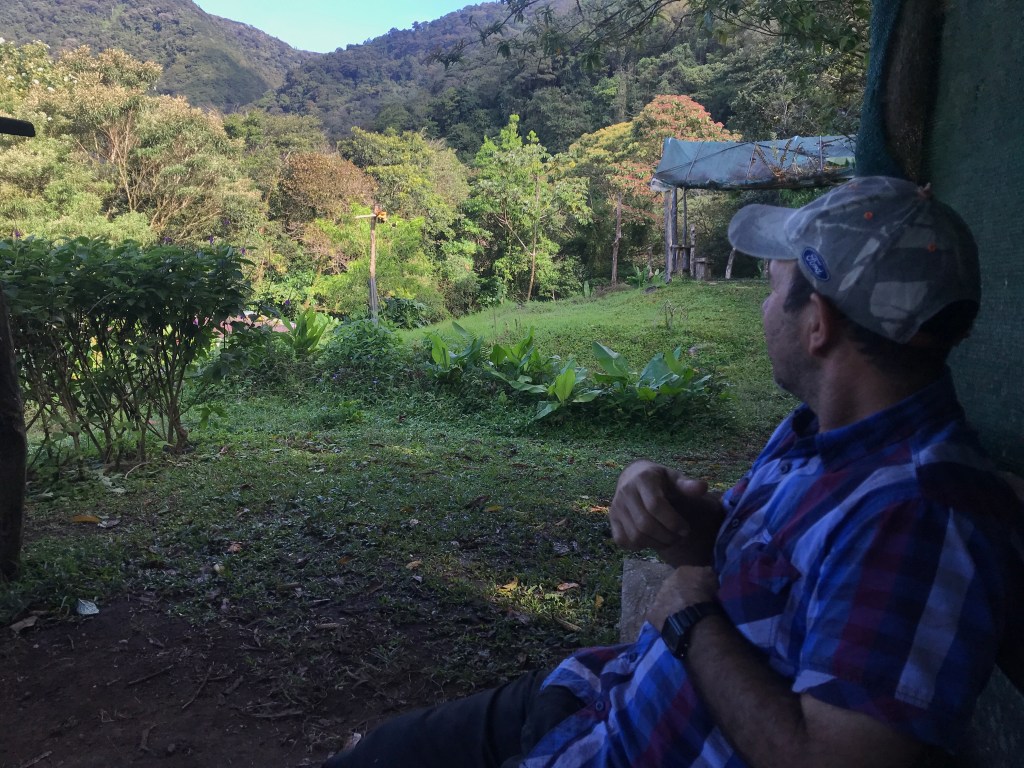
He explained to me that his father used to run the farm as an adventure park where tourists could come to ride horses and to see the large waterfall at the far end of the property, and that he kept cows in several open pastures. But about 35 years ago he said he and his father decided to changed their business model, as more people wanted to see birds and other animals. “Before,” he tapped his temple knowingly “We didn’t have it all together up here, we had to change our mentality.” He gestured around at the trees in the feeding station area “All this has grown back since then.”
Sergio had a similar story about a different place. his family owns the property called “Mirador el Pizote” (Coatimundi View) which seems to be the best place in the world to see King Vultures up close, since they have built a blind very close to a roosting site. Sergio explained that guides would come to visit, and he started shadowing his friend several years ago to lear to identify birds: “The client would follow my friend, and I would follow behind the client.” He said that once he was confident enough to start guiding on his own, he also set about improving the family’s property to attract other birds. He set up feeders and blinds, and did another thing that I thought was really cool: he took dead logs, drilled 1.5-2-inch holes in them and placed them into the ground as posts, within camera distance of the blinds. Soon after he installed them, Woodpeckers came and continued excavating the holes and started nesting right in view of anyone sitting in the blind. To find a natural woodpecker nest and set up a blind would take weeks, this strategy brought the nest to the blind.
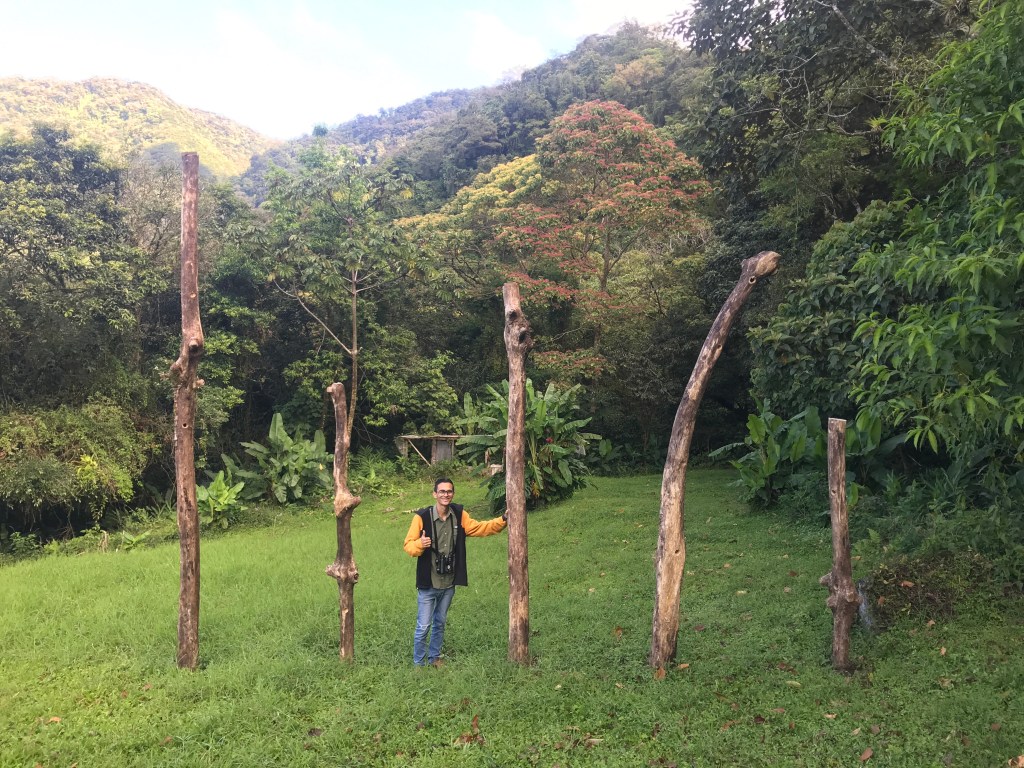
Sergio moved to Monteverde from San Carlos about 3 years ago, and has teamed up with Giovanni to bring Finca San Luis to the next level in terms of visitor experience. He’s added a few woodpecker logs (above) to the feeding station area, and while I was there we saw Hoffman’s woodpecker, Golden-Olive Woodpecker and even Masked Tityra checking them out!
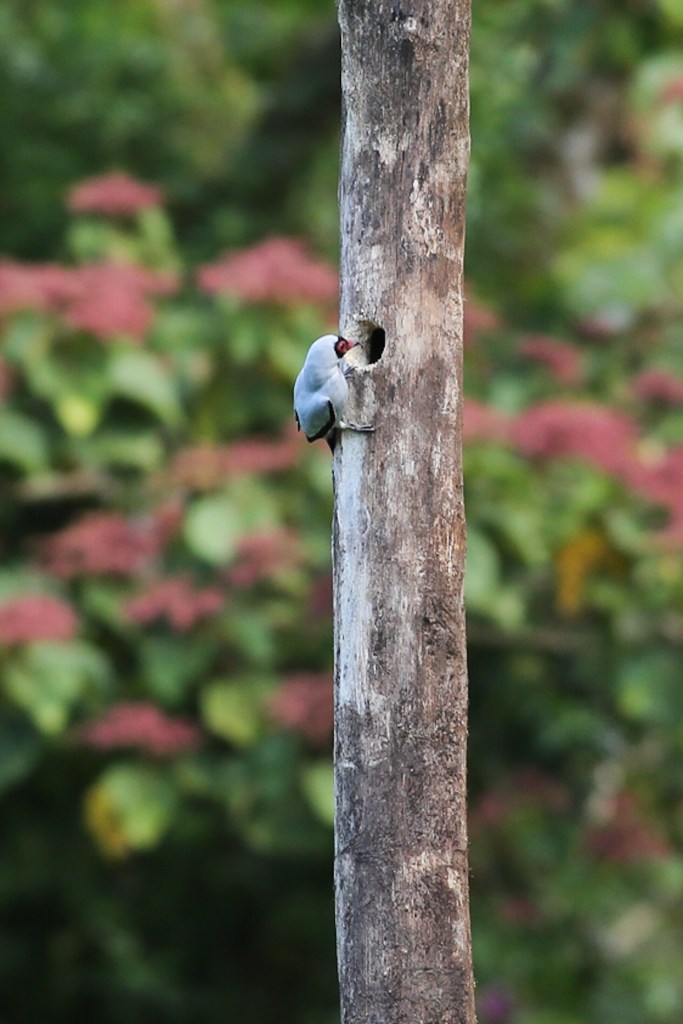
It was really cool to see how both guys were equally excited about all the new birds coming to the feeders. If anyone reading this is planning a trip to Monteverde, I’d STRONGLY encourage them to visit Finca Ecológica San Luis as well. It doesn’t see many visitors at the moment since COVID knocked down a lot of tourism in the area and smaller-name reserves have had a hard time bouncing back, so your visit will be much appreciated.
Now here are some birds:
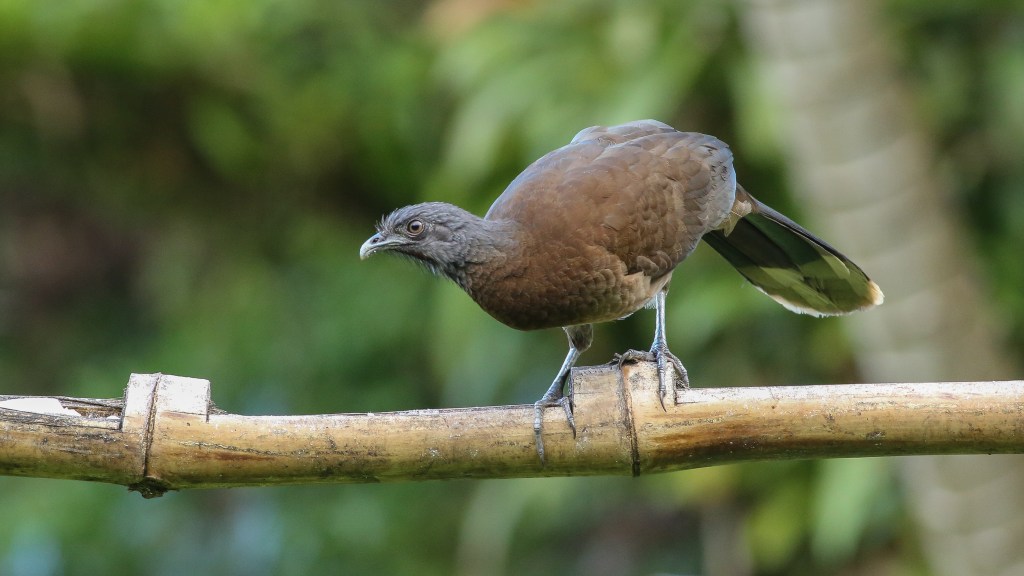
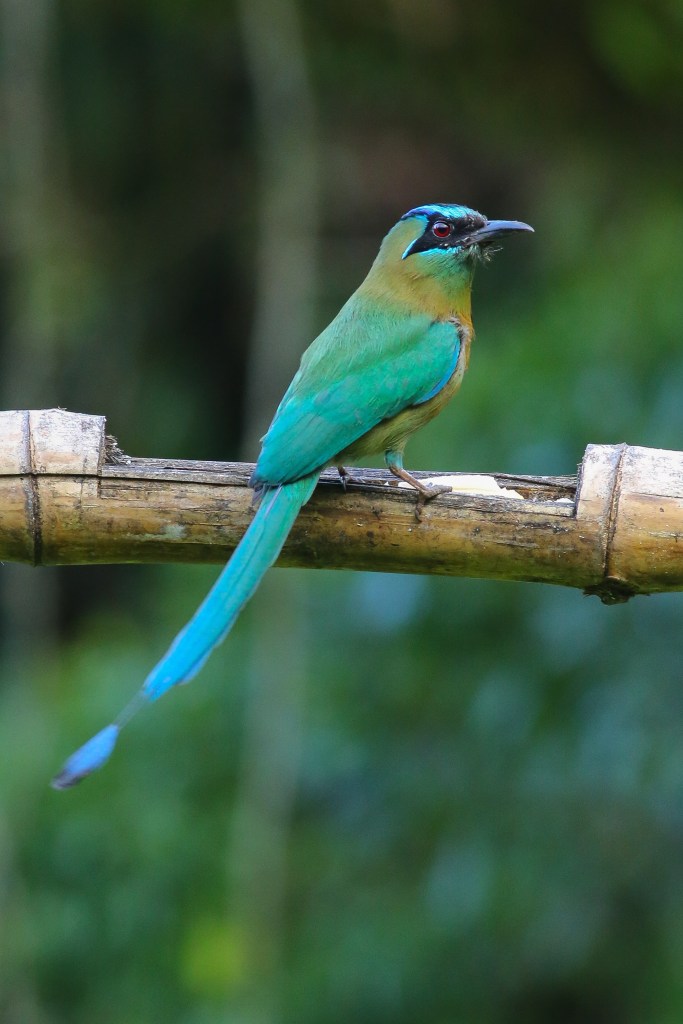
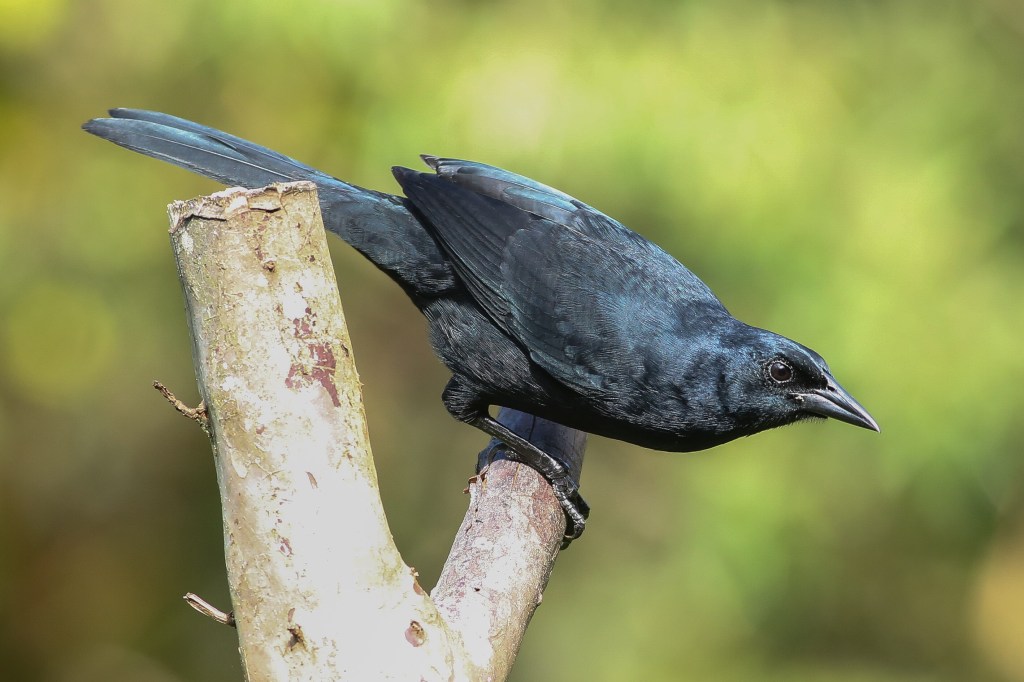
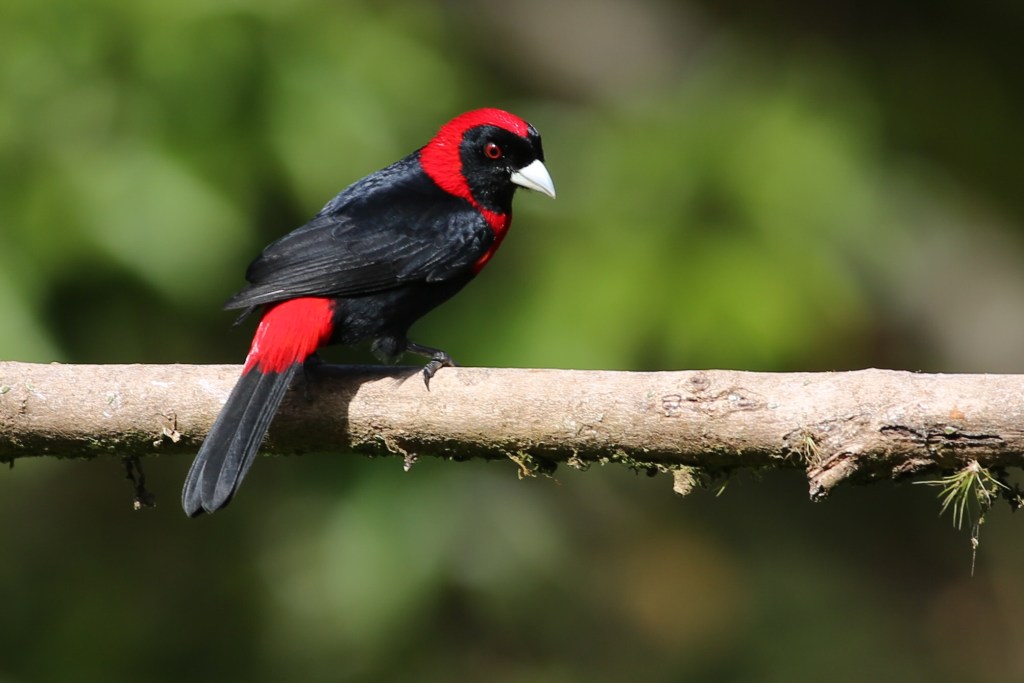
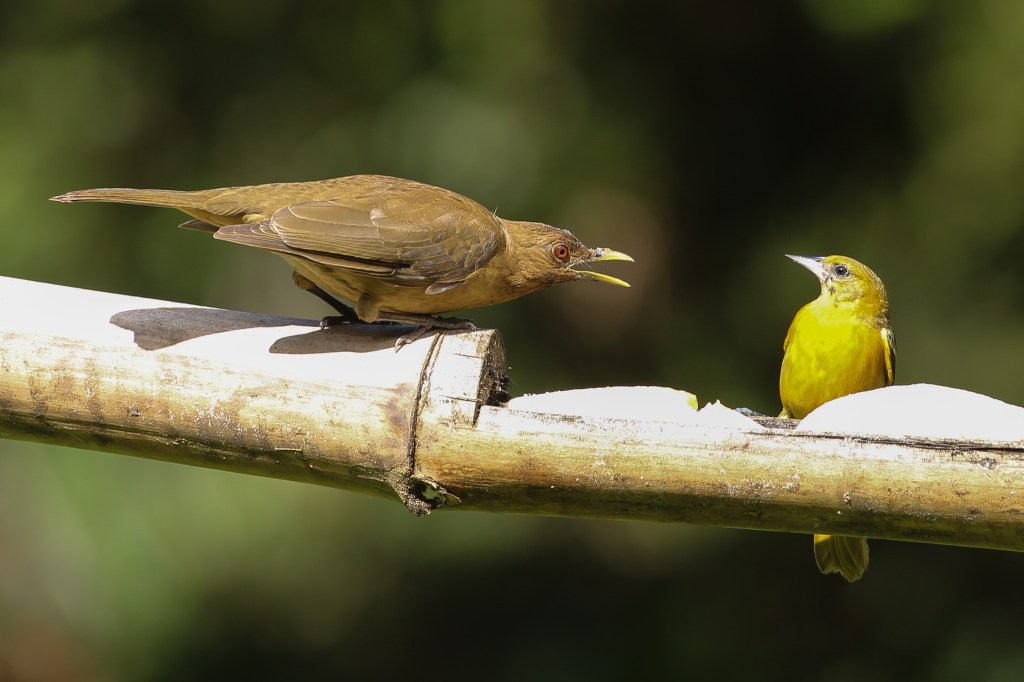
Towards the end of the morning Sergio left his camera in the car and we walked around a couple of the trails through the forest. We rounded a corner overlooking a high bluff and Sergio gasped: there was an Anteater sitting on a branch and drinking from a bromeliad in plain view, something that is almost never seen.
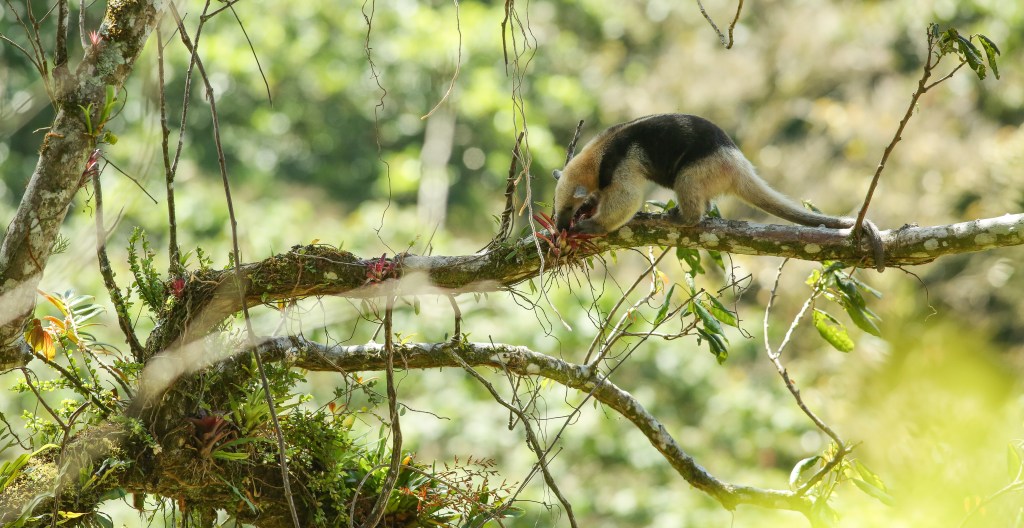
Based on Sergio’s reaction when he realized he didn’t have his camera with him, I told him he should go get it from the car while I watched the Anteater. It didn’t take much convincing for him to go, and he managed to make it there and back in less than two minutes! BUT just after he left, a medium-sized round gamebird dropped out of a tree and ran across the trail:
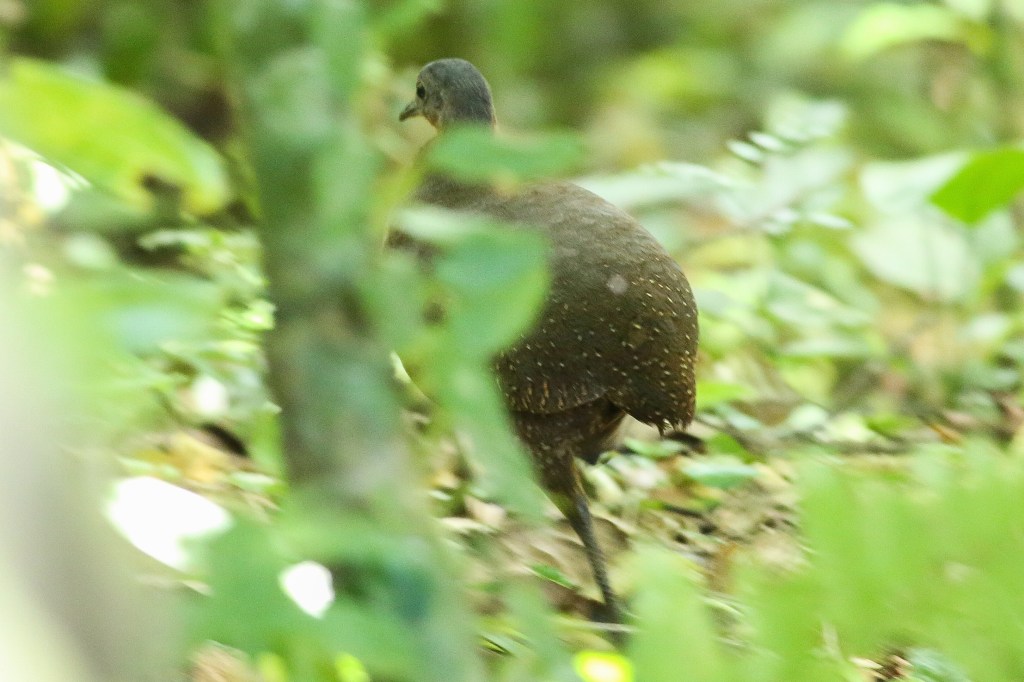
I was very excited because I instantly recognized it as a Tinamou, an evolutionarily ancient lineage of birds that are very hard to see. As it turns out, the cream-colored spots on the wings and tail of this one make it a Highland Tinamou, one of the rarest in Central America. Sergio was overjoyed to get pictures of the Anteater but was very jealous when he realized what I had seen while he was gone; it would have been a lifer for him! Definitely an unmerited treat for me to see one on my second day of birding in Costa Rica! And to get such an incredible view of the Anteater was really something else. Normally they’re only seen at night and even then they’re not that common.
What a day! It’s late now so I’m calling it a night on this post which ended up being WAY longer than expected, but tomorrow I’m going to Reserva Curi-Cancha and hopefully I can meet some new folks!


 Backcountry Birding
Leave a comment